
Franchising in marketing merges the power of a well-known brand with the need for local marketing at individual franchise locations. This article will cover essential strategies, benefits, and common challenges in franchise marketing, offering insights to amplify your franchise’s marketing efforts.
Key Takeaways
- Franchise marketing combines national brand promotion with targeted local efforts to enhance brand awareness and profitability across franchise locations.
- Key challenges in franchise marketing include managing unique location information and maintaining consistent brand messaging across all outlets.
- Effective franchise marketing strategies incorporate digital marketing channels, community engagement, and consistent brand guidelines to optimize customer reach and retention.
- Consistent branding across all franchise units—using uniform logos, colors, and messaging—reinforces brand recognition and trust.
- Franchise marketing includes both operational marketing (promoting individual franchise locations) and development marketing (attracting new franchisees to the brand).
Understanding Franchise Marketing
Understanding the essence of franchise marketing is the first step to navigating this field. Franchise marketing is a collaborative effort between the franchisor and individual franchisees, focusing on promoting the franchise business to increase awareness and drive revenues. It involves promoting a more prominent brand to drive awareness and revenue for individual franchise locations. This intricate dance requires a cohesive franchise marketing strategy that harmonizes the efforts of both franchisors and franchisees. Leveraging an established brand allows franchise owners to access a wealth of resources and expertise to optimize their marketing efforts.
A well-structured franchise system is essential for scaling marketing strategies and maintaining consistency across all locations. Franchise brands benefit from shared marketing approaches that can be adapted by individual franchisees to suit their local markets. The franchisor creates brand guidelines and marketing tools, such as style guides and content repositories, to support franchisees and ensure brand consistency while allowing for local engagement.
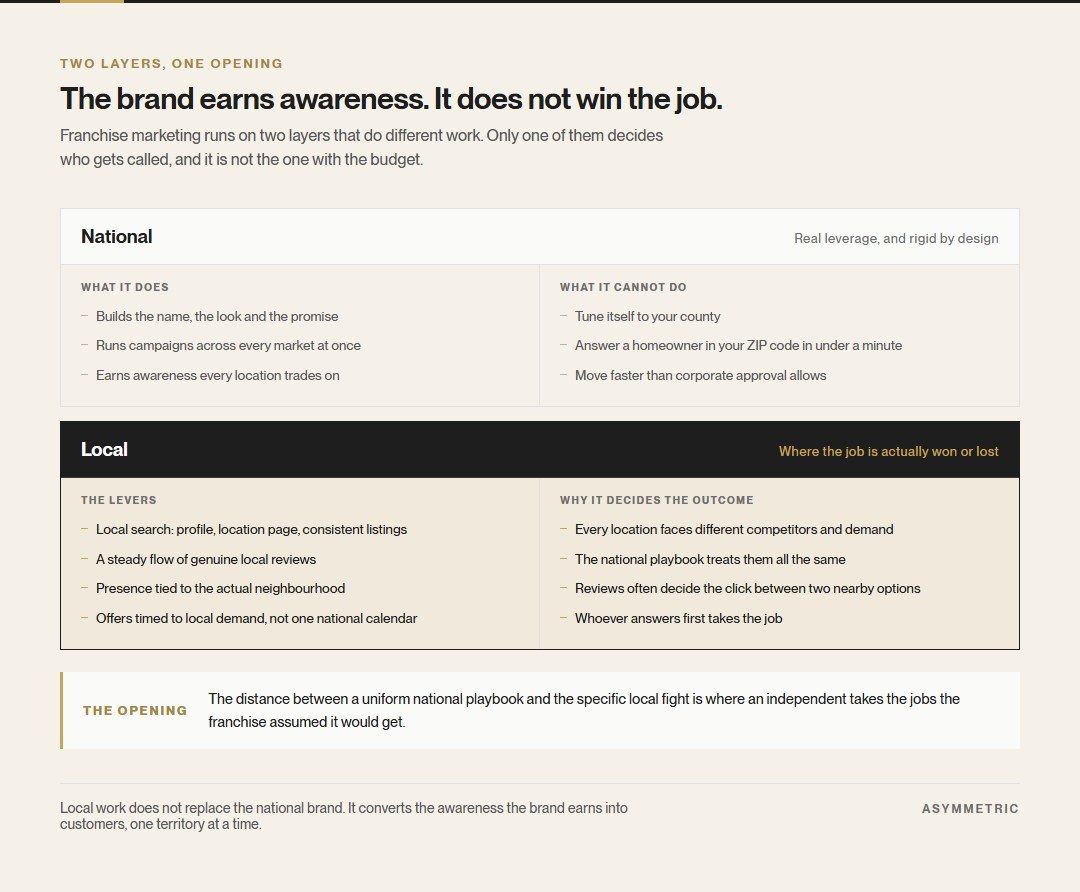
A successful franchise marketing strategy requires balancing national branding efforts with localized marketing initiatives to ensure relevance and engagement with local audiences. Managing unique information for each location and ensuring unified goals and strategies are just a few hurdles franchise marketers must overcome. The right approach can turn these challenges into growth opportunities and reinforce the brand.
What is Franchise Marketing?
Franchise marketing is a complex strategy that balances the corporate brand image with the individual franchisee’s voice. A key component of this is franchise development marketing, which focuses on generating leads and attracting new franchise partners through targeted promotional activities, success stories, and brand positioning. Maintaining a strong brand identity is essential for profitability and market relevance. Franchisors also provide marketing support to franchise partners, offering access to marketing resources, branding strategies, and promotional programs to help ensure the success of each franchise business.
Franchise marketing strategies should include both operational marketing—focused on local community engagement—and development marketing, aimed at attracting potential franchisees. This dual approach ensures that marketing efforts align with franchise business objectives, maintaining brand consistency and avoiding confusion among the audience, and reflects the core principles of franchise marketing as a discipline.
The Role of Digital Marketing in Franchise Business Growth
Digital marketing tactics are essential for boosting brand visibility, attracting new franchisees, and ensuring consistent messaging across different markets. By leveraging digital marketing strategies, franchises can connect with a broader and more diverse audience, increasing brand awareness and driving sales. Key strategies such as search engine optimization (SEO) (SEO), pay-per-click (PPC) advertising, and social media marketing are essential for reaching the target audience and staying ahead of the competition.
Digital advertising is a key component of paid marketing strategies, allowing franchises to target specific audiences through paid search and social ads. Targeted paid social/search advertising on platforms like Facebook and Instagram can direct local audiences to specific franchise locations, increasing foot traffic and conversions. Search engine optimization (SEO) helps prospective leads discover your brand through organic search engines like Google, making it essential for increasing visibility and improving local search rankings. PPC advertising allows franchises to target specific demographics precisely, ensuring their ads reach the right people at the right time. Social media marketing on platforms like Facebook and Instagram enables franchises to engage with their audience, build relationships, and foster brand loyalty.
By effectively utilizing these digital marketing strategies, franchises can enhance their online presence, engage with customers, and drive business growth. Partnering with a specialized digital marketing agency can further optimize these efforts. Digital advertising is essential for brand visibility and capturing new customers. Digital marketing helps attract new customers and retains existing ones, making it a crucial component of any successful franchise marketing strategy.
Key Benefits of Franchise Marketing
The benefits of a well-executed franchise marketing plan are manifold. Franchise success is achieved through effective franchise management, utilizing tools and strategies that help franchisees grow their businesses, boost sales, and optimize marketing efforts. It helps build strong brand equity and generates profitable results across locations. Increasing brand exposure allows franchises to reach a broader audience and boost revenue potential. Effective franchise marketing also contributes to customer retention, strengthening word-of-mouth marketing and reducing churn rates.
Effective marketing can significantly grow franchise locations, expand into new markets, and enhance brand recognition. The franchisor creates a profitable brand and supports franchisees in maintaining its reputation and profitability at the local level. For instance, email marketing is crucial for maintaining long-lasting relationships with prospects and improving customer loyalty.
Challenges in Franchise Marketing
One of the biggest challenges in franchise marketing is managing unique information for each franchise location while keeping all franchisees on the same page regarding marketing strategies. This often results in fragmented digital marketing efforts, leading to misaligned priorities and mixed brand messages. Franchise marketing also requires managing multiple locations with varied requirements, including different demographics and competition levels. Franchises also struggle with a lack of unified goals and strategies, hindering operational efficiency and overall performance.
Enhancing communication, alignment, and collaboration among all entities can help overcome these challenges. Selecting the right marketing tools is essential for managing campaigns across multiple locations and improving customer relationship management. Leveraging customer data allows franchises to personalize marketing messages and in-store experiences, which enhances engagement and loyalty. Market research and SWOT analysis can help improve franchise marketing plans, ensuring a unified approach that drives maximum conversions.
Developing a Strategic Franchise Marketing Plan
Developing a strategic franchise marketing plan is crucial for the success of any franchise business. A well-crafted plan helps align marketing efforts with the franchise’s overall goals and objectives, ensuring that all marketing activities are focused on driving business growth and supported by effective business planning principles.
A strategic franchise marketing plan should start with clearly understanding the target audience. Knowing who your customers are, what they need, and where they spend their time is essential for creating effective marketing strategies. This involves conducting thorough market research to gather insights into customer demographics, preferences, and behaviors. Incorporating data driven marketing into this process allows you to track and analyze performance metrics, using customer data and analytics to make real-time adjustments to your marketing plan for optimal results.
Next, it is important to develop a unique value proposition that sets your franchise apart from competitors. This value proposition should highlight your franchise’s unique benefits and features, clarifying why customers should choose your brand over others.
The plan should include a comprehensive marketing mix incorporating digital marketing, social media, and traditional marketing tactics. Digital marketing efforts, such as SEO and PPC, can help increase online visibility and drive traffic to your website. Social media marketing allows you to engage with your audience and build a loyal customer base. Traditional marketing tactics, such as print ads and direct mail, can complement your digital efforts and reach customers who may not be as active online.
Developing a strategic franchise marketing plan ensures all marketing efforts align and focus on achieving your business goals. This comprehensive approach will help drive growth and success for your franchise business.
Creating a Comprehensive Franchise Marketing Plan
Creating a comprehensive franchise marketing plan involves several key steps. First, it’s essential to conduct market research to understand the target audience, their needs, and preferences. This research will provide valuable insights to inform your marketing strategies and ensure they resonate with your audience, serving as the foundation for structured marketing planning.
Next, a unique value proposition should be developed to differentiate the franchise from competitors. This value proposition should communicate your franchise's unique benefits and features, clarifying why customers should choose your brand.
The plan should also include a comprehensive marketing mix that includes digital marketing, social media, and traditional marketing tactics. Digital marketing efforts, such as SEO and PPC, can help increase online visibility and drive traffic to your website. Social media marketing allows you to engage with your audience and build a loyal customer base. Traditional marketing tactics, such as print ads and direct mail, can complement your digital efforts and reach customers who may not be as active online.
Additionally, the plan should outline the franchisor and franchisees' roles and responsibilities. This ensures that all marketing efforts are aligned and effective, with clear communication and collaboration between all parties involved.
By following these steps, you can create a comprehensive franchise marketing plan that drives growth and success for your franchise business.
Essential Components of a Franchise Marketing Strategy
A successful franchise marketing strategy is built on several key components and can be strengthened by using coordinated marketing frameworks:
- Brand positioning
- Target audience identification
- Strategic messaging
- Marketing channel selection
Clear and detailed brand guidelines are essential to maintain the brand's integrity across all franchise locations, ensuring consistency in messaging, visuals, and overall brand identity. National marketing efforts provide brand recognition and credibility across multiple locations, while local marketing allows customization for individual franchisees. Maintaining consistent branding is essential for establishing customer trust and brand loyalty.
These elements are the blueprint for achieving marketing goals specific to the franchise’s growth and outreach.
The head organization is crucial in developing overarching strategies and ensuring brand compliance across all franchisees.
Identifying Your Target Audience
A deep understanding of the specific audience is fundamental to any franchise marketing strategy. Identifying potential franchisees involves considering demographics, industry experience, and a self-starter attitude. Recognizing and defining your specific audience allows for more targeted and effective marketing strategies. Understanding the needs and preferences of your specific audience enables the creation of content marketing strategies that resonate with them.
Identifying where your specific audience spends their time aids in crafting effective marketing strategies. Gathering insights from existing customers can refine the ideal buyer profile, ensuring that marketing efforts are tailored to attract the right individuals.
A franchise marketing strategy enables businesses to focus on individuals with particular interests and demographics, resulting in more effective overall marketing efforts.
Choosing the Right Marketing Channels
Franchises utilize various marketing channels to enhance brand visibility and customer engagement, including websites, social media, and direct advertising. Social media platforms like Facebook and Instagram are vital for marketing franchises, leveraging targeted advertising to reach desired demographics. Direct mail campaigns deliver personalized messages to potential franchisees, creating a memorable impact.
SEO strategies give franchises a competitive advantage by improving their visibility in search engine results. Public relations initiatives help franchises connect effectively with audiences through consistent messaging across multiple platforms.
Diversifying local marketing strategies allows franchises to engage their target audience effectively through various channels.
Crafting a Unique Franchise Story
A unique franchise story is crucial for establishing a strong brand narrative. Clearly defining your franchise brand identity, story, values, mission, and purpose is part of this process. Engaging storytelling helps convey core values and sets the brand apart from competitors, making the prospect the central character and relating their challenges.
A compelling franchise narrative should place the prospective franchisee at the forefront of the story. Defining your core offer attracts franchisees and helps tailor your narrative. Engaging content adds credibility and fosters trust among potential investors.
Digital Marketing Strategies for Franchises
Digital marketing is crucial for distinguishing franchises in a competitive landscape. Effective digital marketing strategies are essential for attracting new business and supporting new franchisees, helping to expand the brand’s reach. Leveraging data-driven growth marketing further enhances visibility and reach, which is essential for franchise growth. Local marketing is also vital, as it helps franchise brands grow by tailoring strategies to specific customer preferences in different locations, increasing revenue and engagement through effective local advertising techniques. Key digital channels for franchise marketing include optimized websites, social media, email marketing, and SEO. These channels are critical for generating sales leads and improving brand visibility.
Leveraging Social Media Platforms
Social media platforms offer opportunities to grow the business and connect with communities. A robust social media presence is vital for modern business success in franchise marketing. Creating content tailored to the local audience and individual locations is essential, as it increases relevance and engagement. Social media engagement helps current customers feel appreciated and welcomed, fostering loyalty.
Franchisors must balance protecting the brand while empowering franchisees in social media marketing. Platforms like Facebook and Instagram allow for direct engagement with local audiences and sharing of brand stories, and they fit naturally into a customer-centric Asymmetric Marketing Engine approach. Paid social media can enhance local brand awareness by reaching specific demographics based on location, age, and gender. User-generated content featuring customer experiences and actively managing online reviews help build social proof and trust. Engaging with local influencers can also effectively promote the brand within the community by encouraging their followers to make purchases.
A structured social media plan that combines organic and paid strategies is crucial, especially for new locations.
Implementing SEO for Local Businesses
Local SEO is vital for franchises as it helps improve their visibility in online search results, especially across multiple locations. Implementing local SEO for franchise locations aims to improve visibility in local search results. Optimizing a Google Business Profile allows franchises to verify their existence and gain targeted exposure.
Effective local SEO strategies can significantly boost sales revenue through improved local search visibility. Expert local SEO services support the optimization of the franchise’s local online presence, helping to improve search engine rankings.
Investing in Paid Advertising for Franchises
Investing in paid advertising, such as PPC and social media ads, is crucial to franchise marketing. It enables franchises to reach their target audience quickly and effectively, increasing brand awareness, driving website traffic, and generating leads.
PPC advertising allows franchises to target specific demographics precisely, ensuring their ads reach the right people at the right time. Paid advertising can also be tailored to reach customers in a specific location, making it possible to focus marketing efforts on individual franchise areas. Social media ads on platforms like Facebook and Instagram enable franchises to engage with their audience and build relationships. These ads can be highly targeted based on location, age, and interests, making them an effective way to reach potential customers.
However, it’s essential to ensure that paid advertising efforts are targeted and measurable, with a clear return on investment (ROI). This involves setting clear goals and objectives for your advertising campaigns, tracking key metrics, and continuously optimizing your ads to improve performance.
By investing in paid advertising, franchises can effectively reach their target audience, increase brand awareness, and drive business growth.
Utilizing Email Marketing
Email marketing strengthens relationships with existing customers and reaches prospective ones. Real-time communication and personalized campaigns effectively enhance customer relationships through email marketing. Email campaigns can be used for feedback collection, surveys, timely campaigns, and generating web traffic.
Tracking key metrics such as open and click rates is vital for measuring email performance. Tailoring emails based on customer preferences and regularly assessing campaign effectiveness can improve these metrics. Email marketing can provide a high return on investment, significantly outpacing traditional marketing methods.
Creating Consistent Marketing Materials
Consistent branding is crucial for building brand recognition and trust across all franchise locations. By following brand guidelines, using uniform logos and colors, and ensuring messaging aligns, franchise marketing campaigns become more straightforward and effective.
A centralized content portal provides franchisees with a shared library of content, helping to ensure brand consistency across every location.
Consistent brand messaging and visual identity maintain customer expectations and build loyalty.
Establishing Brand Guidelines
Brand guidelines should include logos, colors, fonts, imagery, tone, and messaging. These guidelines help maintain brand consistency and reduce deviations across franchise locations. Providing templates and examples of marketing materials is beneficial. This enables franchisees to align their local strategy with the broader franchising strategy.
Centralized marketing materials ensure uniformity in franchisee campaigns, preserving brand integrity. Clear brand guidelines in a comprehensive franchise marketing plan are essential for maintaining brand consistency.
Developing High-Quality Content
High-quality visuals combined with clear messaging effectively communicate a franchise’s values. Strong visuals combined with a clear call to action enhance the effectiveness of marketing materials.
High-quality content marketing can significantly improve customer engagement and retention rates. This includes developing compelling visuals, informative blogs, and engaging social media posts that align with the brand’s voice and values.
Local Marketing Initiatives for Franchises
Local marketing initiatives are vital for reaching potential customers. They help engage audiences within specific regions effectively by combining digital outreach with local advertising strategies for small businesses. These initiatives involve creating campaigns based on brand standards targeted to particular market segments.
Local market research is essential for creating a marketing plan tailored to local needs.
Enhancing Local SEO
Local SEO is essential for franchises to enhance visibility in specific regions and attract the right audience. Effective local SEO strategies can significantly boost sales revenue through improved local search visibility. Optimizing Google Business Profiles is essential for improving local search visibility and attracting specific customers.
Ineffective content marketing practices can lead to a decline in local search visibility. Expert SEO services support the optimization of the franchise’s local online presence, helping to improve search engine rankings.
Overall, enhancing local SEO boosts visibility in target markets and increases customer engagement and sales.
Engaging with the Community
Participating in community events and engaging with local media can promote a franchise brand effectively, much like a well-crafted local brand strategy does for regional businesses. Contacting local businesses and introducing themselves can build community relations that may lead to collaboration. Networking with larger businesses can open up catering opportunities for franchise owners. The franchise owner plays a crucial role in building these community relations, ensuring effective communication and collaboration within the franchise network.
Utilizing door hangers can help a franchise introduce itself to the community while offering discounts. Engaging with the community fosters a sense of belonging and loyalty among local customers, enhancing the franchise’s reputation and customer base.
Direct Marketing Tactics in Franchise Business
Direct marketing tactics, such as direct mail, email, and telemarketing, play a pivotal role in the franchise business. These tactics enable franchises to connect with their target audience directly, increasing brand awareness and driving sales, especially when guided by an asymmetric marketing strategy that helps smaller operators outmaneuver larger competitors.
Direct mail allows franchises to send personalized messages to potential customers, creating a tangible connection that can be more memorable than digital marketing efforts. Email marketing enables real-time customer communication, allowing for personalized and timely messages that can drive engagement and sales. Telemarketing provides a direct line of communication with potential customers, allowing for customized interactions and immediate feedback.
These direct marketing tactics are particularly effective for franchises with a local presence, as they allow for targeted and personalized communication with customers. By leveraging direct marketing tactics and adopting asymmetric marketing tactics, franchises can build strong relationships with their audience, increase brand awareness, and drive business growth.
Benefits of Direct Mail in Reaching the Target Market
Direct mail is a highly effective marketing tactic for reaching the target market. It allows for personalized and targeted communication with customers, increasing the likelihood of conversion. Direct mail also provides a tangible and physical connection with customers, making it more memorable and engaging than digital marketing.
Additionally, direct mail can be tracked and measured, providing valuable insights into the effectiveness of marketing efforts. By analyzing response rates and critical metrics, franchises can continuously optimize their direct mail campaigns to improve performance.
Direct mail is particularly effective for franchises with a local presence, as it allows for targeted communication with customers in specific regions. By leveraging direct mail, franchises can increase brand awareness, drive sales, and build strong relationships with their target audience.
Measuring Success in Franchise Marketing
Measuring franchise marketing success is essential for continuous improvement. Key performance indicators (KPIs) should align with business goals to track marketing effectiveness.
Tools for measuring digital marketing effectiveness include click-through rates, email open rates, and SEO analytics, along with broader B2B marketing KPI frameworks when franchises operate in business-to-business markets.
Tracking KPIs
Sales growth, customer engagement, brand awareness, and return on marketing investment are key franchise marketing performance indicators (KPIs). These metrics help measure success in this area. Online marketing provides valuable data analytics for tracking behaviors and preferences. Tools like CallRail can help franchisees track campaign success.
Social media KPIs provide metrics to measure the success of social media marketing efforts in franchise organizations. Monitoring these KPIs helps understand the impact of marketing strategies and adjust them for better results.
Analyzing Data for Improvement
Regularly assessing marketing metrics is crucial for understanding effectiveness and guiding improvements. Continuous analysis includes tracking performance and learning from successful and less effective initiatives.
Partnering with a growth marketing agency can improve the tracking of marketing response rates and the identification of market trends. Assessing marketing performance with data analytics can inform strategy adjustments for better returns.
Working with a Franchise Marketing Agency
A franchise marketing agency can significantly enhance marketing efforts. These agencies understand the brand, study the industry, and know the audience. Choosing partners that embody top marketing agency strategies and tailoring marketing strategies specifically for franchise businesses helps achieve marketing goals.
Selecting the Right Agency
Choosing an agency that understands the franchise’s unique needs is crucial for successful collaboration. A good account manager in a franchise marketing agency facilitates the sales process. The agency provides innovative strategies and unconventional tactics to give clients a competitive advantage.
Utilizing local keywords is essential for effectively connecting with the local customer base. Selecting an agency that emphasizes result-oriented outcomes rather than just efforts is vital.
Collaborating for Success
When entering a PR partnership, assigning a dedicated liaison to manage the relationship is crucial. Clients should treat the person leading their PR program as an internal team member for better alignment. Regular communication between clients and PR agencies is vital, especially during strategy development.
Working with a specialized agency allows tailored marketing efforts to align with franchise needs and goals. Effective collaboration with a marketing agency is critical to successfully achieving franchise marketing objectives.
Budgeting for Franchise Marketing
Wise allocation of marketing funds is crucial for the success of individual franchise locations and the overall business model. Proper budgeting ensures optimal resource utilization for maximum impact in marketing campaigns.
Setting a Marketing Budget
Setting clear goals is the first step in developing a franchise marketing budget. Two methods to outline a franchise marketing budget include driving budget by brand expansion speed or speed of expansion by the budget. Applying effective marketing budget strategies ensures that an organized budget is vital for the marketing team’s success, providing clear direction for strategies and initiatives.
Franchise marketing budgets can also be calculated based on industry averages for cost per franchise sale, typically around $10,000. Important metrics to monitor while creating a marketing budget include cost-per-lead and cost-per-sale. A franchise marketing budget should prioritize immediate and long-term branding activities.
Marketing budgets generally constitute between 2% and 10% of a company’s sales, varying by industry and size. Small businesses with annual sales under $5 million should allocate around 8% of their revenue for marketing. For additional context, recent benchmarks on marketing budget by industry show that the average allocation of total budgets to marketing has risen to 11.8%, reflecting a return to pre-pandemic spending levels.
Maximizing ROI
Developing educational blogs, webinars, infographics, and eBooks can enhance franchise marketing efforts. Content marketing educates and creates interest in products or services, leading to better ROI.
Managing online reputation is essential for attracting new customers and retaining existing ones. A solid online reputation fosters trust and credibility among prospective franchisees, making it vital to attract them. Investing in public relations is beneficial for creating a solid brand reputation. This reputation effectively attracts potential franchisees and new clients.
Summary
In summary, a successful franchise marketing strategy encompasses understanding the franchise business objectives, identifying the target audience, choosing the right marketing channels, and crafting a unique franchise story. Digital marketing strategies, including leveraging social media platforms, implementing SEO, and utilizing email marketing, are critical in enhancing visibility and engagement.
Creating consistent marketing materials, engaging in local marketing initiatives, and measuring the success of marketing efforts are equally important. Collaborating with a franchise marketing agency and setting a well-planned budget ensures that marketing efforts are optimized for maximum impact. With these insights, franchise owners and marketers can drive their franchises to new heights of success and growth.
Summary
In summary, a successful franchise marketing strategy encompasses understanding the franchise business objectives, identifying the target audience, choosing the right marketing channels, and crafting a unique franchise story. Digital marketing strategies, including leveraging social media platforms, implementing SEO, and utilizing email marketing, are critical in enhancing visibility and engagement.
Creating consistent marketing materials, engaging in local marketing initiatives, and measuring the success of marketing efforts are equally important. Collaborating with a franchise marketing agency and setting a well-planned budget ensures that marketing efforts are optimized for maximum impact. With these insights, franchise owners and marketers can drive their franchises to new heights of success and growth.
Frequently Asked Questions About Franchise Marketing
What is franchise marketing?
Franchise marketing is essential for enhancing brand visibility and generating revenue for individual franchise locations. It focuses on promoting the overarching brand to support each franchise's success.
Why is brand consistency important in franchise marketing?
Brand consistency is vital in franchise marketing. It ensures a unified brand image, which helps build consumer trust and recognition. This clarity minimizes confusion and strengthens the franchise's overall market presence.
What are some effective local marketing initiatives for franchises?
Implementing local SEO strategies and engaging with your community is critical to effective local franchising marketing initiatives. These approaches help increase visibility and foster strong customer relationships.
How can a franchise marketing agency help my business?
A franchise marketing agency can significantly enhance your business by creating customized marketing strategies tailored to the unique needs of franchise operations, ultimately helping you achieve your specific marketing goals. This targeted approach ensures effective outreach and growth for your franchise.
What should be included in a franchise marketing budget?
To ensure comprehensive planning and effectiveness, a franchise marketing budget should encompass clear goals, designated spending for various marketing channels, and allocations for immediate and long-term activities.
Ready to Elevate Your Franchise Marketing?
Implementing the right marketing strategies can transform your franchise’s growth trajectory. At Asymmetric Marketing, we specialize in helping franchises overcome marketing challenges and achieve measurable success, drawing on Mark Hope’s strategic insights across asymmetric and digital marketing.
Take action today:
- Learn more: Explore our blog for additional marketing insights and strategies.
- Get personalized advice: Schedule a free consultation to discover how we can help your franchise grow.
- Stay connected: Subscribe to our newsletter for the latest tips on franchise marketing and business growth.
Contact Us Today
Mark Hope
Partner, Asymmetric Marketing
📧 mark.hope@asymmetric.pro
📞 (608) 410-4450
About the author
Mark A. Hope is the co-founder and Partner at Asymmetric Marketing, an innovative agency dedicated to creating high-performance sales and marketing systems, campaigns, processes, and strategies tailored for small businesses. With extensive experience spanning various industries, Asymmetric Marketing excels in delivering customized solutions that drive growth and success. If you’re looking to implement the strategies discussed in this article or need expert guidance on enhancing your marketing efforts, Mark is here to help. Contact him at 608-410-4450 or via email at mark.hope@asymmetric.pro.