
Staying ahead of the curve in small business financing is crucial for entrepreneurs looking to secure the capital needed to grow and sustain their businesses. As we move into 2024, several key trends in business lending shape how small businesses approach financing. Whether you want to expand your operations, invest in new technology, or manage cash flow, understanding these trends can give you a competitive edge and drive small business growth.
1. The Rise of Fintech and Digital Lending
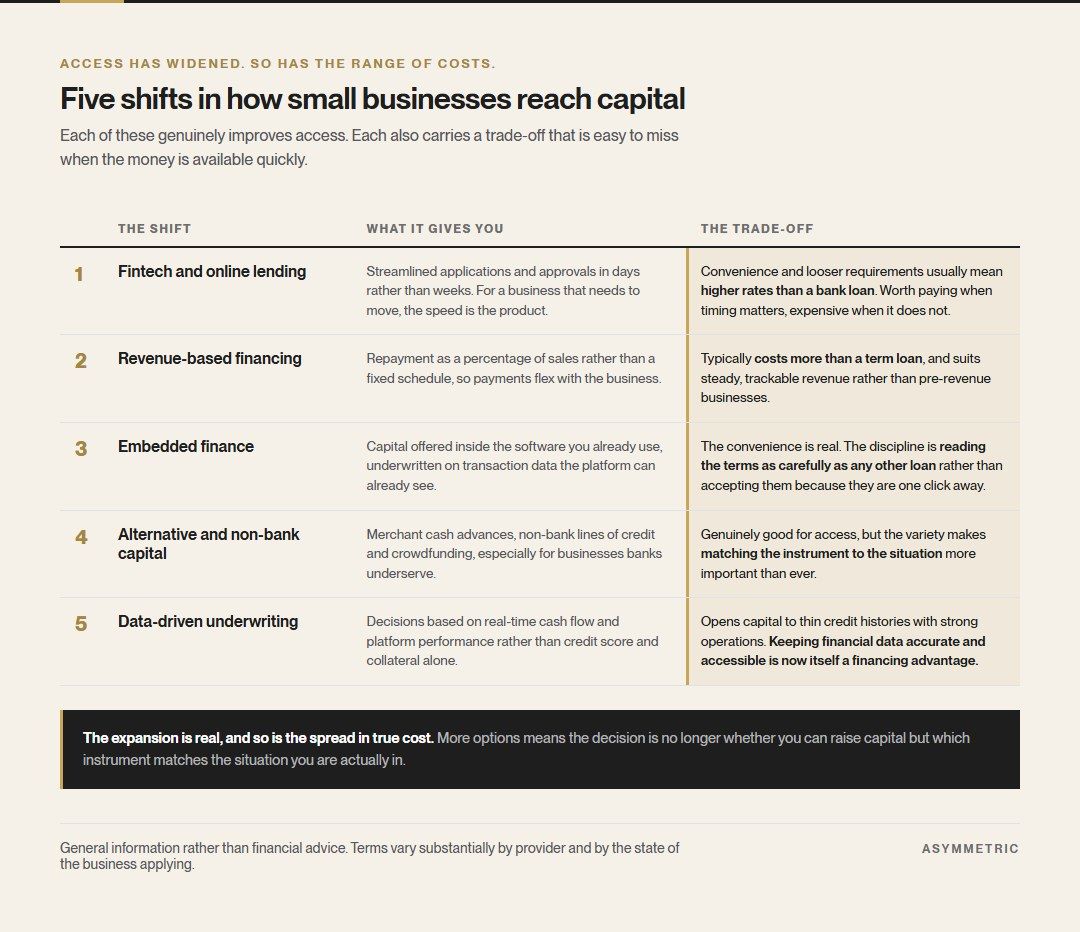
The growth of financial technology (fintech) has dramatically changed the small business financing landscape. Digital lenders are offering faster, more accessible financing options compared to traditional banks. With streamlined application processes, businesses can often receive funding within 24 hours.
Why It Matters:
- Speed and Accessibility: Fintech lenders leverage AI and big data to assess creditworthiness, often providing loans to businesses that traditional lenders may overlook. These lenders utilize advanced credit risk assessment techniques, incorporating AI and big data to evaluate borrowers’ creditworthiness comprehensively.
- Diverse Options: From short-term loans to merchant cash advances, fintech platforms now offer different lending products, including business term loans and an unsecured term loan for companies that need fast access to money.
Case Study: Consider a small retail business that needed quick capital to take advantage of a bulk purchasing opportunity. Traditional banks required extensive paperwork and weeks to process the loan. Still, a fintech lender approved the loan within hours, helping the business purchase inventory or buy equipment quickly and boost profits.
2. Crowdfunding as a Viable Funding Source
Crowdfunding has moved from a niche fundraising method to a mainstream financing option for small businesses. Platforms like Kickstarter, Indiegogo, and GoFundMe enable entrepreneurs to raise capital from a large pool of individual investors. Unlike traditional small business loans or a standard business loan, crowdfunding allows entrepreneurs to raise capital without incurring debt.
Why It Matters:
- Market Validation: Crowdfunding not only raises funds but also validates your business idea by attracting early adopters and creating a customer base.
- Equity Crowdfunding: Beyond rewards-based crowdfunding, equity crowdfunding platforms like Wefunder and SeedInvest allow businesses to offer shares to investors in exchange for capital.
Example: A startup offering eco-friendly products turned to crowdfunding to raise funds for its initial production run. By showcasing their products and values on a crowdfunding platform, they secured the necessary funding and gained valuable market insights and loyal customers.
3. Government Programs and Grants for Small Business Financing
Government support for small businesses has expanded, primarily through programs offered by the Small Business Administration (SBA) in response to economic challenges. Programs like the SBA’s 7(a) loan program, Economic Injury Disaster Loans (EIDL), and various state-level grants have become more accessible, and an sba loan can also support long term financing needs for an existing business.
Why It Matters:
- Lower Interest Rates: Government-backed loans often offer lower interest rates, favorable repayment terms, competitive loan amounts, and lower down payments, making them attractive options for small businesses.
- Targeted Support: Grants and loans are often available for specific industries or business types, such as minority-owned businesses, which can provide a crucial lifeline, and some SBA programs can help businesses refinance debt or buy equipment.
Updated Insight: The SBA has recently introduced new initiatives to support businesses transitioning to green energy or those investing in sustainability projects. These programs offer lower interest rates and longer repayment terms, making them attractive for companies looking to innovate.
4. The Importance of Maintaining Strong Financial Health
Lenders are increasingly focused on small businesses’ financial health. This trend underscores the importance of maintaining vital financial records, healthy cash flow, and a solid credit history, since lenders often look for good credit and a good credit score.
Why It Matters:
- Creditworthiness: A solid financial track record improves your chances of securing funding at favorable terms and can help you qualify for better terms. This is true for both traditional and alternative lenders. Lenders often require detailed financial statements to assess a business’s financial health and creditworthiness.
- Financial Management Tools: The rise of digital accounting platforms like QuickBooks and Xero has made it easier for small businesses to manage their finances, keep a separate business account for cleaner records, and support business credit when presenting a clear picture to potential lenders.
Expert Opinion: Financial advisor Jane Doe emphasizes, “In today’s market, businesses prioritizing financial health and transparency are more likely to secure funding. Lenders want to see that you’re profitable, financially stable, and prepared for potential challenges.”
5. Exploring Alternative Financing Options
Traditional bank loans are no longer the only option for small businesses. Various alternative financing methods have emerged, including several lending products designed for different financing needs, such as peer-to-peer lending, invoice factoring, and revenue-based financing.
Why It Matters:
- Flexibility: These alternatives often offer more flexible terms and can be easier to obtain than traditional loans, particularly for businesses with non-traditional revenue streams. Some are secured by collateral, including business assets, while others are unsecured. Credit unions also offer various loan products that are more flexible and accessible than conventional banks.
- Customization: Many alternative financing options are tailored to specific business needs, whether managing seasonal cash flow, financing a large purchase, or structuring regular payments and monthly payments based on the product.
Real-World Application: A tech startup with fluctuating cash flow turned to invoice factoring to unlock cash in unpaid invoices. This move provided the working capital to meet payroll and invest in product development without debt.
Looking Ahead: Forecasting the Future of Small Business Financing
As we look to the future, several factors will likely influence small business financing:
- Economic Conditions: Inflation rates and economic policies will significantly determine interest rates and lending conditions.
- Technological Advancements: Continued advancements in AI and machine learning will further streamline the lending process, making it more efficient and accessible.
- Sustainability Initiatives: Businesses focusing on sustainability may find new financing opportunities as governments and private investors increasingly prioritize green projects.
Economic Trends Affecting Small Businesses
Economic trends significantly impact small businesses and can either boost or hinder their growth. The economy is experiencing a period of high inflation, with an 8.5% increase in 2022, its highest level since 1982. This surge in inflation has led to increased costs for small businesses, making it challenging for them to maintain profitability. From rising raw material prices to higher wages, the cost pressures are squeezing margins and forcing business owners to rethink their pricing strategies and deepen their understanding of price elasticity and consumer response to price changes.
Additionally, the Federal Reserve’s interest rate hikes to combat inflation may lead to a recession, further affecting small businesses’ access to capital. Higher interest rates mean that borrowing costs are rising, making it more expensive for small businesses to take out loans for expansion or operational needs, and larger loan amounts may be harder to justify as rates climb. This tightening of monetary policy can also reduce consumer spending, directly impacting small businesses’ revenue streams.
Understanding these economic trends is crucial for small business owners as they navigate the complexities of maintaining profitability and securing financing in a challenging environment, especially as firms with more employees may feel these pressures more acutely when seeking expansion capital.
Challenges Faced by Small Business Owners
Small business owners face numerous challenges in the current economic climate. One of the primary concerns is managing cash flow. High demand and inflation have increased costs for goods and services, reducing profit margins. This financial strain makes it difficult for small businesses to maintain a healthy cash flow, essential for day-to-day operations, including how they pay suppliers and staff, and for long-term growth, which is why many are adopting business systems and technology to improve efficiency.
Furthermore, small businesses struggle to hire enough people and procure supplies to satisfy customer demand, including when they need to purchase inventory during disruptions. The labor market is tight, and supply chain disruptions pose significant hurdles. These issues affect the ability to meet customer expectations and put additional pressure on operational efficiency, making it more important to build an information advantage through smarter use of data.
Adding to these challenges, small business lenders’ tightening of lending standards has reduced access to capital. Traditional banks and some alternative lenders are becoming more cautious, making it harder for small businesses to secure the funds they need to grow; some owners may turn to business lines when traditional credit tightens, even those with uneven revenue. This lack of access to capital can stifle innovation and expansion, leaving many small businesses in a precarious position, underscoring the need for disciplined business planning and strategy development.
Tips for Increasing Chances of Getting Funds
Small business owners should take several proactive steps to increase their chances of getting funds. Firstly, they should understand what helps them qualify before applying and ensure their business and personal credit scores are at least 650, as this will improve their credit risk assessment. A higher credit score signals to lenders that the company is a lower risk, which can improve approval odds for business term loans and lead to more favorable loan terms, especially when supported by a clear strategic and tactical marketing plan.
Secondly, it is crucial to review financial statements and dispute any incorrect items. Accurate financial records not only provide a clear picture of the business’s financial health but also help improve the debt-to-income ratio, making the business more attractive to lenders, particularly when combined with competitive intelligence to inform financial decisions.
Thirdly, thorough research of loan options is essential. Small business owners should apply only for loans they have a good chance of getting approval. This means understanding the specific requirements of each loan, comparing whether funding is secured by assets or available without collateral, and ensuring that the business meets those criteria in light of the key trends in small business financing for 2024.
Finally, being open to different types of loans and lenders, including alternative lenders and credit unions, can be beneficial. These institutions often offer more flexible terms than traditional banks, making it easier for small businesses to secure the necessary funding. Exploring various financing options can help owners match products to their financing needs, whether they run an existing business or their own business, and get the best terms and conditions for their unique needs while aligning financing with broader growth marketing strategies for long-term success.
By understanding the economic trends affecting small businesses, being aware of the challenges small business owners face, and following these tips, small business owners can increase their chances of getting the funds they need to grow and succeed, especially when they pair sound financing decisions with an Asymmetric Marketing Engine that supports customer growth.
Potential Pitfalls and Challenges of Interest Rates
While these trends offer exciting opportunities, they also come with risks:
- Over-Reliance on Digital Lenders: FinTech offers speed and convenience, but businesses must be cautious of higher interest rates, shorter repayment terms, and fixed payments that require careful budgeting, ideally within an asymmetric marketing strategy that balances risk and growth.
- Crowdfunding Risks: Not all crowdfunding campaigns succeed; failure can impact your brand reputation, particularly if your broader asymmetric marketing approach for small businesses is not aligned with investor expectations.
- Grant and Loan Requirements: Government programs often have strict eligibility criteria and documentation requirements, and approval may be subject to revenue and credit standards, which is where partnering with a skilled digital marketing agency to support growth can help strengthen your overall business profile.
Mitigation Strategies:
- Diversify Funding Sources: Avoid over-reliance on a single source of financing by exploring a mix of traditional and alternative options.
- Maintaining a favorable debt-to-income ratio can improve your chances of effectively securing financing and managing repayment terms.
- Thorough Research: Before committing to a funding method, thoroughly research the terms and potential risks involved, and consider how experienced marketing agency strategies for business growth can complement your financing choices.
Conclusion: Navigating the Small Business Financing Landscape
Understanding and leveraging the latest financing trends is crucial for the success of the small business sector in today’s dynamic environment. You can position your business for growth and resilience by staying informed and strategically approaching funding options, while also tapping into resources like the Asymmetric Blog for ongoing marketing insights and investing in a strong web presence through professional web design.
Frequently Asked Questions (FAQ): Small Business Financing Trends
What is the most significant trend in small business financing right now?
One of the most significant trends is the growing accessibility of alternative financing options. Small businesses are no longer limited to traditional bank loans and can now choose from alternative small business loans and other flexible funding sources. Platforms offering peer-to-peer lending, crowdfunding, and fintech-based lending provide businesses with faster and more flexible ways to secure capital.
How can fintech solutions help small businesses with financing?
Fintech solutions offer streamlined applications, faster approvals, and more customized loan options. With the rise of online platforms, small business owners can compare different lending products and see which ones they may qualify for, receive funds quicker, and access non-traditional credit assessments that cater to businesses with less-than-perfect credit, which can help businesses with limited collateral access funding faster.
How are economic trends impacting small business financing?
Rising interest rates and inflation make it more challenging for small businesses to secure affordable loans. Many business owners are turning to flexible options like revenue-based financing, with some using business lines for short-term gaps while others seek long term financing for larger plans, rather than relying only on fixed-rate loans.
Is venture capital a viable option for most small businesses?
While venture capital can provide significant funding, it’s typically reserved for businesses with high growth potential, often in tech or innovation-driven industries. Alternative funding sources like an sba loan, crowdfunding, or local investment initiatives may be more attainable and practical for an existing business seeking growth capital or to refinance debt.
What should small business owners consider before choosing a financing option?
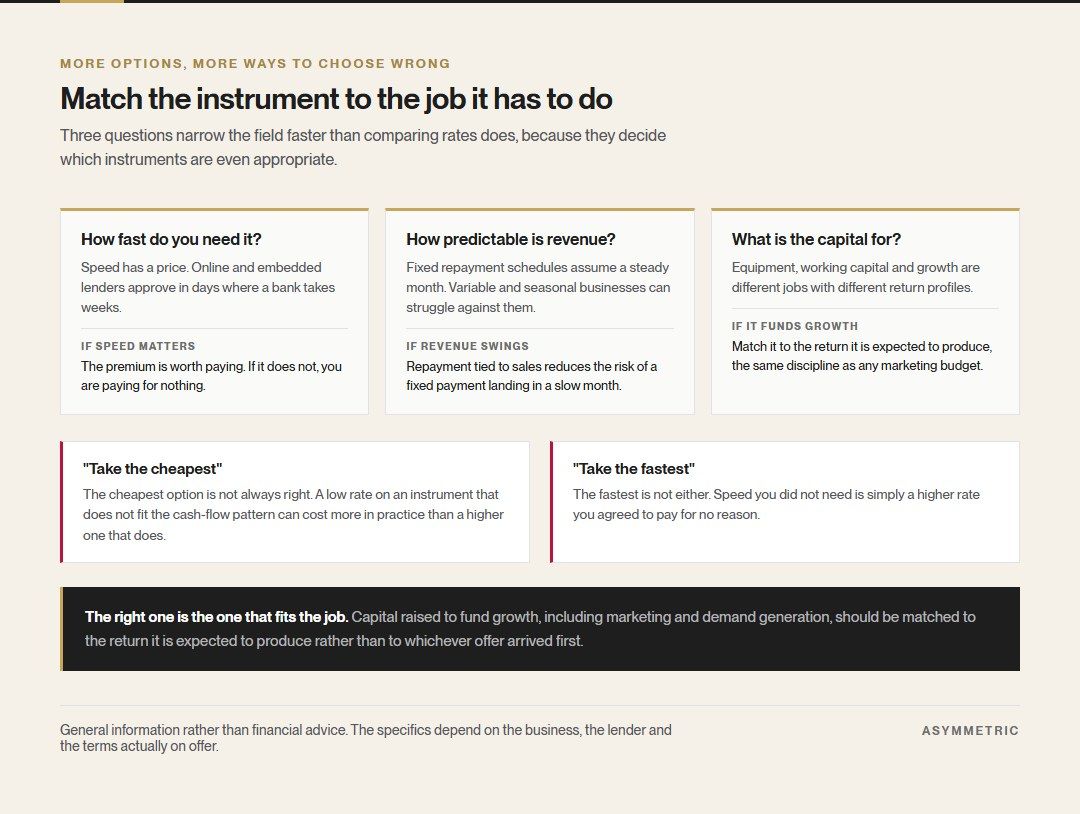
It’s essential to evaluate the cost of capital, including interest rates and fees, repayment terms, whether you can comfortably pay fixed monthly payments, and the potential impact on cash flow. Additionally, understanding the long-term implications of equity financing versus debt financing is crucial, and the right choice depends on the company’s financing needs and available resources for maintaining control and ownership of the business.
Ready to Explore Your Financing Options?
Whether you’re just starting or looking to expand, we’re here to help business owners find financing that fits their own business and supports the needs of their employees. Contact us for personalized advice or to learn how we can support your business’s financial needs.
- Contact us: Contact Form
- Schedule a complimentary consultation: Book Now
Don’t miss this opportunity to gain valuable insights and elevate your business strategy to the next level.
Mark Hope
Partner, Asymmetric Marketing
📧 mark.hope@asymmetric.pro
📞 (608) 410-4450
About the author
Mark A. Hope is the co-founder and Partner at Asymmetric Marketing, an innovative agency dedicated to creating high-performance sales and marketing systems, campaigns, processes, and strategies tailored for small businesses. With extensive experience spanning various industries, Asymmetric Marketing excels in delivering customized solutions that drive growth and success. If you’re looking to implement the strategies discussed in this article or need expert guidance on enhancing your marketing efforts, Mark is here to help. Contact him at 608-410-4450 or via email at mark.hope@asymmetric.pro.