
In today’s hyper-competitive digital economy, knowing what your competitors charge is critical to shaping your pricing strategy. Monitoring competitor pricing isn’t just about staying informed—it’s about unlocking strategic advantages that drive revenue, maximize profitability, and protect your market share.
Whether launching a new product, managing an established brand, or expanding your online presence, competitor price monitoring helps you make smart, data-driven pricing decisions. Advanced competitor price monitoring tools provide actionable insights, such as historical price charts and real-time alerts, that help optimize pricing strategies and inform business decisions. Ensuring accurate data and data accuracy is essential for reliable results, supporting data-driven insights that empower effective pricing decisions and maintain your competitive edge. This post explores tools, techniques, and benefits of monitoring competitor pricing effectively.
Introduction to Monitor Competitor Pricing
Competitor price monitoring is the ongoing process of tracking and analyzing the prices set by your competitors to gain a clear understanding of their pricing strategies and market positioning. Competitor monitoring is a broader practice that not only tracks prices but also monitors stock levels and gathers valuable market insights to inform your overall strategy. By leveraging advanced price monitoring software and tools, businesses can collect real-time data on competitors’ prices, enabling them to make informed decisions about their pricing strategy. This approach helps identify emerging market trends and ensures your business remains agile and responsive in a dynamic market environment. With effective competitor price monitoring, companies can adjust their prices proactively, optimize their pricing strategies, and stay competitive by responding quickly to changes in the market. Ultimately, integrating price monitoring into your business operations empowers you to set the correct prices, maximize profitability, and maintain a strong competitive edge.
Why Competitor Price Monitoring Matters
Your competitors constantly adjust prices based on market trends, inventory, demand, etc. If you’re not watching, you’re missing out on crucial pricing data that could impact your bottom line.
Competitor price tracking gives you:
- Competitive pricing insights for smarter pricing decisions
- The ability to track competitor pricing across competitor websites or marketplaces
- The ability to track prices efficiently and accurately using automated tools
- Dynamic pricing opportunities that adjust based on live data
- Increased pricing optimization and market responsiveness
Relying on manual work for competitor price tracking is time-consuming and prone to errors, making automation essential for accurate and efficient pricing decisions.
Competitor price monitoring becomes a key pillar of a comprehensive pricing strategy grounded in core principles like cost-plus, competitive, and value-based pricing when used effectively.
The Core Benefits of Price Monitoring
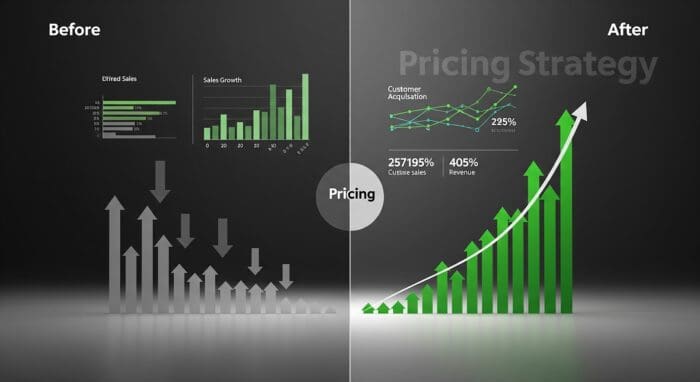
By leveraging price intelligence, businesses can adopt a strategic, data-driven approach to understanding market pricing, enabling them to make smarter and more informed pricing decisions.
1. Gain a Competitive Edge
Using competitor pricing data allows you to craft a competitive pricing strategy that balances profit margins and customer appeal. Monitoring helps you stay competitive, attract online shoppers, and protect your market positioning. By utilizing a price index, you can directly compare your prices to those of competitors and the overall market, giving you a clear understanding of your relative price position and informing your pricing strategy. Additionally, leveraging competitor pricing data can support and enhance your brand positioning in the market.
2. Maximize Profitability
Whether through daily price updates or trend forecasting, price monitoring tools reveal opportunities to raise prices when the market allows, or lower them to regain lost share. These tools help businesses achieve optimal prices by leveraging advanced algorithms and real-time data to set the most profitable and competitive pricing. Margin analysis can be used alongside price monitoring to evaluate profitability and provide strategic pricing guidance, ensuring that pricing decisions support both revenue growth and healthy margins.
3. React to Market Changes Quickly
Timely price changes and agile response to market trends can be the difference between losing and gaining customers. Change alerts from monitoring tools notify businesses of important price or market changes, enabling faster responses. Instant alerts are crucial for responding to competitor price changes in real time, ensuring your business can act immediately to maintain competitiveness. Monitoring software helps you adapt to demand, supply, and competition fluctuations.
4. Improve Data-Driven Decisions
A steady flow of quality data enables you to make smart pricing decisions based on evidence, not assumptions. Analyzing historical data can reveal competitor pricing trends and patterns, supporting more reliable and strategic pricing analysis. The more data points you collect, your pricing analysis becomes more reliable.
Understanding Competitor Pricing Strategies

Competitor pricing strategies are the various methods businesses use to set and adjust their prices in response to the actions of other players in the market. Common strategies include penetration pricing, where a company sets lower prices to quickly gain market share; skimming, which involves setting higher prices initially and lowering them over time; and competitive pricing, where prices are set based on competitors’ charges. Understanding these strategies is essential for developing your pricing strategy, allowing you to anticipate competitor moves and respond effectively. By analyzing how competitors price their products and the reasoning behind their pricing decisions, you can refine your approach, ensuring your prices are attractive to customers while supporting your business goals. Gaining insight into competitor strategies enables you to optimize your own pricing, making data-driven adjustments that improve your market positioning and profitability. Building this insight on top of a structured competitor analysis framework for business leaders helps you make smarter, data-driven decisions and maintain a strong position in the market.
The Role of Competitive Pricing and Dynamic Pricing
Competitive and dynamic pricing are two powerful approaches that are central to effective competitor price monitoring. Competitive pricing involves setting your prices directly to those of your competitors, ensuring your offerings remain attractive to customers in a crowded market. Dynamic pricing, on the other hand, takes this a step further by allowing businesses to adjust prices in real-time based on shifts in demand, inventory levels, and market trends. Both strategies require robust price monitoring tools and up-to-date pricing data. By implementing competitive and dynamic pricing, businesses can respond quickly to competitor price changes, capitalize on market opportunities, and optimize their pricing for maximum profitability. Understanding price elasticity and how customers respond to price changes is critical when setting effective pricing rules based on competitor pricing, shipping costs, stock status, and overall market data to enable automated, strategic adjustments that maintain competitiveness. Leveraging these strategies with the help of advanced price monitoring software ensures your business stays ahead of the competition and adapts seamlessly to the ever-changing market landscape.
How to Monitor Competitor Pricing Effectively

This section introduces how to monitor competitor pricing effectively. Incorporating broader competitive benchmarking against your market peers ensures your efforts go beyond prices alone. E-commerce price tracking tools can automate the process by continuously monitoring competitor prices and stock levels across various online retail platforms, enabling businesses to quickly adjust their own pricing strategies.
1. Manual Monitoring (Limited but Free)
Smaller businesses may begin with manual checks. Free tools like Google Alerts can also be used for basic competitor monitoring, though they have limitations in frequency and scope. This involves regularly visiting competitor websites, performing a simple competitor website audit to capture broader digital signals, and logging price changes. It’s labor-intensive and limited in scope, but it can temporarily work for simple product lines.
2. Use Price Monitoring Software
Modern price monitoring tool automates competitor tracking, aggregates pricing data, and delivers real-time insights. In more complex sales environments, combining these capabilities with CPQ software to configure, price, and quote accurately can create an end-to-end pricing workflow. Many platforms offer features like:
- Price trackers with customizable dashboards
- E-mail notifications for competitor price changes
- Custom reports and advanced features such as dynamic pricing
- Integration with your sales team and inventory management
Look for competitive price monitoring software that supports unlimited competitors, allows you to define rules, and provides data-driven recommendations.
Subscribing to a paid plan unlocks advanced features, customer support, and trial options to help you evaluate the software’s value for your business needs. Many price monitoring tools also offer a free tier with limited features, allowing businesses to test the service before committing.
3. Install All-in-One Monitoring Tools
All-in-one price monitoring tools combine competitor analysis, pricing optimization, and market strategy features. Many incorporate structured competitive intelligence services that turn price data into strategic insights. These tools often include:
- Pricing intelligence dashboards
- Monitoring tools that scan competitor pricing in real-time
- AI-driven pricing strategy recommendations
- Options to install software or use cloud-based dashboards
Some all-in-one monitoring tools are designed as enterprise solutions, offering advanced features and integration capabilities for large-scale operations, including the ability to support in-depth competitor site analysis across SEO, content, and engagement metrics.
If you’re unsure where to begin, platforms offering competitive price monitoring for real competitors are your best bet.
Features to Look for in Competitor Price Monitoring Tools
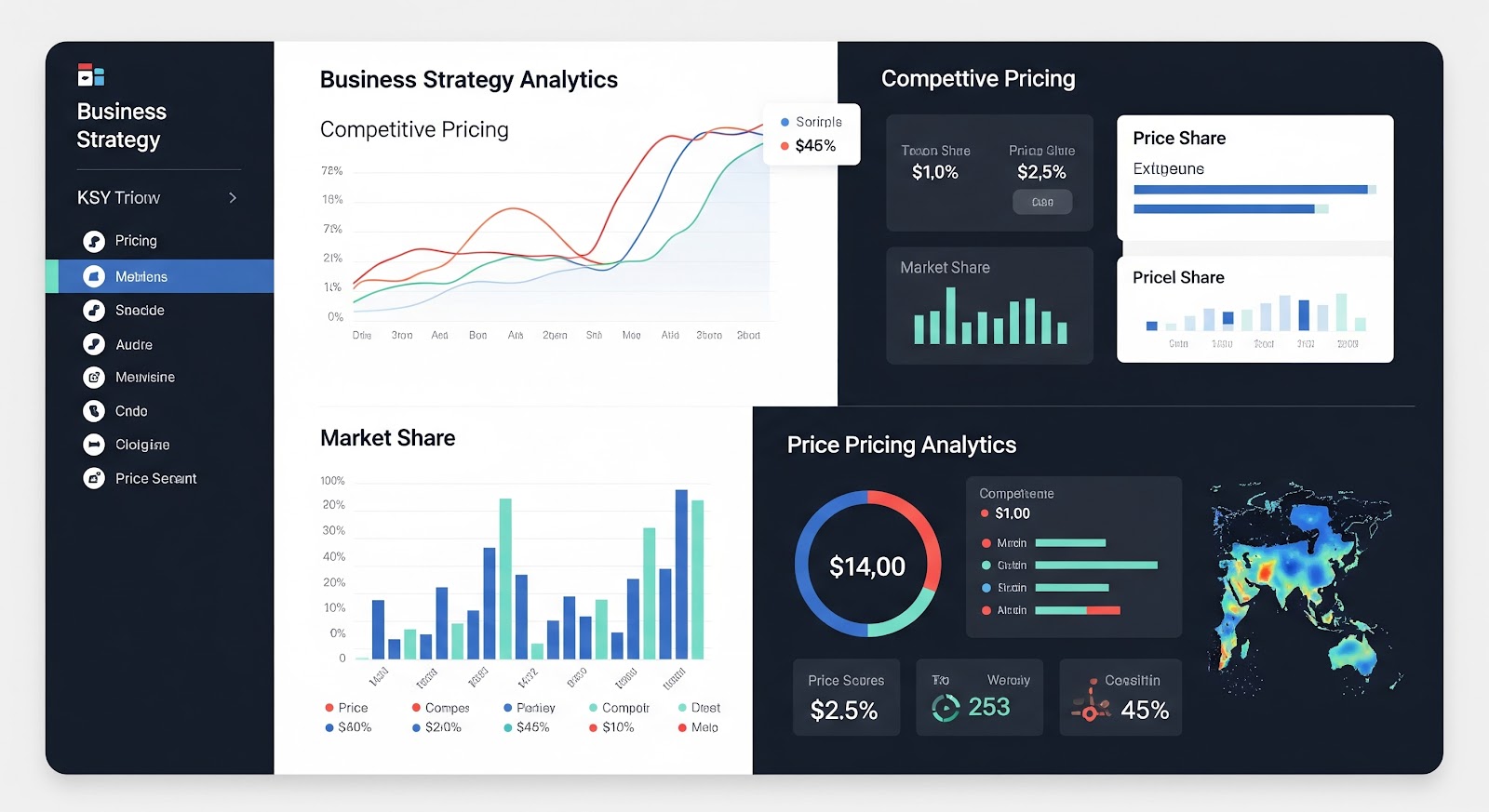
- Dynamic pricing capabilities
- Ability to track daily price updates
- Price update notifications to alert users about changes in competitor pricing
- Reports on market changes and market trends
- Integration with Google Analytics and other platforms, as well as tools that enable in-depth competitor content analysis to find content gaps
- Support for enterprise tools with high accuracy and advanced configuration options
- Ability to manage pricing across multiple channels
- Comparison of different price points for various tools and customer segments
- Inclusion of shipping costs in price comparisons
- Monitoring of competitor stock levels in real time
- Access to comprehensive vendor documentation for tool features and capabilities
- Access to free trials or scalable pricing
- A responsive support team and an experienced team to guide onboarding
Automated Matching: Streamlining Price Comparisons
Automated matching is a game-changer for businesses looking to elevate their competitor price tracking and price monitoring strategies. At its core, automated matching leverages advanced algorithms to accurately pair your products with equivalent items across multiple competitor websites. This ensures that your price comparisons are precise, up-to-date, and relevant—eliminating the guesswork and manual effort that often lead to costly errors.
By integrating automated matching into your price monitoring software, you can instantly track competitor prices, monitor stock availability, and detect price changes as soon as they happen. Combined with an information advantage built on faster insight and decision-making, this real-time access to competitor pricing data empowers your team to make smarter, faster pricing decisions and refine your competitive pricing strategy on the fly.
The efficiency of automated matching means your pricing teams spend less time on tedious data collection and more time analyzing valuable insights. Pairing these insights with a regular SWOT analysis of strengths, weaknesses, opportunities, and threats ensures pricing decisions align with broader strategic realities. With accurate, automated product matching, you can confidently adjust your prices to reflect market trends, optimize profit margins, and ensure your offerings remain attractive to price-sensitive customers. Automated matching also supports dynamic pricing by providing the reliable pricing data needed to respond to market shifts and competitor moves.
Ultimately, automated matching is essential for any business aiming to stay competitive in today’s fast-paced digital marketplace. By streamlining price comparisons and delivering actionable insights, this feature helps you maintain a competitive edge, maximize profitability, and make informed pricing decisions that drive long-term growth.
How Often Should You Monitor Prices?
The monitoring process should be tailored to your business. Because competitors change prices frequently in response to market conditions, regular monitoring is essential to stay competitive. For fast-moving products or markets, daily price tracking may be necessary. For others, weekly or monthly reports may be enough. Embedding this cadence into your broader business planning across strategic, operational, and tactical levels helps ensure pricing supports long-term goals. The key is consistency—pricing should never be “set and forget.”
You can automate this cadence using competitor price monitoring software and receive alerts for specific product categories or competitors, then fold those insights into a living marketing planning process that connects strategy and execution.
What Can You Learn from Competitor Pricing?
Beyond numbers, pricing insights help you build a richer picture of performance when combined with broader competitive benchmarking on non-pricing metrics. Pricing insights help you:
- Understand how competitors brand position their products, including analyzing other retailers in the same market
- Identify gaps in product availability or design features
- Predict how market positioning affects price elasticity and plan your marketing budget to support those pricing moves effectively
- Uncover patterns in price updates that signal major promotions or shortages, and identify new competitors entering the market.
- Analyze competitors’ product prices to identify pricing patterns and opportunities for differentiation.
Competitor Price and Market Share

The relationship between competitor price and market share is critical to any successful pricing strategy. When businesses monitor competitor prices using advanced price monitoring software, they gain valuable insights into how pricing shifts influence customer behavior and overall market share. Drawing on resources like the Asymmetric Blog’s broader library of competitive and pricing insights, companies can identify opportunities to adjust prices, attract new customers, and strengthen their competitive edge by analyzing competitor pricing data and market trends. Strategic price changes, informed by comprehensive monitoring software, can help a business capture a larger market share while maintaining healthy profit margins. Understanding and responding to competitor price movements is essential for any company to grow its market presence and achieve long-term success in a competitive environment. Monitoring competitor pricing directly supports price optimization by enabling businesses to set and adjust prices dynamically, maximizing both market share and profitability.
Why Partner with Asymmetric Applications
At Asymmetric Applications, we provide businesses with advanced tools and services to gain pricing clarity. We help you monitor the competitive landscape, gather pricing intelligence, and build a competitive pricing strategy that drives long-term growth, often in tandem with our dedicated competitive intelligence consulting services. Our solutions feature affordable pricing to ensure accessibility for businesses of all sizes, and we prioritize data accuracy in all our pricing intelligence services to deliver reliable, high-quality insights.
Our solutions include:
- Custom price monitoring software solutions
- Integration with top competitor price tracking software platforms
- Consulting on pricing optimization, market strategy, and price management for comprehensive pricing control
- Support in evaluating the best price for your unique customer base
From startups to enterprise-level brands, our all-in-one solutions help you stay a step ahead and maximize profitability through better pricing, especially when combined with our Asymmetric Marketing Engine framework for small-business growth.
Final Thoughts
Effective competitor price tracking is no longer optional—it’s essential for any business looking to stay competitive, grow revenue, and serve customers better. Whether starting with basic monitoring or implementing advanced monitoring tools, tracking competitor prices will sharpen your pricing strategy and empower your entire business. By monitoring competitor pricing, you can identify the right price for your products or services—maximizing sales, profitability, and market competitiveness through data-driven decisions.
Unlike most competitors, Asymmetric Applications is competitively priced and offers superior value.
Need help optimizing your pricing approach? Let Asymmetric Applications show you how to harness the power of competitive price monitoring and smart pricing decisions.

Frequently Asked Questions About How to Monitor Competitor Pricing (FAQs)
What is Competitor Price Monitoring?
Competitor price monitoring is a strategic process of tracking and analyzing competitors’ pricing strategies in your market. It involves systematically collecting and examining pricing data to make informed business decisions, helping companies understand market trends, adjust their pricing, and maintain competitiveness. However, while monitoring competitor pricing is valuable, businesses should be cautious not to engage in price wars—aggressive discounting that can erode profitability and lead to reactive rather than strategic pricing decisions.
Why is Competitor Price Monitoring Important for My Business?
Monitoring competitor prices is crucial because it provides real-time insights into market dynamics, helps you understand pricing strategies, and enables you to make data-driven decisions. For smaller firms, combining this with an asymmetric marketing approach that exploits speed and information advantages can level the playing field against larger rivals. Collecting and analyzing competitor data supports more informed and effective pricing strategies by giving you a comprehensive view of the market landscape and allowing you to adjust your pricing in response to competitors' moves.
It allows you to respond quickly to market changes, optimize your pricing, protect your market share, and potentially increase profitability by staying ahead of competitive trends.
How Often Should I Monitor Competitor Prices?
The frequency depends on your specific industry and product type. Fast-moving markets or products with rapid price fluctuations may require daily monitoring, while more stable markets might only need weekly or monthly tracking. The key is consistency and using automated tools to ensure you’re always informed about significant price changes.
While most price monitoring tools are user-friendly, some advanced features or integrations may require technical skills.
What Tools Can Help with Competitor Price Monitoring?
Modern businesses can use various price monitoring tools that offer features like:
- Real-time price tracking
- Customizable dashboards
- Email notifications for price changes
- Integration with sales and inventory management systems
- AI-driven pricing recommendations
- Comprehensive market trend analysis
Is Manual Price Monitoring Effective?
Manual price monitoring can work for smaller businesses with limited product lines, but it's time-consuming and prone to errors. As businesses grow, automated price monitoring software becomes essential for accurate, comprehensive, and efficient pricing intelligence.
Can Price Monitoring Help Me Improve Profitability?
Absolutely. By providing insights into market pricing, competitor strategies, and pricing trends, these tools help you:
- Identify opportunities to adjust prices
- Maximize profit margins
- Respond quickly to market changes
- Make data-driven pricing decisions
- Maintain competitive positioning
How Does Price Monitoring Impact My Overall Business Strategy?
Price monitoring is more than just tracking numbers. It provides strategic insights that can inform broader initiatives, and resources like Mark Hope’s articles on marketing strategy and competitive insight illustrate how to put these ideas into practice. It provides strategic insights that can inform:
- Product positioning
- Market expansion strategies
- Competitive differentiation
- Customer attraction and retention
- Overall business growth and market responsiveness

Ready to Master Competitor Price Monitoring?
Unlock the power of strategic pricing intelligence with Asymmetric Applications. Transform how you understand and respond to market dynamics.
Get Started Today:
📅Schedule a Consultation: Dive deep into your pricing strategy with our experts. Book Now
📚Learn More: Discover advanced pricing monitoring solutions. Explore More
Take the next step towards pricing mastery and market leadership. Let's elevate your business potential together!
Mark Hope
Partner, Asymmetric Applications
📧 mark.hope@asymmetric.pro
📞 (608) 410-4450

About the author
Mark A. Hope is the co-founder and Partner at Asymmetric Marketing, an innovative agency dedicated to creating high-performance sales and marketing systems, campaigns, processes, and strategies tailored for small businesses. With extensive experience spanning various industries, Asymmetric Marketing excels in delivering customized solutions that drive growth and success. If you’re looking to implement the strategies discussed in this article or need expert guidance on enhancing your marketing efforts, Mark is here to help. Contact him at 608-410-4450 or via email at mark.hope@asymmetric.pro.