

Years ago, I attended the Army’s Ranger School as a young soldier assigned to the 1st Battalion of the 75th Ranger Regiment. The tradition of Ranger units dates back to the French and Indian War when Major Robert Rogers organized these units and established the ‘Rules of Ranging’ as foundational guidelines for military operations.
The Ranger Department was established as a branch of the Infantry School to develop combat skills among selected officers and enlisted personnel.
The Army Rangers, formed during the American Revolution, are renowned for their elite status and rigorous training. This course is one of the toughest training environments offered by the Army. The course prepares officers and enlisted soldiers for combat arms-related functional skills.
Ranger Training
Ranger training was established in 1950 at Fort Benning, Georgia, and has changed little since then. The Ranger Training Brigade conducts the United States Army’s Ranger School and administers the satisfactory completion of the school, which is required to become qualified and wear the Ranger Tab.
Regimental headquarters are key in coordinating operations and supporting the increasing complexity of missions, especially in the Global War on Terrorism.
The Ranger Training Command has evolved over the years, with its formation, inactivation, and reorganization playing a crucial role in developing the combat skills of selected officers and enlisted men. The Ranger Department originated from the Ranger Training Command during the Korean War and is now a branch of the Infantry School.
How long is Ranger School?
The course is eight weeks and divided into three phases. It is mentally and physically grueling, causing significant mental and physical fatigue. A specific Military Occupational Specialty (MOS) is crucial for enlisted Soldiers, and candidates must meet the eligibility criteria for hiring into specialized units like the 75th Ranger Regiment.
During the Mountain Phase, students are trained and tested in various combat patrol missions in a mountainous environment, including movement to contact, ambush, raid, and river crossings, all while under significant physical and mental stress.
Historically, the graduation rate is about 50%. This is especially high given that most attendees undergo intensive preparation before arriving at the course.
Where is Ranger School located at Fort Benning?
The U.S. Army Ranger School location differs for each of the three phases—the first begins at Camp Rogers and Camp Darby at Fort Benning, Georgia. The Benning Phase includes a rigorous combat water survival assessment to ensure students can operate safely around water.
The second phase, or the “Mountain Phase,” is conducted at Camp Merrill in Dahlonega, Georgia, in the Appalachian Mountains. The third or “Swamp Phase” phase is conducted in the Florida panhandle at Eglin Air Force Base, where the follow on phases are built around extended platoon level operations, including waterborne operations and small boat movements as part of the phase’s small-unit field work.
How hard is Army Ranger School for ranger students?
Ranger School is arguably the most difficult training course the Army offers. The combination of academic stress from leadership practical tests, intense physical stress, and the grueling lack of food and sleep makes the course a “beast.”
The Ranger Assessment Phase, commonly known as ‘RAP week,’ is an essential part of the Ranger School that assesses each soldier’s physical and mental endurance. That prolonged caloric deficit commonly causes students to lose an average of 25 to 30 pounds during the course.
After completing Ranger School, students usually have very poor physical condition. The toll of Ranger School is equivalent to years of natural aging. Extreme sleep loss can cut cognitive performance by 30% to 60%, impairing attention, working memory, and logical reasoning, while undernourishment and continual strain also contribute to dehydration, trench foot, heat or cold injuries, fractures, and tissue tears.
The 75th Ranger Regiment and Ranger School
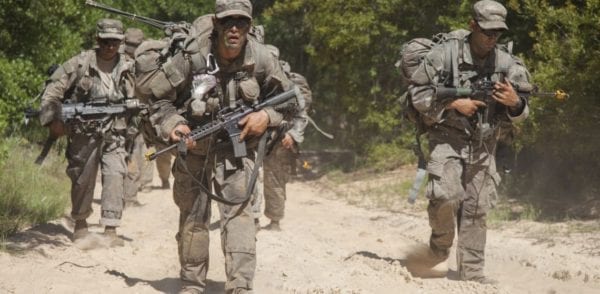
The 75th Ranger Regiment is the Army’s premier direct-action raid force, renowned for its ability to conduct complex, joint special operations missions. Ranger School, a grueling 61-day course, is a cornerstone of the regiment’s training program.
It’s designed to develop the functional skills to engage the enemy in close combat and direct-fire battles. The course is divided into three distinct phases: the Benning Phase, the Mountain Phase, and the Swamp Phase, each presenting its own unique set of challenges and obstacles.
Ranger students train to exhaustion, pushing the limits of their physical and mental endurance. The training is relentless, designed to simulate the intense conditions they will face in the field.
Each phase tests the students in different environments, from the dense forests of Fort Benning to the rugged terrain of the Appalachian Mountains and the swamps of Eglin Air Force Base, ensuring they are prepared for any situation. This rigorous training is essential for developing the skills and resilience needed to succeed in the 75th Ranger Regiment.
Stress
Stress is a feeling of emotional or physical tension. It can come from any of a variety of events or thoughts. Stress is your body’s reaction to a challenge or demand. Stress can be beneficial in small doses to avoid danger or meet a challenging deadline, especially when you’ve learned specific techniques for staying calm during difficult times.
Ranger students often train about 20 hours per day, covering long distances through harsh terrain under heavy loads with rucksacks and weapons.
The military wants people who can handle the stressful environments that are routine parts of many military assignments or deployments. Combat arms units, in particular, want troops who handle stress well and have learned to make good decisions under stressful conditions. In training, students often cope by compartmentalizing immediate problems, leaning on peer support, and strictly following small unit tactics.
During the Vietnam War, the Combat Arms Regimental System (CARS) reorganized and redesignated Ranger units, leading to the formation and consolidation of various National Guard Ranger Companies. Historically, Ranger battalions were established during World War II.
They have since played a significant role in numerous military operations, showcasing their elite status through exceptional training and key mission involvement, as reflected in my broader lessons learned from Army Ranger School.
Ranger School creates a stressful environment using three primary techniques.
- Academic Stress. The course is demanding academically. Participants are evaluated constantly while serving in positions of responsibility and authority (as patrol leaders or assistant patrol leaders) and in non-leadership roles.
- Sleep Deprivation. During patrols, Ranger School participants get very little sleep. Ranger Instructors strictly control sleep, and it is common for students to get less than three hours of sleep per day during patrols. Students often cope by grabbing micro-naps or optimizing short rest windows, but the sleep loss still drives emotional stress and cognitive decline.
- Food Deprivation. While in garrison, students are given routine meals but are forced to eat quickly and without talking. While on patrol, students are given two ready to eat meals (approximately 2,200 calories). While 2,200 calories may sound like plenty, the Army estimates that Ranger students spend between 6,500 and 9,000 calories daily (driven by exertion, stress, temperature, etc.).
Prolonged stress can sharply raise serum cortisol, suppress immune function, and over time contribute to hippocampal atrophy that harms learning and decision-making.
Constant movement under heavy load also contributes to severe sprains, strains, joint injuries, and other chronic orthopedic problems.
My Experience
When I was eighteen and had less than two years of active duty experience, I was assigned to the Ranger Force and went to Ranger School. The 1st Battalion, where I was stationed, was located at Hunter Army Airfield in Savannah, Georgia, a college town and popular vacation destination known for its ‘Beach Boys’ with toned physiques, big muscles, nice tans, and immaculate haircuts.
The 75th Ranger Regiment comprises three Ranger battalions, each with a unique operational history and role in various military engagements. I was in excellent physical condition, coming from a Ranger Battalion, but I had very little body fat and was academically unprepared.
Years later, the Ranger Regiment implemented a Pre-Ranger course to get young soldiers ready, but at the time that I went, there was no real preparation. The Regimental Special Troops Battalion (RSTB) is crucial in supporting the 75th Ranger Regiment by sustaining intelligence, reconnaissance, and maintenance missions during extended combat operations, much like how modern leaders must adapt structures and mindsets to navigate today’s BANI (Brittle, Anxious, Non-linear, Incomprehensible) environments.
I handled the sleep deprivation without too much trouble, but the lack of food kicked my butt. I thought about food all the time, and I often felt weak and had trouble focusing. Despite my lack of preparation, I was fortunate to pass all my leadership tasks, making the academic stress less of an event.
Although the Ranger School experience was tough, it improved my self-confidence, made me more resilient, and taught me much about leadership and stress management, shaping how I later used business insight to turn information into action.
Leadership and Teamwork in Ranger Training
Leadership and teamwork are the bedrock of Ranger training. Throughout the course, Ranger students learn to operate as a cohesive unit, honing their skills as they lead small units on assigned missions around the clock, in all climates and terrains. Graduation depends heavily on performance in graded leadership positions across different situations throughout the course.
The role of Ranger instructors (RIs) is pivotal in this process. These seasoned veterans provide guidance and support, teaching students the critical skills and knowledge needed to excel in Ranger School. Peer evaluations are also part of the leadership process, and falling below a 60% approval rating can be disqualifying.
The course is designed to push students to their physical and mental limits, emphasizing the importance of teamwork and leadership. Whether navigating a night raid in the mountains or coordinating a river crossing in the swamps, students must rely on each other and their training to succeed.
This intense focus on leadership and teamwork prepares them for the high-stakes missions they will undertake as part of the 75th Ranger Regiment. Students can usually absorb only one unsuccessful patrol before they are in serious jeopardy of being dropped, which makes those tactical decisions even more emotionally and psychologically stressful as they try to maintain the respect of their peers—very similar to the pressure leaders feel when developing and executing effective business plans.
Overcoming Fear and Uncertainty
Ranger training is not just about physical endurance; it’s also a mental crucible. Students often grapple with fear and uncertainty, but this is where the course’s transformative power lies.
Ranger instructors (RIs) are adept at creating a safe yet challenging learning environment, helping students confront and overcome their fears. Visualization techniques also help candidates reduce fear and anxiety by mentally rehearsing success in each phase and obstacle course. This process builds confidence and self-awareness, essential traits for any member of the 75th Ranger Regiment.
The course serves as a “laboratory” for leadership and teamwork, allowing students to experiment with different approaches in a controlled yet demanding setting as part of their continued development.
This environment fosters growth, enabling students to develop the resilience and adaptability needed to face the unpredictable challenges of combat. Overcoming fear and uncertainty in Ranger School more directly increases self-efficacy, stress-management, and psychological resilience, improving decision-making under pressure in real-world scenarios, just as disciplined marketing planning that links strategy to execution improves performance in competitive markets.
What Did I Learn About Stress?
- Stress can be a positive experience if you know you are experiencing it and have learned how to manage it. The hormonal response to stress (epinephrine, norepinephrine, and cortisol) can give you focus and energy, improving performance. Unmanaged stress can have very negative effects.
- Stress doesn't always look the same. When you encounter a person under stress, the symptoms are often very different. Some people become visibly shaken or angry, while others become quiet and withdrawn.
- Your ability to recognize and manage stress can give you a substantial competitive advantage over those who cannot, especially when you pair it with an asymmetric marketing strategy for small businesses.

The 75th Ranger Regiment and Ranger School
The 75th Ranger Regiment is the Army’s premier direct-action raid force, renowned for its ability to conduct complex, joint special operations missions. Ranger School, a grueling 61-day course, is a cornerstone of the regiment’s training program.
It’s designed to develop the functional skills to engage the enemy in close combat and direct-fire battles. The course is divided into three distinct phases: the Benning Phase, the Mountain Phase, and the Swamp Phase, each presenting its own unique set of challenges and obstacles.
Ranger students train to exhaustion, pushing the limits of their physical and mental endurance. The training is relentless, designed to simulate the intense conditions they will face in the field.
Each phase tests the students in different environments, from the dense forests of Fort Benning to the rugged terrain of the Appalachian Mountains and the swamps of Eglin Air Force Base, ensuring they are prepared for any situation. This rigorous training is essential for developing the skills and resilience needed to succeed in the 75th Ranger Regiment.
Stress
Stress is a feeling of emotional or physical tension. It can come from any of a variety of events or thoughts. Stress is your body’s reaction to a challenge or demand. Stress can be beneficial in small doses to avoid danger or meet a challenging deadline, especially when you’ve learned specific techniques for staying calm during difficult times.
Ranger students often train about 20 hours per day, covering long distances through harsh terrain under heavy loads with rucksacks and weapons.
The military wants people who can handle the stressful environments that are routine parts of many military assignments or deployments. Combat arms units, in particular, want troops who handle stress well and have learned to make good decisions under stressful conditions. In training, students often cope by compartmentalizing immediate problems, leaning on peer support, and strictly following small unit tactics.
During the Vietnam War, the Combat Arms Regimental System (CARS) reorganized and redesignated Ranger units, leading to the formation and consolidation of various National Guard Ranger Companies. Historically, Ranger battalions were established during World War II.
They have since played a significant role in numerous military operations, showcasing their elite status through exceptional training and key mission involvement, as reflected in my broader lessons learned from Army Ranger School.
Ranger School creates a stressful environment using three primary techniques.
- Academic Stress. The course is demanding academically. Participants are evaluated constantly while serving in positions of responsibility and authority (as patrol leaders or assistant patrol leaders) and in non-leadership roles.
- Sleep Deprivation. During patrols, Ranger School participants get very little sleep. Ranger Instructors strictly control sleep, and it is common for students to get less than three hours of sleep per day during patrols. Students often cope by grabbing micro-naps or optimizing short rest windows, but the sleep loss still drives emotional stress and cognitive decline.
- Food Deprivation. While in garrison, students are given routine meals but are forced to eat quickly and without talking. While on patrol, students are given two ready to eat meals (approximately 2,200 calories). While 2,200 calories may sound like plenty, the Army estimates that Ranger students spend between 6,500 and 9,000 calories daily (driven by exertion, stress, temperature, etc.).
Prolonged stress can sharply raise serum cortisol, suppress immune function, and over time contribute to hippocampal atrophy that harms learning and decision-making.
Constant movement under heavy load also contributes to severe sprains, strains, joint injuries, and other chronic orthopedic problems.
My Experience
When I was eighteen and had less than two years of active duty experience, I was assigned to the Ranger Force and went to Ranger School. The 1st Battalion, where I was stationed, was located at Hunter Army Airfield in Savannah, Georgia, a college town and popular vacation destination known for its ‘Beach Boys’ with toned physiques, big muscles, nice tans, and immaculate haircuts.
The 75th Ranger Regiment comprises three Ranger battalions, each with a unique operational history and role in various military engagements. I was in excellent physical condition, coming from a Ranger Battalion, but I had very little body fat and was academically unprepared.
Years later, the Ranger Regiment implemented a Pre-Ranger course to get young soldiers ready, but at the time that I went, there was no real preparation. The Regimental Special Troops Battalion (RSTB) is crucial in supporting the 75th Ranger Regiment by sustaining intelligence, reconnaissance, and maintenance missions during extended combat operations, much like how modern leaders must adapt structures and mindsets to navigate today’s BANI (Brittle, Anxious, Non-linear, Incomprehensible) environments.
I handled the sleep deprivation without too much trouble, but the lack of food kicked my butt. I thought about food all the time, and I often felt weak and had trouble focusing. Despite my lack of preparation, I was fortunate to pass all my leadership tasks, making the academic stress less of an event.
Although the Ranger School experience was tough, it improved my self-confidence, made me more resilient, and taught me much about leadership and stress management, shaping how I later used business insight to turn information into action.
Leadership and Teamwork in Ranger Training
Leadership and teamwork are the bedrock of Ranger training. Throughout the course, Ranger students learn to operate as a cohesive unit, honing their skills as they lead small units on assigned missions around the clock, in all climates and terrains. Graduation depends heavily on performance in graded leadership positions across different situations throughout the course.
The role of Ranger instructors (RIs) is pivotal in this process. These seasoned veterans provide guidance and support, teaching students the critical skills and knowledge needed to excel in Ranger School. Peer evaluations are also part of the leadership process, and falling below a 60% approval rating can be disqualifying.
The course is designed to push students to their physical and mental limits, emphasizing the importance of teamwork and leadership. Whether navigating a night raid in the mountains or coordinating a river crossing in the swamps, students must rely on each other and their training to succeed.
This intense focus on leadership and teamwork prepares them for the high-stakes missions they will undertake as part of the 75th Ranger Regiment. Students can usually absorb only one unsuccessful patrol before they are in serious jeopardy of being dropped, which makes those tactical decisions even more emotionally and psychologically stressful as they try to maintain the respect of their peers—very similar to the pressure leaders feel when developing and executing effective business plans.
Overcoming Fear and Uncertainty
Ranger training is not just about physical endurance; it’s also a mental crucible. Students often grapple with fear and uncertainty, but this is where the course’s transformative power lies.
Ranger instructors (RIs) are adept at creating a safe yet challenging learning environment, helping students confront and overcome their fears. Visualization techniques also help candidates reduce fear and anxiety by mentally rehearsing success in each phase and obstacle course. This process builds confidence and self-awareness, essential traits for any member of the 75th Ranger Regiment.
The course serves as a “laboratory” for leadership and teamwork, allowing students to experiment with different approaches in a controlled yet demanding setting as part of their continued development.
This environment fosters growth, enabling students to develop the resilience and adaptability needed to face the unpredictable challenges of combat. Overcoming fear and uncertainty in Ranger School more directly increases self-efficacy, stress-management, and psychological resilience, improving decision-making under pressure in real-world scenarios, just as disciplined marketing planning that links strategy to execution improves performance in competitive markets.
What Did I Learn About Stress?
- Stress can be a positive experience if you know you are experiencing it and have learned how to manage it. The hormonal response to stress (epinephrine, norepinephrine, and cortisol) can give you focus and energy, improving performance. Unmanaged stress can have very negative effects.
- Stress doesn't always look the same. When you encounter a person under stress, the symptoms are often very different. Some people become visibly shaken or angry, while others become quiet and withdrawn.
- Your ability to recognize and manage stress can give you a substantial competitive advantage over those who cannot, especially when you pair it with an asymmetric marketing strategy for small businesses.


Use These Principles in Your Business
Success isn't just about luck; it's about being prepared. Let's take your business to the next level with strategic insights and a proactive approach.
Get in Touch
📧 Email: mark.hope@asymmetric.pro
📞 Phone: (608) 410-4450
Schedule a Meeting
Click here to book a convenient time for us to discuss how we can work together to achieve your business goals.

About the author
Mark A. Hope is the co-founder and Partner at Asymmetric Marketing, an innovative agency dedicated to creating high-performance sales and marketing systems, campaigns, processes, and strategies tailored for small businesses. With extensive experience spanning various industries, Asymmetric Marketing excels in delivering customized solutions that drive growth and success. If you’re looking to implement the strategies discussed in this article or need expert guidance on enhancing your marketing efforts, Mark is here to help. Contact him at 608-410-4450 or via email at mark.hope@asymmetric.pro.