

Adopting a CRM system (Customer Relationship Management) can unlock powerful benefits for your business, from streamlined processes to stronger customer relationships and increased revenue. Over time, CRM systems have become essential business tools, offering advanced features that drive growth and improve customer engagement. A CRM initiative is a strategic, high-priority project that requires strong executive support and sponsorship from top management to ensure successful implementation and alignment with business objectives. However, a successful CRM implementation requires a clear plan, resources, and whole team alignment, like any primary business tool. Having a well-defined CRM implementation plan and CRM implementation strategy is crucial, as these guide the system design, configuration, and deployment, help avoid common pitfalls, and ensure collaboration between business and IT stakeholders. Structured CRM implementations are crucial, as careful planning and execution help ensure the deployment meets your business goals and delivers lasting value. The global CRM software market is projected to grow 12% by 2034, underscoring the increasing importance of CRM technologies in digital transformation initiatives.
Here’s your ultimate guide to the CRM implementation steps that matter most, along with expert tips to ensure a smooth and efficient rollout.
Why CRM Implementation Steps Matters

Whether upgrading from spreadsheets or replacing outdated software, a new CRM system will only succeed if it supports your business processes, empowers your sales team, and improves customer data management. It’s essential to follow a structured approach to implement a CRM system to maximize results, ensuring careful planning, strategy, and execution. However, common CRM implementation challenges—such as unclear objectives, resistance to change, and data management issues—often arise and must be addressed early to ensure success.
A successful CRM implementation plan is essential for achieving operational efficiency and measurable business results, and it should be tightly aligned with your broader business planning and strategy development. A thoughtful implementation process helps avoid common pitfalls, such as low user adoption rates, poor data migration, or disconnected workflows. Companies that properly implement a CRM experience increased customer retention, improved sales performance, and a higher return on marketing investment. Many companies, however, encounter issues like cost overruns, integration challenges, and poor user acceptance during CRM implementation. It also lays the groundwork for successful implementation, leading to long-term customer satisfaction, retention, and revenue growth.
Define Business Needs and CRM Goals
Start by clearly identifying your business needs. What do you want your CRM software to accomplish?
- Improve sales tracking and pipeline visibility
- Centralized contact management
- Enhance customer interactions across channels
- Optimize lead management and nurturing
- Support customer retention efforts
- Evaluate essential features that align with your business requirements when considering CRM options.
It is crucial to set clear business goals for your CRM initiatives that are specific, measurable, achievable, relevant, and time-bound (SMART) to guide your project and measure its success.
This vision will shape the entire CRM implementation process, from selecting the right system to training your team. Choosing CRM solutions that align with your defined goals and requirements is essential to ensuring successful adoption and measurable business benefits. Successful CRM projects require collaboration between business and IT departments to ensure alignment between business goals and system design.
Pre-Implementation Planning

Before diving into the technical aspects of CRM implementation, it’s essential to lay a firm foundation with thorough pre-implementation planning. This stage sets the tone for the entire CRM implementation process and helps ensure your new CRM system delivers real business value.
Start by clearly defining the project scope—what are the boundaries, deliverables, and success criteria for your CRM implementation project? Identify key stakeholders across your organization, including sales, marketing, customer service, and IT, to ensure all perspectives are considered. Establish a detailed CRM implementation plan that aligns your business goals with IT responsibilities, guiding system design, configuration, and deployment through collaboration between business and IT stakeholders. Set a project timeline with milestones and responsibilities, so everyone knows what to expect and when.
During this phase, closely examine your existing business processes and pinpoint areas that could benefit from improvement or automation. It’s crucial to ensure your new CRM integrates smoothly into your existing workflows to maximize efficiency and support a seamless transition. When considering integration with existing systems, prioritize CRM software with strong integration capabilities, including the ability to connect with accounting software and other essential business tools, to streamline workflows and improve overall efficiency. Evaluate your current customer relationship management (CRM) processes and look for opportunities to enhance customer interactions and boost customer satisfaction.
The CRM implementation process typically includes several main steps: strategy and needs assessment, vendor selection, customization, data migration, integration and testing, training and adoption, and go-live and optimization, all of which should be supported by disciplined marketing planning across strategic, operational, and tactical levels.
By investing time in pre-implementation planning, you set your CRM implementation up for success, ensuring your new CRM system aligns with your business goals, supports your team, and delivers a successful CRM outcome.
Assemble a Strong CRM Implementation Team
A successful CRM implementation project relies on collaboration and, in many cases, benefits from support from experienced external partners who understand top marketing agency strategies for business growth and success. Form a dedicated project team including:
- A project manager to oversee timelines and accountability
- Key stakeholders from sales, marketing, and customer support
- A sales manager will provide input on lead management and promote user adoption.
- IT or technical leads to handle integrations
- A data analyst (if available) for reporting and CRM data insights
Ensure your implementation team encourages open communication throughout the process and includes feedback from potential CRM users early on.
Selecting a CRM Implementation Partner
Choosing the right CRM implementation partner can make all the difference between a smooth, successful CRM implementation and a project that falls short of expectations. A skilled CRM implementation partner brings not only technical expertise in CRM software but also a deep understanding of your business needs and industry challenges, especially when they offer full-funnel digital marketing agency services to drive growth. Look for a partner with a proven track record in your sector, experience with your chosen CRM system, and a commitment to ongoing support throughout the CRM implementation process.
A reputable partner will take the time to understand your business goals, guide you through each phase of the implementation process, and help you navigate change management challenges. They’ll ensure your new CRM system is tailored to your unique requirements, from initial setup to user training and post-launch optimization. With the right CRM implementation partner by your side, you can confidently transition to your new CRM, knowing you have expert guidance to maximize your investment and achieve a truly successful CRM outcome.
Audit Current Business Processes
Before introducing a new system, assess your current business processes. Identify what’s working and outdated, and where technology could enhance performance. Optimizing internal processes at this stage is essential to maximize CRM effectiveness and improve overall business operations, especially when you want them to align with a proven Asymmetric Marketing Engine framework for small businesses. As part of your audit, pay special attention to tracking customer interactions to identify areas for improvement. Failing to address data silos during this process can lead to inefficiencies and hinder collaboration across departments.
This is also the time to review your existing customer data for quality, consistency, and completeness, and to prepare to migrate data by auditing, cleaning, and mapping it before beginning data migration. Proper data hygiene and migration planning ensure that your sales, marketing, and customer service teams have access to accurate, actionable insights.
Select the Right CRM Platform
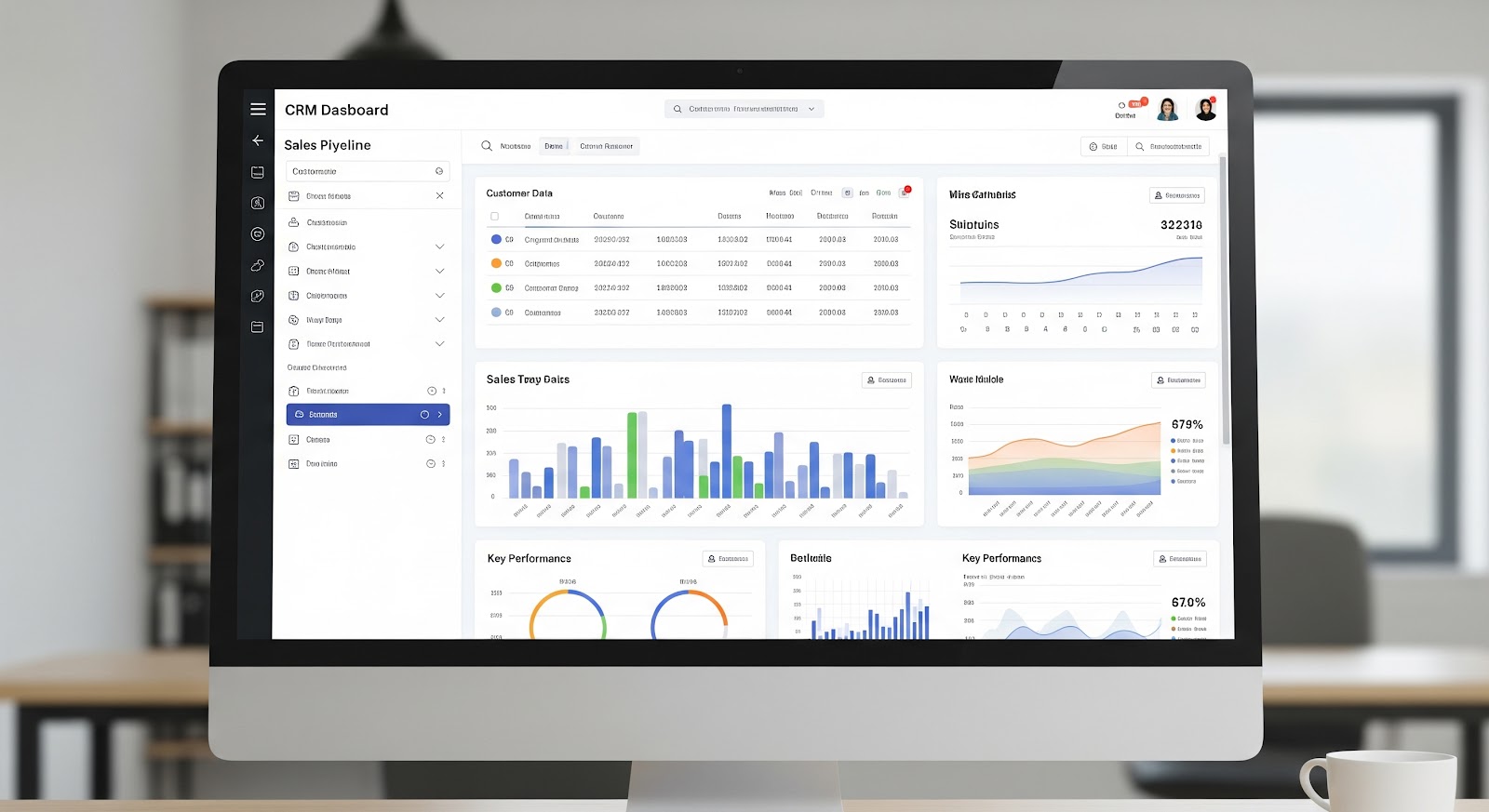
Every organization’s needs differ. Compare CRM platforms based on:
- Ease of use and user interface
- Integration capabilities with your other business tools, including the ability to connect seamlessly with legacy systems. Integrating with legacy systems can be complex and costly, so prioritize platforms that minimize these challenges.
- Robust customer relationship management CRM features
- Scalability and support for future upgrades
- Industry relevance (e.g., Salesforce CRM, HubSpot, Zoho, Pipedrive)
Choosing a CRM application that meets your business requirements natively can significantly lower the total cost of ownership over the life of the solution, and pairing it with a strong local web design and digital presence partner ensures your customer experience is consistent across every touchpoint.
Ensure the CRM solution matches your team’s day-to-day needs and long-term goals.
Customize for Your Business
Once you’ve selected your CRM provider, it’s time to configure your CRM processes. Remember, the primary goal is to enhance customer-facing processes, not just implement new technology, and your setup should support data-driven growth marketing strategies for acquisition and retention. Consider:
- Defining pipelines and sales process stages
- Setting up automation for follow-ups and reminders
- Tagging or segmenting contacts based on customer interactions
- Aligning dashboards with your implementation strategy and KPIs
To effectively implement CRM, tailor configurations and automations to your business needs. However, be cautious of overcustomization—this is a common reason CRM implementations exceed budgets and miss deadlines.
Tailoring your CRM to your business outcomes is crucial for effective adoption.
Plan and Execute Data Migration

Migrating data is one of the most critical and complex aspects of CRM implementation. Poor data migration can lead to data loss and inaccuracies if not managed properly.
One of the riskiest steps is transferring customer data into your new CRM. To avoid issues:
- Clean and deduplicate contacts
- Map fields between platforms
- Test imports before full launch
- Back up critical information
- Track any errors during the CRM journey
Accurate, organized data builds trust with your CRM users and supports more intelligent data management, enabling clearer reporting on essential B2B marketing KPIs like CAC, CLV, and MQLs.
Change Management: Guiding Your Team Through Transition
A successful CRM implementation isn’t just about technology—it’s about people. Change management is essential for helping your team embrace a new CRM system and realize its full potential for customer relationship management. Start by communicating the benefits of the new CRM clearly, showing how it will streamline daily tasks, improve customer satisfaction, and support business operations.
Invest in comprehensive user training tailored to different roles, and create open channels for feedback and questions. Address any concerns or resistance early, and highlight quick wins to build momentum for successful CRM adoption. By prioritizing change management, you’ll foster a culture of collaboration and continuous improvement, ensuring your team feels supported and confident as they transition to the new CRM system. This approach not only minimizes disruption but also drives higher user adoption and long-term customer satisfaction, especially when combined with the strategic support of a growth marketing agency focused on sustainable expansion.
Launch User Training and Support
Even the best CRM application fails without user adoption. Provide clear, role-specific training and ongoing support:
- Host hands-on workshops and offer step-by-step documentation
- Use a digital adoption platform for in-app guidance
- Collect user and customer feedback early and often during training and rollout to identify areas for improvement and enhance adoption
- Ensure training covers the software’s features, how to use them to support business processes, and how it impacts employees’ daily responsibilities and broader business objectives
- Incorporate the knowledge of frontline professionals into your system design to significantly boost enthusiasm for the solution
- Develop a step-by-step training plan that includes technical training, highlights the benefits, and demonstrates how the CRM can streamline tasks
Ongoing coaching reduces friction and builds confidence in the system, especially for sales reps, by helping them leverage automations and integrations to streamline their tasks and connect CRM usage to modern growth marketing services that drive revenue.
Implementation Testing and Quality Assurance
Once your new CRM system is configured and your data is migrated, it’s time to focus on implementation testing and quality assurance. This critical phase of the CRM implementation process ensures that your CRM system is ready for real-world use and that unexpected issues won’t disrupt your business operations.
Begin with user acceptance testing (UAT), where actual CRM users validate that the system meets their needs and supports their daily workflows. Conduct system integration testing to confirm that the new CRM works smoothly with your existing systems and business tools. Performance testing ensures the CRM can handle your company’s data volume and user activity without slowdowns or errors.
Don’t overlook data migration testing—verify that all existing customer data has been wholly and accurately transferred to the new CRM. Check for missing fields, formatting issues, or data mismatches that could impact your team’s ability to serve customers.
A comprehensive testing and quality assurance process helps you catch and resolve issues before your CRM system goes live, ensuring a smooth transition and building confidence among your CRM users.
Ensuring a Smooth Transition
Transitioning to a new CRM system is a pivotal moment for your business, and careful planning is key to a seamless experience. Begin by ensuring your customer data is accurately migrated and your CRM system is configured to reflect your specific business needs. Comprehensive user training should be provided before and after launch, empowering your team to use the new CRM effectively from day one.
Establish a clear support process to quickly resolve any issues that arise, and consider a phased rollout to minimize disruption to your business operations. This allows you to test the new CRM system with a smaller group, gather feedback, and make necessary adjustments before a full-scale launch. By taking a structured approach to CRM implementation, you’ll set the stage for improved customer relationships, increased sales, and enhanced customer satisfaction—unlocking the full value of your new CRM.
Monitor, Adjust, and Improve
After launch, the CRM implementation process is far from over. Projects fail when ongoing monitoring and adjustments are neglected, so it’s essential to track progress and make continuous improvements to ensure success:
- Monitor user adoption rates and usage patterns
- Analyze metrics like sales velocity, customer loyalty, and conversion
- Leverage data analytics to monitor CRM performance and drive continuous improvement
- Track common KPIs such as the number of qualified leads, lead conversion rate, sales revenue growth, and average case resolution time
- Revisit workflows as your team evolves
- Use feedback to make continuous improvements
A successful CRM grows and adapts with your business.
Post-Implementation Review
Once your CRM implementation is complete, it’s essential to conduct a thorough post-implementation review. This step allows you to evaluate how well your CRM system is meeting your business goals, such as enhancing customer relationship management, boosting sales, and improving customer satisfaction. Gather feedback from your team to assess user adoption and identify any challenges or opportunities for further optimization.
Review key metrics to determine the effectiveness of your CRM implementation process and the return on your CRM investment. Use these insights to refine your business processes, address any gaps, and plan for future enhancements. A comprehensive post-implementation review ensures your CRM system continues to deliver value, supports evolving business needs, and drives ongoing success.
Monitoring Business Growth
Your CRM system is a powerful tool for driving business growth—if you use it to its full potential. Regularly monitor key performance indicators (KPIs) related to your sales team, business processes, marketing automation, and customer relationships. Leverage CRM reports and analytics to gain insights into customer behavior, sales processes, and campaign effectiveness.
By tracking these metrics, you can identify trends, optimize your business processes, and make informed decisions that support your business goals. Continuous monitoring allows you to adapt your CRM strategy as your company evolves, ensuring your CRM system remains aligned with your growth objectives and delivers long-term value. With a proactive approach, your CRM will not only support your current operations but also fuel future business success.
Best Practices for CRM Implementation

Achieving a successful CRM implementation requires more than following a checklist—it’s about adopting best practices that drive real business results. Start by setting clear business objectives and ensuring your CRM implementation project is tightly aligned with these goals. A well-defined CRM implementation strategy is essential to avoid common pitfalls, mitigate risks, and ensure your rollout supports broader digital transformation goals. This ensures that your CRM system delivers measurable value to your sales teams and the wider organization.
Engage key stakeholders early and often, including sales teams, customer service representatives, and IT staff. Their input is invaluable for tailoring the CRM system to your company’s unique needs and ensuring high user adoption rates. Comprehensive user training is another cornerstone of effective CRM implementation—equip your team with the knowledge and support they need to make the most of the new system.
Sales managers can leverage CRM tools to improve sales pipeline visibility, automate lead tracking and follow-ups, and monitor performance metrics, ultimately boosting sales efficiency and close rates when combined with Asymmetric Marketing’s unconventional strategy framework.
Monitor user adoption rates and customer satisfaction metrics regularly to gauge the effectiveness of your CRM implementation. Use this data to identify areas for improvement and ensure your CRM system continues to meet evolving business needs. By following these best practices, you’ll maximize the return on your CRM investment and set your business up for long-term success, and you can stay ahead of evolving tactics by regularly exploring the Asymmetric Blog’s digital marketing resources.
Common Pitfalls to Avoid
Don’t let your CRM rollout become one of the projects that fail. Avoid these common mistakes:
- Ignoring your team’s needs and feedback
- Skipping planning or rushing through implementation steps
- Failing to document existing processes or align them with the new CRM system
- Delaying user training until after launch
- Not having a dedicated team or project owner
The CRM Journey: What Comes Next?
Implementing a new CRM system is just the beginning of your customer relationship management journey. To achieve a successful implementation, it is essential to view the journey as an ongoing evaluation, adaptation, and growth process.
After your new CRM system is live, continue to monitor its performance and gather user feedback to identify opportunities for improvement. This might mean refining business processes, updating the CRM’s configuration, or providing additional user training to boost adoption and efficiency. Your CRM system should evolve as your business grows—integrate new systems, add custom fields, or roll out new features to support changing business needs.
Leverage a digital adoption platform to help users get the most out of your CRM and to streamline onboarding for new team members. By embracing continuous improvement and staying responsive to user input, you’ll foster customer loyalty, drive revenue growth, and ensure your CRM system remains a powerful tool for your business.
A thoughtful implementation process and a commitment to ongoing optimization will help you realize the full potential of your CRM journey, delivering lasting value for your team and your customers.
Final Thoughts
A CRM implementation isn’t just a tech upgrade—it’s a strategic investment in your customer relationship management success. You can unlock new efficiencies and better serve your customers by following a detailed CRM setup checklist, assigning the right project team, and aligning your CRM to your sales process and business needs.
Need help kicking off a CRM implementation or optimizing your CRM usage? Our experts can guide you through a smooth, scalable rollout.

💡 CRM Implementation Steps FAQ: Your Top Questions Answered

Ready to Revolutionize Your Business Operations?
Transform your business with a CRM implementation that streamlines processes, empowers your team, and builds lasting customer relationships. Whether you aim to increase sales, improve data management, or boost efficiency, our expert team at Asymmetric Marketing is here to guide you.
Get Started Today:
📅 Schedule a Consultation: Explore tailored CRM implementation strategies for your business. Book Now
📚 Learn More: Discover advanced techniques for a successful CRM rollout. Explore More
Take the next step towards powerful, integrated business systems. Let's amplify your operational potential together!
Mark Hope
Partner, Asymmetric Marketing
📧 mark.hope@asymmetric.pro
📞 (608) 410-4450

About the author
Mark A. Hope is the co-founder and Partner at Asymmetric Marketing, an innovative agency dedicated to creating high-performance sales and marketing systems, campaigns, processes, and strategies tailored for small businesses. With extensive experience spanning various industries, Asymmetric Marketing excels in delivering customized solutions that drive growth and success. If you’re looking to implement the strategies discussed in this article or need expert guidance on enhancing your marketing efforts, Mark is here to help. Contact him at 608-410-4450 or via email at mark.hope@asymmetric.pro.