

As businesses face increasing pressure to deliver growth, marketing expectations for CEOs are evolving. Marketing is no longer a support function; it is now a core driver of revenue, customer experience, and brand strategy. Yet many CEOs and COOs struggle to define what marketing should actually deliver and how to hold the team accountable for performance. Most CEOs often underestimate or lack confidence in their CMOs’ strategic and leadership capabilities, leading to a disconnect between CEO expectations and marketing performance. To bridge this gap, it is essential to align marketing strategies with the CEO's vision and company goals, ensuring that marketing initiatives directly support the organization's long-term aspirations and business targets.
Here’s what leadership should expect from a modern marketing team, and how to set clear expectations to align marketing efforts with fundamental business objectives.
Introduction: The Evolving Role of Marketing in Business Leadership — and Marketing Expectations for CEOs

In today’s fast-paced business environment, marketing has transformed from a support function to a central pillar of business leadership. As companies strive to remain agile and competitive, marketing efforts are expected to directly influence business growth and revenue. CEOs and the broader C-suite look to marketing teams for creative campaigns, actionable insights, and measurable outcomes that clearly impact business performance.
Modern marketing leaders are tasked with developing strategies that align closely with overarching business objectives, ensuring that every initiative contributes to long-term success. The brand marketer plays a crucial role as a key driver of trust and differentiation within the organization, helping to shape perceptions and build lasting value. Marketing teams can optimize their approach and make data-driven decisions that fuel business growth by focusing on key performance indicators such as customer acquisition cost, lifetime value, and conversion rate. This evolution means that marketing is not just about brand awareness—it’s about driving growth, acquiring and retaining customers, and delivering real business results. Brand building, as a long-term strategic activity, is essential for enhancing trust, strengthening market positioning, and supporting sustainable growth.
Ultimately, great marketing is impactful, strategic, and outcome-oriented—demonstrating measurable results that resonate with top-tier leadership.
Understanding Corporate Strategy: The Foundation for Marketing Alignment
For marketing to truly drive business growth, it must be built on a deep understanding of the company’s corporate strategy, supported by disciplined business planning and effective strategy development. The best marketing leaders recognize that their marketing strategies are not developed in isolation—they are crafted to support the broader mission, vision, and objectives of the entire company. This alignment ensures that every marketing effort, from brand campaigns to lead generation initiatives, is directly contributing to revenue generation and long-term business outcomes.
When marketing teams are closely attuned to corporate strategy, they can design marketing initiatives that not only attract new customers but also maximize customer lifetime value and reduce customer acquisition cost. This strategic focus enables marketing to play a critical role in achieving sustainable growth, as every campaign and touchpoint is measured against its impact on the company’s business goals.
CEOs should expect their marketing organization to demonstrate a deep understanding of the company’s direction and to proactively align marketing plans with evolving business priorities. By embedding marketing within the fabric of corporate strategy, organizations can ensure that marketing activities are always driving toward measurable outcomes—whether that’s expanding market share, increasing customer lifetime, or supporting new product launches. Ultimately, this strategic alignment is what transforms marketing from a cost center into a true growth engine, delivering on CEO expectations and fueling the company’s long-term success.
Clear Business-Aligned Marketing Objectives
A high-functioning marketing team should tie its work to the company’s strategic goals through a structured marketing planning process that connects strategy and execution. This means setting measurable marketing objectives such as reducing customer acquisition costs, improving lifetime value, or accelerating revenue growth, while also defining clear marketing goals that support desired outcomes. Focusing on key areas like strategic value, improved measurement, and cross-team collaboration ensures that marketing objectives drive meaningful business impact.
Expect your team to demonstrate how their marketing strategies directly influence business performance and customer behavior, not just vanity metrics like pageviews or likes. It is crucial to align marketing strategies with company goals and current economic realities to ensure messaging and tactics are appropriate for present conditions. Tracking and analyzing relevant marketing metrics aligned with business goals is essential to measuring effectiveness and supporting growth.
Performance-Driven Metrics That Matter
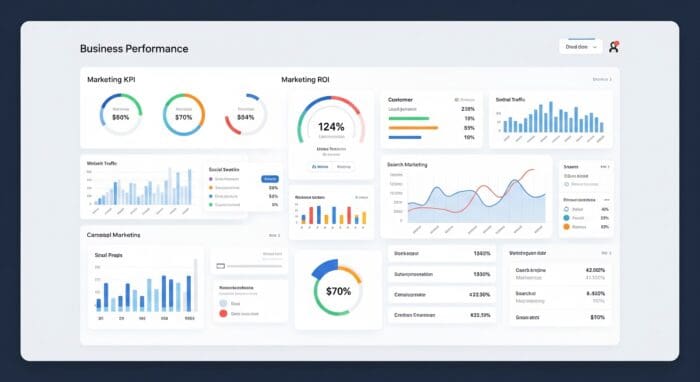
Effective marketing leaders go beyond basic reports. CEOs should expect a clear focus on key performance indicators (KPIs) like marketing qualified leads, conversion rate, and customer retention, along with tools like Google Analytics to track them. In addition to these KPIs, monitoring leading indicators is crucial for forecasting future marketing performance, as they help predict upcoming results and inform strategic planning. These analytics often focus on lead quality, engagement, and customer lifetime value to drive growth.
Marketing performance must be reported regarding business outcomes: how much pipeline is generated? How many new customers are attributed to a campaign? What’s the return on every dollar spent? A well-defined marketing plan guides the selection and reporting of these metrics to ensure alignment with business goals.
Customer Acquisition Cost and Lifetime Value: The Financial Levers of Growth
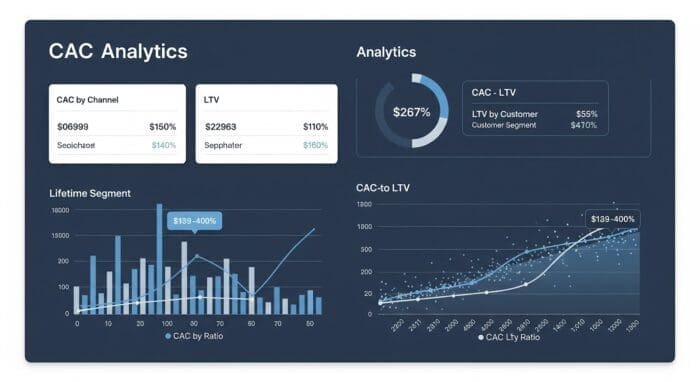
Understanding and managing customer acquisition cost (CAC) and customer lifetime value (CLV) are essential for any marketing team aiming to drive sustainable growth, and both should be central pillars of your overall marketing budget strategy. CAC measures the investment required to acquire a new customer, while CLV estimates the total revenue a customer will generate throughout their relationship with your company. These metrics are critical for marketing leaders to evaluate their marketing efforts’ effectiveness and make informed decisions about where to allocate resources. By understanding CAC and CLV, marketing teams can clearly demonstrate their financial impact and financial outcomes, showing how their strategies contribute to key business metrics in financial terms that matter to CEOs and CFOs.
By leveraging tools like Google Analytics, marketing teams can track and analyze these metrics, identifying opportunities to reduce CAC through more efficient digital marketing strategies or to increase CLV by enhancing customer retention initiatives. For example, if CAC is high, marketing may need to refine targeting, improve messaging, or optimize the marketing funnel to attract new customers cost-effectively. Conversely, focusing on increasing CLV might involve delivering exceptional customer experiences and building loyalty programs that encourage repeat business. Financial literacy is crucial for marketers, as it empowers them to communicate results in financial terms that executives value, strengthening strategic credibility and trust with leadership. Ultimately, a deep understanding of these financial levers enables marketing teams to make necessary adjustments that maximize growth and profitability.
Digital Marketing and Customer Experience Excellence
Digital marketing is now at the heart of every successful marketing strategy, enabling companies to reach and engage their target audience precisely and on scale, especially when guided by a comprehensive digital marketing approach. However, true business growth comes from more than just digital reach—it requires delivering customer experience excellence at every touchpoint. Mapping and orchestrating the customer journey is essential to improve experience and loyalty, ensuring that every interaction is aligned with business goals—an approach reflected in the Asymmetric Marketing Engine framework. Marketing teams must leverage digital channels such as social media, email, and SEO to attract new customers and create meaningful, personalized interactions that foster loyalty. For more insights into digital marketing strategies, explore expert resources and guides.
To achieve this, marketing leaders need a deep understanding of customer needs and behaviors, using data to analyze and measure success. Understanding the entire journey allows marketing teams to better meet evolving customer expectations by coordinating all touchpoints and delivering a seamless experience. Metrics like net promoter score (NPS) and customer satisfaction (CSAT) provide valuable insights into how customers perceive their experiences, allowing teams to refine their approach and deliver even greater value. By focusing on digital marketing effectiveness and customer experience, organizations can drive higher engagement, increase retention, and achieve sustained business growth.
Strategic Partnership Across the C-Suite
CEO expectations should include cross-functional collaboration, often supported by a full-service digital marketing agency partner. Marketing must operate as a strategic partner, especially to COOs and the sales team, helping to improve alignment across business strategy, operations, and execution. The marketing leader plays a critical role in driving this alignment and fostering growth across the organization by ensuring marketing strategies are closely tied to business outcomes. Ensuring that marketing and executive teams are on the same page with a shared understanding of metrics, objectives, and performance measurement is essential for consistent communication and effective decision-making.
COOs should focus on marketing funnel efficiency and how marketing supports scalable systems, leveraging data-driven growth marketing strategies to improve performance at each stage. CEOs should look for alignment between strategic initiatives and ongoing marketing plans that drive long-term success.
Centralized Marketing Intelligence and Data-Driven Decisions

In a landscape where data is abundant but actionable insights are rare, centralized marketing intelligence is a game-changer for business growth because it turns raw information into strategic business insight that informs decisions. By consolidating data from various sources—such as CRM systems, digital analytics, campaign performance, and customer data—marketing teams can gain actionable intelligence for strategic decision-making, as well as a holistic view of their customers and market dynamics. This enables marketing leaders to make data-driven decisions that optimize marketing strategies and drive measurable outcomes.
For instance, using Google Analytics to monitor website traffic and conversion rates allows companies to pinpoint which marketing activities deliver results and require necessary adjustments. By focusing on meaningful rather than vanity metrics, marketing teams can ensure their efforts align with business performance goals. This approach improves marketing effectiveness and empowers organizations to remain agile, respond quickly to market changes, and continuously drive growth.
Accountability for Business Results
Many organizations are shifting their approach to marketing accountability, focusing on data-driven results and transparency.
Gone are the days when marketing was evaluated solely on creative output; leaders now expect rigorous analysis, including competitor site analysis to benchmark performance. Today, teams must deliver measurable outcomes and be able to justify marketing budgets with data. Demonstrating the return on marketing investment is essential for leadership to understand the effectiveness and value of marketing activities.
Leadership should expect complete transparency from their marketing director or CMO: what’s working, what isn’t, and what necessary adjustments are underway. Marketers are critical in delivering these measurable outcomes and ensuring transparency. That includes tracking results against industry benchmarks, comparing spend to impact, and filtering out vanity metrics.
Strong Customer Understanding and Insights
Modern marketing starts with knowing your target audience inside and out. Assessing the current state of customer understanding and measurement is essential to identify gaps and opportunities for improvement.
From customer acquisition to customer value and experience, marketing should lead with actionable insights derived from data. Understanding how customers engage across various touchpoints is crucial for measuring marketing effectiveness and accountability. Mapping the buyer's journey helps improve communication and build trust at each stage of the decision-making process, and it should inform multichannel growth marketing services and tactics. These insights inform not just campaigns, but also product decisions, brand positioning, and sales enablement.
Agility and Adaptation to Market Change
Technological advancements, industry trends, and shifting buyer expectations impact marketing. CEOs and COOs should expect a marketing team that monitors change, learns quickly, and adapts strategy based on real-time feedback. In today's climate of economic uncertainty, the marketing landscape has been reshaped, making strategic agility and innovation more critical than ever, particularly for teams embracing Asymmetric Marketing to outmaneuver larger rivals.
Your team should test, iterate, and continuously optimize marketing activities and performance for ongoing business growth, especially by leveraging asymmetric marketing strategies for smaller competitors. Each marketing initiative should be regularly reviewed and adapted to ensure it remains effective and aligned with business objectives. Incorporating risk management into strategic planning is essential to prepare for potential disruptions and setbacks, ensuring resilience and adaptability in your marketing strategies.
Building Stakeholder Trust Through Transparency

Trust is the foundation of any successful marketing organization, especially when securing buy-in from the C-suite and other key stakeholders, and it aligns with Peter Drucker’s view that marketing and innovation are a business’s core purpose. Marketing's role as a strategic function is to drive measurable outcomes and align with CEO priorities, ensuring that marketing efforts directly support overall business growth and success. Marketing leaders must prioritize transparency by providing regular, data-driven updates on marketing performance and progress toward business outcomes. This means reporting on critical metrics such as return on investment (ROI), return on ad spend (ROAS), and customer acquisition cost (CAC), and being willing to analyze data to measure success honestly.
Marketing teams can build credibility and foster stronger relationships with stakeholders by demonstrating how marketing initiatives contribute to revenue and business growth. This transparency also enables organizations to remain agile, making informed decisions in response to shifting market dynamics and evolving customer needs. Ultimately, a transparent approach builds trust and ensures that marketing is recognized as an essential driver of long-term success and business value, reinforcing the kind of strategic mindset encouraged by the Strategy Development Conference for growth-focused leaders.
Final Thoughts: Setting the Right Expectations
The most successful organizations hold their marketing teams accountable for creative assets and delivering business value. CEOs and COOs should expect:
- A focus on actual results, not activity.
- Reporting that reflects true impact on business results.
- A team aligned with the C-suite on growth and strategy.
- A marketing team that drives outcomes across the whole funnel.
When marketing expectations for CEOs are clear and grounded in data, alignment, and accountability, your marketing team becomes an actual engine of success. How CEOs view marketing directly shapes strategic alignment and determines how marketing initiatives are framed to meet executive priorities.

Frequently Asked Questions (FAQ): Marketing Expectations for CEOs

Ready to Accelerate Your Marketing Leadership Strategies?
Transform your marketing team's performance with strategic leadership alignment, potentially supported by experienced marketing agency partners and their strategies. Whether you aim to improve marketing accountability, enhance cross-functional collaboration, or optimize business outcomes, our expert team at Asymmetric Marketing is here to guide you through executive-level marketing strategy, offering comprehensive digital marketing services for business growth and custom web design solutions that strengthen your online presence.
Get Started Today:
📅 Schedule a Consultation: Explore tailored marketing leadership strategies for your business. Book Now
📚 Learn More: Discover advanced marketing management techniques. Explore More
Take the next step towards marketing excellence and business growth. Let's amplify your leadership potential together, whether you need localized brand strategy expertise in Madison, WI or guidance in choosing among top marketing agencies in Wisconsin!
Mark Hope’s asymmetric marketing insights
Mark Hope
Partner, Asymmetric Marketing
📧 mark.hope@asymmetric.pro
📞 (608) 410-4450

About the author
Mark A. Hope is the co-founder and Partner at Asymmetric Marketing, an innovative agency dedicated to creating high-performance sales and marketing systems, campaigns, processes, and strategies tailored for small businesses. With extensive experience spanning various industries, Asymmetric Marketing excels in delivering customized solutions that drive growth and success. If you’re looking to implement the strategies discussed in this article or need expert guidance on enhancing your marketing efforts, Mark is here to help. Contact him at 608-410-4450 or via email at mark.hope@asymmetric.pro.