

Need an advertising budget example to guide your marketing efforts? An advertising budget refers to the total amount of money a business sets aside for promoting its products, services, or brand over a specific period, serving as a financial plan that guides allocation across various advertising channels to maximize brand visibility and strategic impact. This article breaks down how to allocate your budget effectively. Learn the steps and see real-world examples to maximize your marketing spend.
Key Takeaways
- An advertising budget is a specific allocation for promotional costs. It helps businesses track expenses and align marketing efforts with goals.
- Effective budget management requires regular monitoring, optimization of underperforming channels, and adaptability to market changes.
- Typical advertising spending ranges from 5% to 10% of projected revenue, but depending on industry benchmarks, it may need to increase for smaller firms.
Understanding Advertising Budgets

An advertising budget sets a defined spending limit for marketing promotions within a specific timeframe, acting as a strategic tool to manage your marketing activities. It is a subset of the marketing budget and focuses solely on paid promotional activities. This structured approach helps maintain consistency in marketing efforts, ensuring that resources are allocated effectively to achieve business goals.
Using marketing budget templates can significantly simplify creating and managing your advertising budget. These templates provide a clear breakdown of marketing costs, making tracking expenses easier and adjusting spending as needed. A comprehensive advertising budget should include agency fees, software subscriptions, and other related costs to ensure all aspects of your campaigns are covered. A free marketing budget template can also enhance your budgeting efforts.
With a practical advertising budget in place, you can more effectively assess your spending and returns, paving the way for a successful marketing strategy. Regularly reviewing your budget helps identify and eliminate excess and unnecessary costs, improving overall efficiency and return on investment.
Definition of an Advertising Budget
An ad budget is the amount allocated for promoting a business, determined based on business size, revenue, and marketing goals. It encompasses all promotional costs such as ad creation, distribution, and management. This detailed budget sets boundaries on marketing-related spending, ensuring your marketing efforts are financially sustainable. It is crucial to distinguish between the advertising budget and the overall marketing budget, which covers all marketing-related projects, including advertising.
Businesses use several common methods to determine their advertising budgets, ranging from simple percentages to goal-oriented strategies.
A marketing budget template clearly outlines costs, offering a structured method for managing campaigns and marketing budgets. This not only helps maintain financial discipline but also ensures that your marketing strategy is aligned with your business objectives.
Benefits of an Advertising Budget
Having a structured advertising budget offers numerous benefits. An effective advertising budget is a comprehensive plan that includes allocation strategies, management practices, and performance optimization to maximize marketing impact. It allows businesses to forecast their marketing expenses accurately, categorize costs, and plan ahead for marketing initiatives. Tracking marketing spend helps identify well-performing areas and those needing improvement. This ongoing assessment helps in making real-time adjustments to optimize campaign outcomes.
Moreover, an advertising budget guides marketing planning, ensuring that resources are utilized effectively. Whether you’re focusing on digital marketing or traditional media, having a clear budget helps you stay on track with your marketing goals, ultimately leading to better management of your marketing efforts.
How Much Should You Spend on Advertising?

Determining how much to spend on advertising is a common challenge for many businesses. A marketing budget based on industry standards, company size, and specific marketing channels is a common approach, but businesses should tailor their budget to their specific marketing objectives and unique needs rather than relying solely on broad benchmarks, using industry-specific marketing budget benchmarks as a guide rather than a rule. Typically, advertising budgets range from 5% to 10% of projected revenue. Startups, however, might need to allocate a higher percentage, around 15% to 30% of their projected revenue, to build brand awareness and establish a market presence. A small business with $100,000 in revenue should consider an advertising budget of around $10,000.
The appropriate budget depends on your company's growth stage—whether you are a startup in a high-growth phase (recommended 15%-30% of projected revenue), experiencing moderate growth (10%-15% of total revenue), or in a stable growth stage (2%-10% of revenue, often adjusted based on data-driven insights). The amount you spend should be aligned with your business goals and specific marketing objectives. B2B companies typically allocate 2%-5% of revenue, while B2C companies might aim for 5%-10%. Small businesses often spend roughly $1,000–$10,000 monthly on advertising, with many targeting 5%–12% of their total revenue. Factors such as industry standards, company size, and market trends significantly determine the correct budget allocation. It’s essential to base your marketing spend on a percentage of revenue to ensure sustainability and effectiveness.
Industry Benchmarks
Industry benchmarks provide valuable insights into how different businesses allocate their marketing budgets. For stable growth companies, marketing budgets typically range from 6.4% to 9.5% of revenue. Moderate growth companies, on the other hand, are advised to allocate 10% to 20% of their revenue to marketing. Small businesses with fewer than 50 employees often allocate around 16.9% of their marketing budget, while larger firms usually allocate about 14%. One common approach is competitive parity, where companies set their advertising budgets based on the spending levels of their competitors to ensure their promotional efforts remain on par. Companies operating in crowded markets may require higher advertising spending, often in the range of 10-15%, compared to those in less competitive niches.
By Spring 2024, marketing allocations averaged 10.2% of overall budgets. Digital marketing continues to receive a significant portion of these budgets, reflecting a shift from traditional methods. Despite this shift, traditional media like TV and print still hold a considerable share of the advertising budget.
Factors Influencing Ad Spend
Several key factors influence how much a business should spend on advertising, including campaign objectives, target audience, competitive landscape, and expected return on investment (ROI). Market trends, customer behavior, and the competitive landscape are significant determinants. Marketing budget allocation often hinges on business goals and industry standards. For instance, a company focusing on digital marketing strategies might allocate more of its budget to online advertising channels.
Understanding these key factors helps create a marketing budget template that aligns with your marketing strategy. Setting clear marketing priorities and staying updated on industry trends are essential for optimizing advertising efforts and ensuring effective budget allocation. By analyzing market trends and customer behavior, businesses can make informed decisions about their advertising spending, ensuring that their marketing efforts are both effective and efficient.
Adjusting Your Advertising Budget Over Time
Achieving success in advertising requires a flexible approach to budget management. Analyzing campaign performance regularly helps make informed budget adjustments. By adapting budget allocations based on performance data, businesses can ensure effective spending and maximize ROI. This adaptability is essential in an ever-changing market, where being responsive to trends can lead to sustained growth.
Using a marketing budget template can help track performance and make necessary adjustments. This approach ensures that your marketing spend is always aligned with your business objectives, allowing you to spend effectively and achieve your marketing goals.
Sample Advertising Budget Breakdown

Allocating an advertising budget effectively includes various marketing activities. To maximize ROI and reach your target audience, it's crucial to allocate your advertising budget across different advertising channels—such as digital advertising, social media marketing, content marketing, and email marketing—based on their potential ROI and relevance. This sample breakdown will explore how to distribute your marketing budget across different channels and initiatives.
Digital Advertising: 40-50%
A digital marketing budget should include specific allocations for Google Ads, search engine optimization, and social media ads or support from a full-service digital marketing agency to ensure a comprehensive approach to online outreach. Digital advertising is a crucial component of modern marketing strategies, with companies typically allocating 40-50% of their marketing budget to digital campaign planning and content creation, reflecting the increasing importance of digital channels for reaching audiences. Paid search, such as Google Ads, is recommended to receive 25–35% of the advertising budget to capture high-intent demand, while paid social, including social media ads, is suggested to receive 15–25% for targeting specific demographics and driving engagement.
This higher percentage is justified by the ability to track and measure the performance of digital campaigns in real time, allowing for quick adjustments and optimization. Businesses prioritizing digital marketing—including investments in search engine optimization—can achieve a broader reach and higher engagement levels, making it a vital part of their advertising budget.
Traditional Advertising: 20-30%
Despite the rise of digital marketing, traditional advertising remains a crucial component of a comprehensive marketing strategy. Allocating 20-30% of your advertising budget to traditional media, which includes TV, radio, print, and outdoor advertising, can help ensure a balanced approach to brand promotion.
Each type of traditional advertising serves to reach diverse target audiences, fostering brand recognition and customer loyalty. By incorporating digital and traditional advertising in your marketing plan, you can create a cohesive strategy that leverages the strengths of each channel.
Creative and Production Costs: 10-15%
Investments in creative aspects such as design and copywriting are essential for effective advertising. Usually, 10-15% of the budget goes to creative and production costs. These investments ensure that your marketing messages are compelling and resonate with your target audience.
A well-designed creative budget helps produce high-quality advertisements that capture attention and drive engagement. By prioritizing creative and production costs, businesses can enhance the overall impact of their marketing campaigns, especially when paired with a professionally designed website presence.
Public Relations and Events: 5-10%
Public relations efforts are crucial for enhancing brand reputation and are reflected in the budget allocation. Typically, 5-10% of an advertising budget is allocated for public relations and events. These efforts include media relations, press releases, and organizing events to build brand awareness and credibility.
Investing in public relations and events builds positive publicity and strong audience relationships. This allocation helps maintain a favorable brand image and drives long-term success.
Analytics and Tools: 5-10%
Investment in analytics tools and marketing technology is regarded as vital for tracking the performance of advertising campaigns. Allocating 5-10% of the advertising budget to analytics and tools ensures that businesses can monitor and measure the effectiveness of their marketing efforts. Leveraging marketing technology enables teams to address capability gaps, execute strategies more effectively, and utilize digital tools and analytics for better targeting and measurement. These tools provide real-time data and insights, enabling informed decisions and continuous optimization.
By prioritizing analytics, businesses can track their marketing spend, evaluate campaign performance, and make necessary adjustments to maximize ROI. Tracking customer acquisition cost as a key KPI is essential for measuring campaign efficiency and informing budget management decisions. For sustainable growth, it is recommended to aim for a 3:1 or better LTV:CAC ratio, ensuring that your advertising budget is utilized effectively, driving better results and growth.
Real-World Advertising Budget Examples

Examining real-world advertising budgets from well-known companies offers valuable insights into effective marketing and advertising budget planning, as this crucial financial plan guides investment decisions for promotional activities.
Let’s explore how companies like Nike, Coca-Cola, and Airbnb allocate their advertising budgets to achieve their marketing goals, prioritizing high-performing ad campaigns and optimizing the use of ad dollars to maximize ROI.
Example 1: Nike
Nike dedicates much of its budget to boosting brand awareness and direct audience engagement. The company continuously evaluates its budget to ensure alignment with changing market trends and consumer behavior. A large segment of Nike’s advertising budget is dedicated to digital marketing, reflecting the importance of online presence and engagement.
Influencer partnerships are a crucial element of Nike’s strategy. They leverage the reach and credibility of social media figures to enhance brand loyalty. This focus on digital marketing and influencer partnerships has proven effective in maintaining Nike’s position as a leader in the athletic wear market, illustrating how innovative asymmetric marketing strategies can drive long-term brand success.
Example 2: Coca-Cola
Coca-Cola allocates a significant portion of its advertising budget to global marketing efforts. The brand uses a combination of traditional media and experiential marketing strategies to enhance brand visibility. Coca-Cola’s marketing spending integrates global campaigns, traditional media, and experiential marketing, reflecting a diverse approach to advertising.
This strategy helps Coca-Cola maintain its strong market presence and connect with consumers worldwide. By balancing traditional and experiential marketing, Coca-Cola can create memorable brand experiences that foster customer loyalty.
Example 3: Airbnb
In 2023, Airbnb allocated 9.61% of its revenue to marketing, totaling an investment of $953 million—this significant increase from $786 million in 2022 highlights Airbnb’s strategic emphasis on growth through advertising. The company’s advertising expenditures increased by over 21 percent compared to the previous year.
Airbnb’s marketing investment emphasizes digital advertising and content marketing to enhance brand awareness and drive bookings. This strategy effectively maintains Airbnb’s competitive edge in the hospitality sector.
Creating Your Advertising Budget
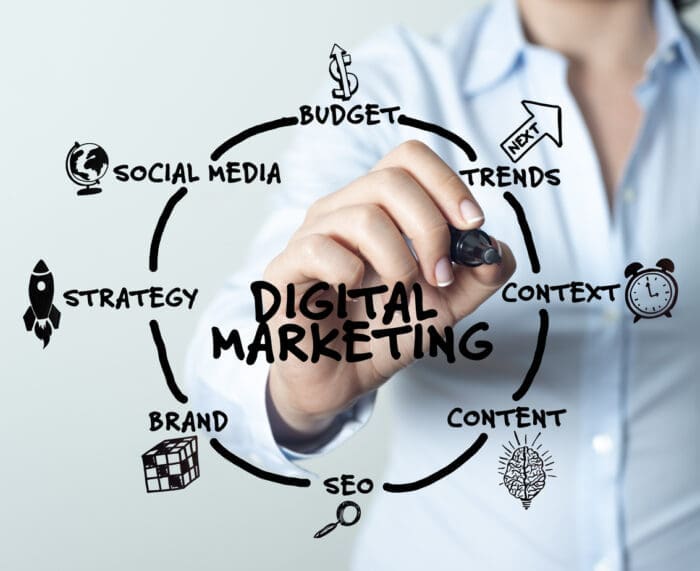
Creating your advertising budget involves a few critical steps. It's essential to map the customer journey and select the right marketing channels to ensure your budget effectively reaches and engages your audience at every stage. By following these steps, you can ensure that your marketing spend is aligned with your business goals and maximizes ROI.
Step 1: Set Clear Objectives
The first step in creating a marketing budget is to set clear objectives. Setting marketing objectives helps develop a cohesive strategy aligned with business goals. This clarity influences determining marketing methods and channels, ensuring effective budget allocation.
By defining clear objectives, businesses can prioritize their marketing initiatives and assign tasks accordingly. This approach helps in planning and achieving campaign goals.
Step 2: Research Costs
To allocate a budget effectively, it is crucial to analyze the costs associated with each marketing channel. Thorough market research clarifies marketing expenses and tracks costs accurately. This detailed budget analysis ensures that funds are allocated efficiently and that overspending is avoided.
Researching costs allows businesses to create a template outlining expenses and supporting budget adherence. This approach helps in managing marketing activities effectively.
Step 3: Allocate Funds Based on Priorities
Once you have set clear objectives and researched costs, the next step is to allocate funds based on priorities. Budget distribution should prioritize marketing methods that align with anticipated returns on investment. For instance, if digital marketing is expected to yield higher returns, a larger portion of the budget should be allocated to digital channels.
Adjusting the budget based on expected ROI ensures effective spending aligned with business goals. If the cost of a marketing strategy exceeds the budget, consider adjusting goals or exploring alternative methods to achieve similar outcomes.
Tips for Managing Your Advertising Budget Effectively
Managing your advertising budget effectively is crucial for maximizing the impact of your marketing efforts. Aligning your advertising efforts with business goals and marketing strategies is essential to optimize return on investment (ROI). Effective advertising budget management involves setting clear, data-driven goals and prioritizing high-performing channels to maximize ROI. Here are some tips to help you stay on track and spend effectively.
Monitor Performance Regularly
Regularly monitoring your advertising budget ensures alignment with overall spending plans. Month-on-month spending can help track trends and make necessary adjustments to stay within budget. Automated alerts for budget overages can assist in maintaining budget adherence and avoiding overspending.
Project management tools like ProjectManager offer real-time budget views, enhancing accountability and facilitating adjustments. Tracking ROI per channel helps you understand your spending and the returns it generates, guiding better future decisions.
Optimize Underperforming Channels
Optimizing underperforming channels is key to maximizing your advertising budget. Calculating the average cost per new lead or ad impression allows marketers to assess the efficiency of each advertising channel. Real-time data helps track costs and supports informed decisions for optimizing advertising budgets.
Ongoing assessment of advertising performance metrics ensures continuous optimization of underperforming channels. By understanding these metrics, businesses can make necessary adjustments to improve the effectiveness of their marketing campaigns.
Stay Flexible and Adaptable
Flexibility and adaptability are crucial for managing your advertising budget effectively. Regularly reviewing and adjusting your advertising budget helps address changes in marketing needs and market conditions. Utilizing performance data to inform decisions on budget reallocations ensures that funds are directed toward the most effective strategies.
A flexible budget management approach allows quick fund reallocations to respond to market trends. Establishing a routine for evaluating advertising performance can guide timely budget adjustments, ensuring sustained growth and success.
Summary
In summary, an advertising budget is critical to any successful marketing strategy. It helps businesses allocate resources effectively, forecast expenses, and track performance. Understanding your target audience and industry benchmarks is essential for effectively reaching potential customers and optimizing advertising spend. By understanding industry benchmarks, factors influencing advertising spend, and how to adjust your budget over time, you can create a budget that aligns with your business goals and maximizes ROI.
Real-world examples from companies like Nike, Coca-Cola, and Airbnb provide valuable insights into effective budget allocation strategies. Setting clear marketing priorities ensures the most effective use of your advertising budget. By following the steps outlined in this guide and implementing the tips for managing your budget effectively, you can ensure that your marketing efforts are efficient and impactful.

Frequently Asked Questions About Advertising Budgets
How much should I allocate to my advertising budget?
To allocate your advertising budget effectively, aim for 5% to 10% of projected revenue; however, if you're a startup, consider increasing that allocation to 15% to 30% to enhance brand visibility.
What are the benefits of having a structured advertising budget?
Having a structured advertising budget enables effective resource allocation and forecasting of marketing expenses, improves performance tracking, and facilitates real-time adjustments. This ultimately leads to more strategic and successful advertising campaigns.
How do industry benchmarks influence advertising budgets?
Industry benchmarks significantly influence advertising budgets by offering insights into how similar businesses allocate their resources. This enables companies to set realistic and competitive budgeting goals and ensures effective allocation based on company size, growth rate, and industry standards.
What factors should I consider when allocating my advertising budget?
When allocating your advertising budget, prioritize market trends, customer behavior, the competitive landscape, and your specific business goals. These considerations will help ensure your spending is both practical and strategic.
How can I adjust my advertising budget over time?
Adjust your advertising budget over time by regularly analyzing campaign performance and reallocating funds based on the data. This approach enhances effectiveness and maximizes your return on investment.

Ready to Optimize Your Advertising Budget?
Explore more insightful articles on optimizing your advertising budgets and strategies:
- Mastering Advertising Budgets: Discover how to set, monitor, and optimize your advertising spend.
- Effective Advertising Campaigns: Learn strategies to maximize ROI and drive growth through targeted campaigns.
Contact Us: Reach out to discuss personalized strategies for your business.
Schedule a Consultation: Book your complimentary consultation here and gain expert insights tailored to your goals.

About the author
Mark A. Hope is the co-founder and Partner at Asymmetric Marketing, an innovative agency dedicated to creating high-performance sales and marketing systems, campaigns, processes, and strategies tailored for small businesses. With extensive experience spanning various industries, Asymmetric Marketing excels in delivering customized solutions that drive growth and success. If you’re looking to implement the strategies discussed in this article or need expert guidance on enhancing your marketing efforts, Mark is here to help. Contact him at 608-410-4450 or via email at mark.hope@asymmetric.pro.