

Content is essential in digital marketing. It engages audiences, boosts SEO, and drives conversions. This article explores why content matters, the types you should use, effective strategies, and examples of success.
Key Takeaways
- Content marketing is cost-effective, with 62% cheaper to launch and maintain campaigns, leading many businesses to outsource 48% of their content efforts.
- A successful content marketing strategy increases lead generation and conversions, making it crucial for businesses to allocate over 10% of their marketing budget to content creation.
- Prioritizing SEO, diverse content formats, and personalization—while utilizing emerging technologies like AI—can significantly enhance content marketing effectiveness and help drive traffic to your website or platform.
The Definitive Guide to Content in Digital Marketing

Digital content—including articles, videos, social media posts, and more—serves as the strategic foundation of digital marketing, building trust and engagement with consumers.
Content marketing is cost-effective and a cornerstone of modern marketing strategies. Content marketing campaigns are 62% less expensive to launch and maintain than other campaign types. This affordability has led many businesses to outsource 48% of their content marketing efforts to third-party agencies.
Investing in content creation is essential for businesses, with most companies allocating over 10% of their marketing budget to this area. Moreover, 51% of content interactions originate from organic search, emphasizing the importance of SEO in content marketing. Optimized content drives traffic through SEO, making it easier for customers to discover a brand.
Focusing on owned media, topic clusters, and pillar content built on original research will be critical to a successful content marketing strategy as we move forward. A clear value proposition is also essential, as it communicates your brand's unique benefits and differentiates you from competitors.
Introduction
Content marketing is about delivering valuable and relevant content to engage a clearly defined audience and drive profitable customer actions. According to the Content Marketing Institute, content marketing is a strategic approach that uses educational, engaging, or inspiring content to attract and retain an audience, focusing on delivering value before asking for a sale. A well-documented content strategy integrates content into all marketing channels, including email, social media, SEO, and PPC.
Quality content enhances marketing efforts and boosts customer loyalty and sales.
Understanding Content in Digital Marketing
Content marketing campaigns are a vital part of a digital marketing strategy, serving as a core component that integrates with broader business goals. These campaigns are significantly less expensive to maintain than other campaigns. Businesses typically invest between $550 and $2,000 per piece of content, highlighting the importance of allocating a substantial portion of the marketing budget to content creation. With 48% of content marketing efforts outsourced to third-party agencies, it’s clear that many businesses recognize the value of professional content creation.
Digital marketing encompasses a wide range of online tactics, including websites, social media, and email, while content marketing is a subset focused specifically on creating and distributing valuable content to attract and engage an audience. Content marketing utilizes digital channels to distribute content, but it can also include traditional formats like print materials used in trade shows. Mapping content to specific stages of the sales funnel and customer journey ensures relevance and effectiveness, engaging prospects early and guiding them toward conversion.
In the digital marketing landscape, 51% of content interactions come from organic search, underscoring the critical role of SEO in ensuring content visibility. Moreover, video content demand is expected to rise, with platforms increasingly encouraging longer video formats to engage audiences more deeply. These trends indicate a return to content marketing basics, focusing on owned media, topic clusters, and original research.
Ultimately, understanding the importance of content in digital marketing involves recognizing its cost-effectiveness, the significant role of organic search, and the growing demand for video content. By aligning your efforts with SEO lead generation strategies, a well-executed content strategy can enhance brand awareness and engage potential customers more effectively.
Importance of a Content Marketing Strategy

A well-executed content marketing strategy is essential for achieving business goals in digital marketing. Businesses that utilize content marketing experience six times more conversions than those that do not. Additionally, 74% of companies report that content marketing effectively increases lead generation. Having a structured content marketing plan—including clear goals, KPIs, and storytelling elements—is crucial for executing successful campaigns and measuring their impact, and aligns closely with the principles of strategic, operational, and tactical marketing planning.
Content marketing yields 54% more leads than traditional marketing methods, making it a powerful tool for businesses looking to expand their customer base. In 2024, 24% of firms aim to increase revenue and sales through content marketing, highlighting its importance in driving business growth and reinforcing the need for solid business planning and strategy development. A key goal of content marketing is to increase brand awareness by focusing on relevant topics and understanding the target audience. Identifying customer needs, creating valuable content, and distributing it effectively are vital components of a successful content marketing strategy.
In conclusion, to create an effective content marketing strategy, brands need to define their audience, map content to the sales funnel, choose the right content approach, set clear goals and KPIs, and plan their distribution. Content marketing is a compelling long-term strategy that enhances brand awareness, engages potential customers, and drives profitable actions. Businesses integrating content into their marketing strategies are better positioned to achieve their goals and stay competitive in the digital landscape.
Types of Content in Digital Marketing
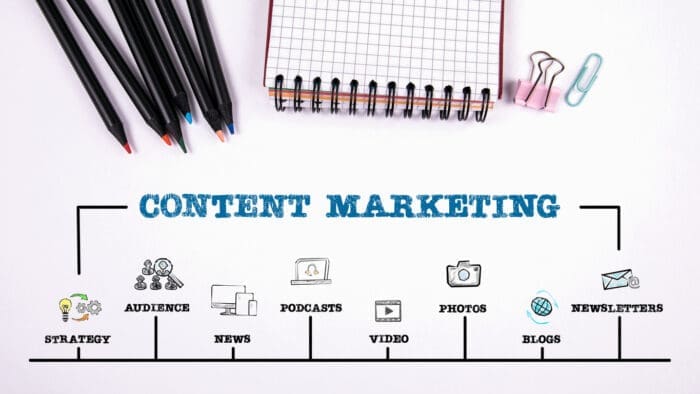
Content marketing leverages a diverse array of digital content formats, including articles, videos, ebooks, podcasts, social media posts, and infographics. These digital assets—such as blog posts, videos, briefs, and ebooks—play a crucial role in engaging audiences and supporting SEO strategies. When mapped to a customer-centric framework like the Asymmetric Marketing Engine, interactive content, like quizzes and calculators, increases user engagement and delivers personalized experiences. Graphic design is essential for creating visually appealing and engaging digital assets that enhance brand storytelling and audience connection across platforms. Tailored content helps a brand stand out by offering unique value and insights.
Different content formats are utilized in the marketing funnel to address each phase of a customer’s research process, making it essential to choose the right type of content to connect with your audience and fulfill your business strategy.
Blog Posts
Blog posts are a cornerstone of content marketing, generating organic traffic, improving SEO, and establishing authority. They are particularly effective for answering questions, sharing expert views, reflecting brand values, and building trust with the audience. Moreover, blog posts are affordable, search engine-friendly, and easier to create than multimedia content, providing a higher return on investment over time due to their repurposing ability.
SEO helps blog posts rank for keywords that potential customers search engines for. Enhanced search engine visibility allows blog posts to engage potential customers and guide them through the buyer journey by providing actionable and valuable content.
Additionally, blog posts can be repurposed into new content formats, such as infographics and videos, extending their reach and impact.
Video Content
Video marketing is increasingly important as it effectively conveys complex messages and engages audiences visually and audibly. With 91% of businesses using video as a marketing tool, it has become a staple in content marketing strategies. Video content engages visitors, improves lead generation, and reduces abandonment, making building trust with the audience through visual and auditory presence easier.
Video content is versatile, ranging from short how-to hacks on TikTok to longer instructional videos on YouTube. Different video formats appeal to varied audiences, and successful brands like Credo Beauty and Ocho use tutorials and complete video courses to provide comprehensive insights on topics.
The secret to successful video content is making videos accessible to everyone, ensuring they can reach a broad audience.
Social Media Posts
Maintaining a strong social media presence is essential for sharing content and engaging your target audience, as it serves as a key channel for building relationships and supporting your overall content marketing strategy. Social media marketing is a powerful distribution tool, with 93% of marketers using it to share content and engage with their audience. Content marketing enhances brand visibility by delivering useful information where the audience is already spending time, inviting engagement rather than interrupting with traditional advertising methods. Social media platforms facilitate direct audience interaction, enhancing brand visibility and community engagement. Brands can quickly develop relationships with their audience, helping content go viral and driving significant engagement.
Popular social media platforms for content marketing include Facebook, Instagram, TikTok, LinkedIn, Twitter, and Pinterest. YouTube, with over 2.5 billion users, and Facebook, with over 2.9 billion monthly active users, are particularly effective for reaching a broad audience and increasing brand visibility.
Infographics
Infographics are valuable for transforming complex data into visually appealing formats that enhance understanding and shareability. They share information digestibly, making it easier for audiences to grasp complex concepts quickly. Tools like Adobe Express can help create quality infographics, typically costing between $100 and $2,000.
Examples of effective infographics include HubSpot’s well-organized infographic on gaining blog subscribers and Getaway’s travel tips infographics. Visual consistency in infographics helps customers quickly recognize brands, enhancing brand awareness and engagement.
Podcasts
Podcasts enable brands to connect with niche audiences through engaging audio content that can foster strong brand loyalty. Branded podcasts are also an effective way to discuss industry trends and showcase current developments, helping brands establish thought leadership and stay relevant. Podcasting reaches niche audiences and allows for passive content consumption while multitasking, leading to high audience retention. Many businesses are creating and sharing podcasts to reach a growing audience for creative topics. Podcasts often feature customer stories to build trust and highlight real-world experiences, further enhancing engagement through channels like social media.
The current trend in podcast listenership shows more listeners and podcasters than ever, driven by smart speaker sales and increased interest in audio content. Businesses can decide on various factors such as episode cadence, podcast guests, and advertising locations to effectively reach their target audience.
Creating High-Quality Content

Creating high-quality, engaging content is crucial for a successful content in digital marketing strategy. Engaging content that resonates with your audience helps build trust, drive conversions, and foster long-term relationships. Consistent content production is essential to maintain brand visibility, strengthen audience trust, and establish your expertise in the field.
Content marketers play a key role in executing and optimizing content strategies across multiple channels. Data-driven decision making is vital for planning and refining these strategies, ensuring actions are informed by analytics and insights. Regularly reviewing content performance allows marketers to identify which types of content resonate best with their audience, enabling them to optimize future content strategies for better results.
The content creation process must be professional, entertaining, and informative to keep readers engaged and coming back for more.
Knowing Your Audience
Audience research is the primary factor contributing to successful content marketing campaigns. Understanding your intended audience and clearly defining your target market are essential steps when developing content. Attracting the right customer is crucial for content marketing to be effective. Establishing your ideal target customer and creating buyer personas helps you better understand the audience and tailor content to their needs. Tailoring content to specific customer needs increases relevance and engagement.
Identifying the audience’s pain points and demographics is crucial for understanding their preferences and delivering content that resonates with them. Engaging with customers and collecting feedback helps build relationships and better understand their needs.
Focusing on a niche audience in content creation helps stand out and build a loyal community.
Generating Content Ideas
Generating unique content ideas is essential for attracting attention and building an audience. Audiences desire humorous content from brands, which can make content creation more engaging. Planning content involves researching audience questions, deciding the content type, and adding it to a calendar.
Free resources such as tools and guides can help content marketers generate new ideas and stay updated with industry trends. Leveraging essential inbound marketing tools can also streamline workflows and improve the impact of your campaigns. Content gap analysis tools can help identify unique content opportunities and ensure your content stands out. AI tools are also increasingly used to assist in content creation, enhance content production capacity, and generate fresh ideas. Repurposing content into multiple formats can maximize efficiency and expand your reach.
Crafting Compelling Headlines
A well-crafted headline can significantly influence whether users engage with the content. Extra time crafting a headline is crucial, as it attracts the target audience and qualifies readers, as demonstrated in many of Mark Hope’s strategic marketing articles.
A compelling headline is essential for drawing in readers and increasing the chances of content being shared and engaged with.
Distribution Channels for Content
Content distribution is a vital component of a successful content strategy. Digital channels are key touchpoints for delivering content to consumers, making them essential for engaging audiences early in the buying process. Effective content distribution is critical for achieving the desired audience reach and engagement results.
Content management systems and digital marketing platforms help deliver content across various channels, streamlining the process of creating, managing, and distributing content to enhance customer engagement and marketing efficiency, which is central to any comprehensive digital marketing strategy.
Monitoring visitor numbers helps identify which channels are effective for attracting traffic and ensuring your content reaches the right audience. Drawing on resources like the Asymmetric Marketing blog for practical tactics can further refine your approach. Additionally, segmented and automated email marketing can deliver tailored content to specific user groups, increasing conversion rates.
Social Media Strategy
The shift towards social media platforms for search is becoming more pronounced, particularly among younger audiences. Social media platforms are essential for content distribution, allowing marketers to share and promote their content effectively. Choosing the right social media platforms for distribution relies on understanding where your target audience is most active.
Many brands approach social media distribution in the wrong way. Instead of using all platforms, they should focus on three frequently used by the target audience. Tools like Google Analytics can analyze social media activity for content distribution, checking the leading social networks for content sharing.
Email Marketing
Email marketing enables personalized communication, making it a powerful tool for delivering content directly to an audience’s inbox. Gated content strategies can significantly enhance email marketing effectiveness by incentivizing subscribers with valuable resources.
The fitness brand 9Round sends out monthly email newsletters. These newsletters include instructional workout videos, nutrition tips, and healthy recipes.
Paid Advertising
Paid media and digital advertising are important components of online marketing strategies, helping expand the visibility of content and quickly reaching a larger audience compared to organic methods. Paid advertising, including paid media campaigns and online ad placements, puts content in front of more potential shoppers and generates results more quickly. Partnering with a full-service digital marketing agency can help integrate these tactics with your broader content efforts. Incorporating paid ads into a content strategy can effectively target specific demographics and enhance audience engagement. Performance marketing focuses on measuring the effectiveness of these digital advertising efforts and optimizing campaigns for better ROI. However, content marketing often provides a better return on investment than paid advertising, as it serves as a permanent, searchable asset.
Revolve utilizes paid and sponsored ads to reach their target audience on social media while they browse. Our Place used paid video ads in its promotional strategy to enhance visibility, showcasing how paid advertising can be a powerful tool in content marketing.
Measuring Content Marketing Success

Content marketing initiatives and a structured content marketing program are essential for achieving measurable results in digital marketing. Establishing specific performance metrics tied to business objectives is crucial for measuring content marketing effectiveness, with common KPIs including engagement rates, conversion rates, and customer retention metrics. Exploring a broader set of essential B2B marketing KPIs can deepen your understanding of performance. Key performance indicators (KPIs) are metrics used to assess content performance. Effectively measuring these KPIs helps organizations adjust strategies to enhance their content marketing outcomes and reach their audience more effectively.
Setting KPIs
Key performance indicators (KPIs) are quantifiable data points for measuring performance in content marketing. Setting measurable KPIs is crucial for tracking progress and ensuring realism in goals. Customer retention is a key metric for evaluating content marketing success, as consistent, high-quality content encourages ongoing engagement and loyalty. Content marketing effectiveness can also be assessed by tracking metrics such as website traffic, lead generation, and social media engagement to determine how well content resonates with the target audience. To evaluate the effectiveness of a content marketing strategy, it’s essential to look at SMART goals. Additionally, you should assess relevant KPIs.
Marketing teams should regularly review their marketing team content marketing efforts against target KPIs. Metrics such as the session-to-contact rate measure how effectively website traffic converts into leads and should be considered alongside thoughtful marketing budget planning strategies.
Tools like Google Alerts and SEMRush track content marketing performance and make necessary adjustments to meet business goals.
Analyzing Results
Analyzing and measuring results in content marketing enhances efforts and helps you reach your audience more effectively. Tools such as Google Alerts, Mention, and SEMRush can track content marketing success and provide valuable insights. Tools like Screaming Frog and the SEMRush Content Audit tool are helpful for logging site or blog content.
If goals and KPIs are unmet, adjusting your strategy is crucial. Insights gained from performance analysis allow for creating more robust content and adjusting budgets effectively, ensuring that your content marketing strategy remains effective and relevant, especially when guided by a structured marketing budget framework.
Content Marketing Examples
Outstanding content marketing examples demonstrate the significant engagement they generate and their role in driving business growth. By reaching a larger audience and guiding potential customers toward making a purchase, content marketing can lead to more sales. Content marketing strategies are specifically designed to attract customers and increase brand awareness. Additionally, effective content marketing provides measurable business value, including increased client lifetime value, reduced customer acquisition costs, and the generation of leads—outcomes that align closely with data-driven growth marketing strategies. Understanding target audience preferences is crucial for choosing the right methods for content marketing, ensuring that content resonates and engages.
Case Study: Blog Content
OptinMonster’s blog has become an authoritative source on lead generation strategies, attracting over 1.2 million websites. Levels, a glucose monitor company, has successfully utilized blog content to connect with its audience and drive leads. These strategies have significantly contributed to increased organic traffic and lead generation for these companies.
Buffer initially grew its user base through guest blogging on high-traffic sites to enhance visibility. Blog content is essential for driving organic traffic, as seen with companies focusing on engaging and informative articles.
Case Study: Video Marketing
Blendtec’s ‘Will It Blend’ series dramatically increased sales by showcasing entertaining product demonstrations. Like Game of Thrones, Hootsuite’s content featuring popular culture references garnered over 1.3 million views. Video marketing is an effective tool for brands to boost engagement and conversions through creative content.
Case Study: Social Media Campaign
Glossier leverages Instagram to showcase product usage and engage with potential customers visually. HubSpot utilizes various platforms to create community engagement through sharing product tips and responding to user inquiries. GoPro’s contests for content engagement earn significant interaction and amplify the reach of their hashtag.
These strategies highlight how businesses can effectively use social media to increase brand visibility and strengthen customer relationships. Social media campaigns are crucial for companies looking to boost brand awareness and engage with followers effectively.
Content Marketing Tips for 2024
A return to content marketing basics, such as focusing on owned media, topic clusters, and original research, is anticipated. A strong digital marketing strategy is essential for effective content marketing, ensuring that all efforts align with broader business goals. Content marketing supports and enhances overall digital marketing efforts by driving engagement, building brand authority, and integrating seamlessly with other digital channels. An adequate content marketing budget is necessary to create effective content marketing campaigns.
Content marketing costs are influenced by various approaches and team structures (in-house, agency, DIY), as well as by how your marketing budget is allocated by industry.
Leveraging User-Generated Content
User-generated content can significantly enhance brand visibility and engagement. Brand familiarity positively affects customer purchasing behavior, making it easier to trust the brand. Consumers are gravitating toward content that reflects personal experiences and original ideas.
Brands can implement user-generated content strategies like contest approaches followed by successful brands like GoPro. Partnering with experienced marketing agencies focused on growth can also help structure and amplify these initiatives. Anyone with a smartphone has the potential to be a brand ambassador or influencer in user-generated content.
Embracing New Technologies
In 2024, marketers are expected to use AI more intentionally, integrating it into their workflows to enhance content quality. Marketers using AI report increased efficiency in content production, a theme reflected throughout Mark Hope’s innovative marketing insights.
Integrating technologies like AI into your content strategy can significantly improve content quality and production processes efficiency.
Focusing on Personalization
Personalization in content marketing is essential for creating meaningful connections with customers. AI technology is leveraged to tailor content for individual customer experiences, making engagements more relevant. Implementing personalized content strategies helps retain customers by fostering ongoing engagement and loyalty. Engaging content not only leads to higher customer retention but also encourages social sharing and positive word-of-mouth.
By focusing on personalization, businesses can ensure their content resonates with their audience, leading to more effective content marketing campaigns and stronger customer relationships within a customer-centric system like the Asymmetric Marketing Engine.
Summary
In summary, content marketing is a powerful strategy encompassing various formats such as blogs, videos, podcasts, social media posts, and infographics. A well-executed content marketing strategy fosters customer interactions, guides prospects through the customer journey, and is essential for achieving business goals, enhancing brand awareness, and driving profitable customer actions. Understanding your audience, generating unique content ideas, and crafting compelling headlines are crucial to creating high-quality content.
Content that solves problems rather than simply promoting products fosters stronger emotional connections with customers. As we move into 2024, focusing on user-generated content, embracing new technologies, and personalizing content will be key trends. By leveraging these strategies, businesses can stay competitive and effectively engage their target audience. Remember, the success of content marketing lies in its ability to connect with your audience and drive meaningful engagement.

Frequently Asked Questions About Content in Digital Marketing
What is content marketing?
Content marketing delivers valuable and relevant content to engage a specific audience, aiming to drive profitable customer actions. It's essential for building brand loyalty and enhancing customer relationships.
Content marketing has become a cornerstone of successful marketing strategies. It involves creating content that informs, entertains, and addresses the needs and interests of the target audience. By doing so, businesses can position themselves as industry leaders and thought leaders, gaining trust and credibility among their potential customers.
The effectiveness of content marketing lies in its ability to create meaningful connections with the audience. This is achieved through various content formats such as blog posts, video content, social media posts, etc. Each format uniquely guides potential customers through the buyer's journey, from awareness to consideration and conversion.
Why is a content marketing strategy important?
A content marketing strategy is crucial for achieving business objectives and boosting brand visibility. This ultimately leads to increased customer engagement and sales. Compelling content helps you connect with your audience and guides them toward meaningful actions.
A well-planned content marketing strategy is essential for several reasons. First, it ensures that your content aligns with your overall business goals and marketing objectives. With a clear strategy, you can focus your content marketing efforts on creating content that resonates with your target audience, leading to more effective engagement and conversions.
A content marketing strategy allows businesses to allocate resources efficiently, ensuring time and budget are spent on high-impact content initiatives. This strategic approach helps optimize marketing costs and achieve a higher return on investment.
What types of content are used in digital marketing?
Digital marketing utilizes diverse content types, including blogs, videos, podcasts, social media posts, and infographics. These formats effectively engage audiences and enhance brand visibility.
How can businesses generate unique content ideas?
Businesses can generate unique content ideas by researching audience questions, conducting content gap analysis, and utilizing AI tools to boost their content production capabilities. This approach ensures the content resonates with the target audience while filling existing gaps.
What are the key performance indicators (KPIs) for measuring content marketing success?
The key performance indicators (KPIs) for measuring content marketing success include revenue, sales, website traffic, SEO performance, email engagement, and social media metrics. Monitoring these indicators allows you to assess content effectiveness and refine your strategies accordingly.

Ready to Boost Your Business With Content in Digital Marketing?
xplore how expertly crafted content can transform your business. Whether you're looking to boost engagement, drive conversions, or enhance brand visibility, our team at Asymmetric Marketing is here to help.
Contact us to schedule a personalized consultation and discover how we can tailor our Asymmetric Marketing approach and growth-focused asymmetric strategies to fit your unique needs, including custom web design and local SEO support.
Get Started Today:
- Let's Talk: Schedule your consultation now
- Learn More: Explore similar content
- Contact Us
Let's unlock the full potential of your digital presence together!

About the author
Mark A. Hope is the co-founder and Partner at Asymmetric Marketing, an innovative agency dedicated to creating high-performance sales and marketing systems, campaigns, processes, and strategies tailored for small businesses. With extensive experience spanning various industries, Asymmetric Marketing excels in delivering customized solutions that drive growth and success. If you’re looking to implement the strategies discussed in this article or need expert guidance on enhancing your marketing efforts, Mark is here to help. Contact him at 608-410-4450 or via email at mark.hope@asymmetric.pro.