

In today’s fiercely competitive e-commerce landscape, simply listing your products on Amazon isn’t enough to capture a significant market share. A robust advertising strategy is essential to truly stand out, increase product sales, and drive consistent growth. This often means strategically leveraging Amazon Ads. Amazon’s advertising is a comprehensive suite of promotional tools sellers can use to increase product visibility and reach more customers. These ad solutions represent Amazon's diverse advertising offerings, designed to help brands and advertisers achieve their marketing objectives across various platforms and formats, especially when coordinated with a full-service digital marketing agency. Whether you’re a seasoned e-commerce veteran or just beginning your journey as an Amazon seller, understanding the fundamentals of Amazon advertising is paramount for success.
This comprehensive beginner’s guide to Amazon ads will walk you through the essentials, offering practical Amazon advertising tips and a clear Amazon ads strategy for sellers. With Amazon, ads helps you reach your target audience across Amazon properties and beyond, ensuring your products are seen by the right shoppers at the right time. You’ll also learn how to create and manage effective advertising campaigns on Amazon, including campaign setup, keyword research, targeting, and optimization. We’ll delve into the various ad types, explain how to run Amazon ads effectively, and show you how to maximize your return on investment (ROI) with Amazon PPC. Amazon ads helps businesses reach audiences across multiple channels such as shopping, streaming, and Prime Video, leveraging first-party data and machine learning to optimize campaigns and drive brand discovery. Get ready to transform your Amazon advertising campaign and boost your business with the power of Amazon PPC ads!
Why Advertising on Amazon is Essential for Your Business Growth
Amazon’s marketplace is an immense digital ocean, with millions of products vying for customer attention. Without a proactive visibility strategy, your products can easily become lost in the vast inventory. Amazon Ads provide the direct spotlight your products need, helping you achieve several critical business objectives:
- Increase Visibility and Discoverability: Amazon advertising ensures your products appear prominently in search results and product detail pages, including the Amazon search result page, where ads are displayed among organic listings to reach shoppers at the point of search. This is especially crucial for product launches or products in a highly competitive product category. Amazon Ads also help generate consumer demand by targeting shoppers with relevant ads, expanding your reach and tapping into new market opportunities.
- Drive Sales and Conversions: Amazon ads appear in prime advertising placements and directly convert Browse customers into loyal buyers. Advertisements can be used to promote your products, increasing their visibility and driving more conversions. The more clicks your ad campaigns receive, the higher your potential for ad sales.
- Boost Organic Ranking: Amazon’s A9 algorithm often rewards your products with higher organic search rankings as your ad-driven sales increase. This creates a powerful flywheel effect: better ad performance leads to better organic performance, leading to even more sales over time, reducing your overall advertising cost in the long run.
- Build Brand Awareness and Loyalty: For brand-registered sellers, Sponsored Brands and Display ads offer powerful avenues to showcase your brand logo, tell your brand story, and drive traffic to your dedicated Amazon Store. This helps foster deeper customer relationships and encourages repeat purchases, transforming one-time buyers into loyal brand advocates.
Getting Started with Amazon PPC: The Core Concepts

Amazon’s advertising platform operates on a Pay-Per-Click (PPC) model, meaning you only pay when a customer clicks on your ad. This makes it a cost-effective way to manage your ad spend. In this model, the cost per click (CPC) refers to the amount you pay each time a potential customer clicks on your advertisement, allowing you to control and optimize your advertising costs based on performance. Advertising costs are essential, as they are determined by the number of clicks your ads receive and the bids you set for those clicks.
Amazon campaigns are organized into ad groups, which help structure different segments within a campaign for better targeting, bid management, and performance tracking. These ad groups contain advertisements specifically designed to promote your products to relevant audiences.
Here’s what you need to know to run PPC campaigns effectively:
1. Understanding the Key Ad Types on Amazon
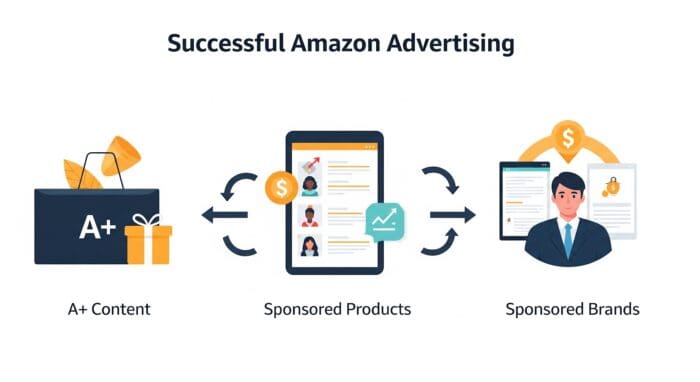
Amazon offers a suite of advertising solutions, each designed for different objectives and stages of the customer journey. Each ad type on Amazon—such as Sponsored Products, Sponsored Brands, and Sponsored Display—has unique features, placements, and strategic uses to help sellers reach their goals. Knowing these ad types is fundamental to building an effective Amazon advertising campaign.
- Sponsored Products Ads: These are the most common and often the best starting point for new advertisers. Sponsored Products are a form of product ad, also known as Amazon Sponsored Product Ads. A sponsored product ad appears in prominent placements, including search results on the product detail page and competitors’ detail pages. They are ideal for driving immediate product sales and improving discoverability. You can run Sponsored Products campaigns using either automatic targeting or manual targeting.
- Sponsored Brands Ads (Formerly Headline Search Ads): Available exclusively to brand-registered sellers, these self-service ads are a fantastic way to build brand recognition and drive traffic to your Amazon Store. Sponsored Brands are a type of sponsored brand and are also referred to as sponsored brand ads. Sponsored Brands feature your logo, a custom headline, and up to three multiple products. They appear prominently at the very top of search results pages. You can also run Sponsored Brands campaigns with video ad formats, which are incredibly engaging and can significantly boost brand recall. Videos are especially effective for promoting products, capturing attention, and increasing discoverability. These are powerful for capturing attention and showcasing your unique brand identity.
- Sponsored Display Ads (Formerly Product Display Ads): These display ads are a type of product ads and allow you to retarget shoppers both on and off Amazon, keeping your products top-of-mind even after they leave the platform. Sponsored Display leverages Amazon’s vast audience data, allowing you to target by specific interests, product category, or even complementary products that customers have viewed or purchased. These are excellent for increasing product consideration, reaching new audiences, and driving repeat purchases. You can also use product targeting with Sponsored Display ads to appear on the product detail pages of specific products or categories, or direct shoppers to a landing page designed to showcase selected products or brand messaging.
When setting up your Amazon ads campaigns, always ensure that you include accurate product or book titles to guarantee proper identification and effective targeting.
2. Setting Up Your Amazon Ads Account
Before launching your first Amazon ads campaigns, you’ll need an Amazon Seller Central account (a Professional Selling Plan is required for most ad types). Your brand must be enrolled in Amazon Brand Registry for Sponsored Brands and Sponsored Display ads.
Once your seller account is active, navigate to the “Advertising” tab in Seller Central and select “Campaign Manager.” This is where you’ll create and manage all your ad campaigns. To get started, click on “Create new campaign” to set up your advertising structure—organizing your products, targeting, and budget for optimal results.
3. Crafting Your Keyword Targeting and Product Targeting Strategy
Your targeting strategy is critical for success for sponsored products and, to a lesser extent, sponsored brands.
- Automatic Targeting: This is an excellent starting point for a beginner’s guide to Amazon ads. Setting up an automatic campaign allows Amazon’s algorithm to automatically target relevant keywords and products based on your product listing information. By running automatic targeting ads, you can gather valuable performance data and discover new, high-performing search terms you might not have considered. Automatic targeting is beneficial for initial ad campaigns to collect data.
- Manual Campaigns: This gives you greater control over where your Sponsored Products or Brands ads appear. Creating a manual campaign lets you select specific keywords or products to target for more precise ad placements. Within manual campaigns, you’ll use different “match types” for your keywords:
- Broad Match: Your ad will show for searches that include your keyword and closely related variations, including synonyms, misspellings, and even other words in any order. While it offers broad reach, it can also lead to less relevant traffic. Choosing a broad or phrase match balances reach and relevance in your keyword targeting.
- Phrase Match: Your ad will show for searches that include your exact keyword phrase, but other words can appear before or after. This offers more control than broad match while still providing flexibility.
- Exact Match: Your ad will only show for searches that precisely match your keyword or very close variations (e.g., plurals). This offers the most control and often the highest conversion rates because the search intent is obvious. Using exact match keywords helps ensure your ad spend is highly targeted.
- Negative Keywords: This is a crucial element for optimizing your ad spend. Adding negative keywords prevents your Amazon PPC ads from showing for irrelevant searches. For example, if you sell “premium coffee,” you might add “cheap” or “instant” as negative keywords to avoid wasting your budget on customers looking for low-cost or specific types of coffee you don’t offer. Regularly reviewing your Search Term Report for irrelevant terms is vital for effectively using negative keywords. Maintaining a negative keyword list helps ensure your ads do not appear for searches irrelevant to your products.
- Product Targeting Campaigns: Beyond keyword targeting, you can also target specific products or categories. Launching a product targeting campaign is particularly effective for increasing visibility for new products. This is particularly effective for Sponsored Display ads and can also be used for Sponsored Products. With product targeting campaigns, your ad can appear on the detail pages of individual products (e.g., complementary products or competitor products) or within specific product category pages, putting your product directly in front of highly relevant shoppers. The link in your ad is crucial, as it guides potential customers directly from the ad to the product detail page, making it easier to track ad performance and drive conversions. Targeting specific product categories helps you structure your campaigns for better performance and ROI.
Consider different bidding strategies at the end of your campaign setup, including using fixed bids for more predictable ad costs, and align these choices with a well-structured marketing budget strategy to avoid overspending.
4. Defining Your Budget and Bidding Strategy
- Daily Budget: Set a daily amount you will spend on your ad campaigns. A starting point of $10-$20 per day per campaign is often recommended for beginners. You can constantly adjust this as you gather data on your campaign performance.
- Bidding Strategy: Amazon offers dynamic bidding options that allow the platform to adjust your bids in real time to optimize for conversions. "Dynamic bids—up and down" is a good option, as Amazon will increase your bid when a sale is more likely and decrease it when it's less likely. "Dynamic bids—down only" is more conservative, only lowering your bid when a sale is less probable. Understanding your advertising cost per sale is key to setting sustainable bids.
Amazon Brand Registry: Unlocking Enhanced Advertising Features
Enrolling in the Amazon Brand Registry program is a game-changer for brand owners looking to maximize their advertising on Amazon. The program empowers brand-registered sellers with exclusive access to advanced advertising features that can significantly enhance their ad campaigns and overall ad spend efficiency, especially when integrated into a structured marketing planning framework.
One of the standout benefits is the ability to create high—impact Sponsored Brand ads. These visually engaging ad formats showcase your brand logo, custom headlines, and multiple products at the top of Amazon’s search results. Sponsored brand ads are designed to tell your brand story, drive traffic to your Amazon Store, and build lasting brand recognition among shoppers.
Beyond creative ad formats, Amazon Brand Registry also unlocks advanced metrics and insights, giving you deeper visibility into your campaign performance. This allows you to make smarter, data-driven decisions to optimize your ad spend and improve your return on ad spend (ROAS), especially when you build campaigns around clear marketing campaign objectives. Brand-registered sellers also benefit from enhanced protection against counterfeiters and improved customer service, helping you safeguard your brand’s reputation.
To join the brand registry program, you’ll need to have a registered trademark and be the official owner of your brand. Once enrolled, you’ll access tools and features that elevate your advertising strategy, from Sponsored Brands and Display to advanced reporting and brand-building opportunities. If you’re serious about scaling your Amazon business, enrolling in Amazon Brand Registry is a crucial first step.
Amazon Advertising Tips for Maximizing Your ROI
Once your ad campaigns run, continuous monitoring and optimization—much like optimizing broader e-commerce paid search campaigns—are key to maximizing your ROI and achieving a truly effective Amazon advertising campaign.
- Optimize Your Product Listings Relentlessly: Your Amazon ads drive traffic to your product detail pages. Ensure these pages are meticulously optimized with high-quality, high-resolution images, compelling bullet points, detailed and keyword-rich descriptions, and strong backend keywords. Take advantage of free tools and resources to enhance your ad visuals or product images, making your listings stand out without additional cost. A well-optimized listing significantly improves your conversion rate, making every click from your Amazon PPC ads more valuable.
- Start with Automatic, Then Refine with Manual Campaigns: For new products or when first venturing into advertising on Amazon, begin with automatic campaigns for your Sponsored Products ads. These automatic campaigns are invaluable for gathering valuable search term report data. Then, use the Search Term Report to identify high-performing keywords that customers use to find your products. Create separate manual campaigns (or manual targeting campaigns) for these terms, utilizing exact match and phrase match types for more precise keyword targeting. This transition from automatic targeting to manual campaigns is a hallmark of an advanced Amazon Ads strategy.
- Ruthlessly Utilize Negative Keywords: Regularly review your Search Term Report from your ad groups to identify irrelevant search queries draining your ad spend. Add these as negative keywords to prevent future wasted budget. This is a simple yet incredibly effective way to improve your ad campaign efficiency.
- Monitor Key Performance Metrics Closely: Keep a close eye on your:
- ACoS (Advertising Cost of Sales): Your ad spend as a percentage of ad-attributed sales. Your goal should be maintaining an ACoS lower than your product’s profit margin.
- CTR (Click-Through Rate): The percentage of impressions that result in clicks. A low CTR might indicate poor ad copy, unappealing main images, or less relevant keyword targeting.
- Conversion Rate: The percentage of clicks that result in sales. A low conversion rate might point to issues with your product detail pages, pricing, or even product reviews.
- Impression Share: Understanding how often your ads are seen compared to competitors.
- To truly measure impact, use Amazon's analytics tools to evaluate the effectiveness of your campaigns across multiple metrics and platforms, ensuring you track performance and campaign efficiency.
- Test and Iterate Constantly: Amazon Ads is an ongoing testing, analysis, and refining process. Don’t be afraid to experiment with different keywords, bids, ad types, and ad creatives within your ad groups to find what works best for your products, following a data-driven growth marketing strategy that prioritizes testing and iteration. Consider running multiple campaigns for different product variations and organizing these campaigns by product categories to improve targeting and ROI, or to test different bidding strategy approaches.
- Consider a Full-Funnel Advertising Strategy: As you gain experience, expand beyond Sponsored Products to include Sponsored Brands for brand building and Sponsored Display for retargeting. Incorporating video ads into your Sponsored Brands campaigns can be incredibly impactful. This creates a comprehensive Amazon advertising strategy that addresses customers at every stage of their buying journey. Don’t forget the power of the Amazon Store as a destination for your Sponsored Brands ads.
- Leverage Product Display Ads Strategically: While Amazon renamed these to Sponsored Display ads, appearing on product detail pages of other products remains potent. Use product targeting to place your ads on the detail pages of complementary or competitor products to steal market share.
Amazon Music and Podcast Advertising: Expanding Your Reach Beyond Search
Amazon Music and podcast advertising open up new avenues for brands looking to reach customers in moments that go beyond traditional search and shopping experiences. With millions of active users streaming music and podcasts daily, Amazon Music provides advertisers with a powerful platform to connect with audiences in a more personal and immersive way.
By leveraging Amazon Music’s advanced targeting capabilities, advertisers can create campaigns that reach users based on their listening habits, preferences, and demographics. This means your brand can deliver relevant messages to listeners who are most likely to be interested in your products, increasing both product visibility and the likelihood of conversion. Whether your goal is to build brand awareness or drive direct sales, Amazon Music advertising helps you reach customers where they are most engaged.
Additionally, podcast advertising on Amazon Music offers brands the opportunity to partner with popular podcasters and tap into their loyal audiences. These partnerships can significantly boost brand awareness and credibility, as listeners are more likely to trust recommendations from their favorite hosts, especially when backed by insights from experienced marketers like Mark Hope’s marketing articles. By integrating your brand into podcast content, you can create memorable touchpoints that resonate with users and keep your products top-of-mind.
For advertisers seeking to expand their reach and connect with customers in new, meaningful ways, Amazon Music and podcast advertising provide a dynamic solution to enhance your overall advertising strategy and drive more impactful results, especially when integrated into a broader growth marketing approach.
Prime Video Advertising Opportunities: Leveraging Streaming Audiences
Prime Video advertising presents a unique opportunity for brands to engage with millions of streaming users in a high-quality, content-rich environment. As more customers turn to streaming for entertainment, Prime Video has become a powerful platform for advertisers to showcase their products and services through compelling video ads.
With Amazon’s robust advertising solutions, brands can create targeted video ads that reach customers at every stage of the purchase journey. Whether you’re looking to build awareness, drive consideration, or boost conversions, Prime Video allows you to deliver your message to engaged viewers who are already immersed in premium content. Sponsored products and video ads can be strategically placed to maximize product visibility and encourage more sales, ensuring your brand stands out in a crowded marketplace.
Prime Video’s integration with Amazon MGM Studios further enhances advertising opportunities by offering exclusive brand integration options. Advertisers can collaborate with Amazon MGM Studios to feature their products within popular shows and movies, creating authentic connections with audiences and elevating brand recognition. This partnership enables brands to reach customers in innovative ways, blending entertainment with advertising for greater impact.
By leveraging Prime Video’s advertising solutions, your business can tap into the growing streaming audience, increase product visibility, and drive measurable sales—all while delivering high-quality, engaging ads that resonate with today’s digital consumers and complement your e-commerce paid search strategy.
Amazon MGM Studios Partnership: Exclusive Brand Integration Options
The partnership between Amazon and MGM Studios unlocks exclusive brand integration opportunities that go far beyond traditional advertising. Through this collaboration, advertisers can seamlessly weave their products and services into the fabric of popular TV shows and movies, reaching customers in a way that feels natural and engaging.
With Amazon’s full funnel advertising approach, brands can connect with audiences at every stage of the purchase journey—from initial awareness to final conversion. By integrating your brand into high-profile entertainment content, you not only boost product visibility but also create memorable experiences that drive more sales and foster lasting customer relationships.
Additionally, the Amazon MGM Studios partnership provides access to a comprehensive suite of advertising solutions, including sponsored products, video ads, and display ads, which work best when supported by a strong conversion-focused website presence. This allows advertisers to scale their campaigns, reach a wider audience, and measure the impact of their efforts across multiple touchpoints. Whether your goal is to build brand awareness, increase sales, or enhance customer engagement, these exclusive integration options offer a creative and effective way to achieve your business objectives, particularly when combined with a localized Madison brand strategy if your audience is region-specific.
By leveraging the power of Amazon MGM Studios, advertisers can elevate their campaigns, stand out in a crowded marketplace, and drive meaningful results for their brand and business.
Measuring Ad Performance: Tracking Success and Optimizing Results
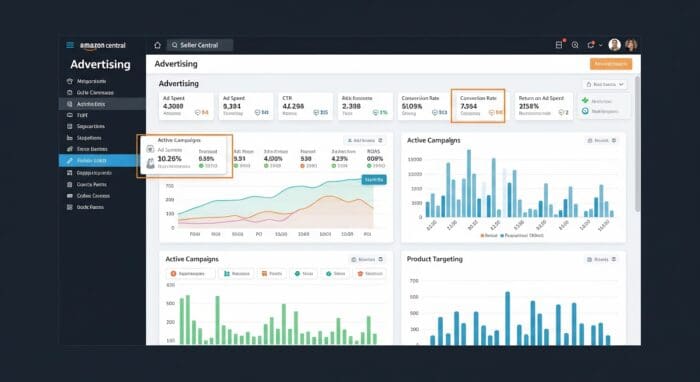
Understanding how your Amazon ads perform is essential for making the most of your ad spend and driving continuous improvement in your ad campaigns. Amazon provides robust metrics and tools to help you track and analyze every aspect of your advertising efforts. Amazon's measurement tools also allow you to track performance in between different platforms and touchpoints, such as Prime Video, Twitch, Fire TV, and Amazon Music, giving you a comprehensive view of your ad impact across the entire Amazon ecosystem.
Within the Amazon Ads console, you can monitor key performance indicators such as impressions, clicks, conversions, and return on ad spend (ROAS). One of the most important metrics to watch is the advertising cost of sales (ACOS), which shows your ad spend as a percentage of sales generated by your ads. Keeping your ACOS in check ensures your advertising costs remain profitable and sustainable.
Other valuable metrics include click-through rate (CTR), which measures how often shoppers click your ads, and conversion rate, which tracks how many clicks turn into sales. By analyzing these metrics, you can identify which ad campaigns, keywords, and ad creatives deliver the best results and which areas need improvement. Tracking customer behavior during the browsing phase also helps you optimize ad targeting to reach shoppers while they are actively exploring products.
Regularly reviewing your campaign performance allows you to make data-driven adjustments, such as refining your keyword targeting, updating your ad creative, or reallocating your budget to the highest-performing ads. By staying proactive and optimizing based on real results, you can maximize the effectiveness of your Amazon ads and achieve better returns on your advertising cost.
Comparison with Other Ad Platforms: How Amazon Stacks Up
Regarding digital advertising, Amazon offers unique advantages that set it apart from platforms like Google Ads and Facebook Ads. The biggest differentiator is Amazon’s ability to connect your sponsored products ads, sponsored display ads, and sponsored brands directly with customers who are actively shopping and ready to buy. Additionally, Amazon provides access to third party supply, offering additional inventory sources beyond its own first-party content and expanding your campaign’s reach across more platforms and devices.
Unlike Google Ads, which primarily drive traffic to external websites, or Facebook Ads, which focus on social engagement, advertising on Amazon puts your products in front of target customers at the critical moment of purchase intent. With various ad types—including sponsored products, sponsored brands, and sponsored display—Amazon enables you to reach shoppers at every stage of their buying journey, from discovery to decision. Ads can also be placed on Fire TV, allowing for targeted video advertising as part of Amazon’s broader suite of advertising channels.
Amazon’s platform also leverages rich shopping and purchase data, allowing for highly effective product targeting and retargeting through display ads and sponsored display. According to Amazon, sellers using sponsored products ads often see a 10-20% increase in sales, a direct impact that’s harder to achieve with other platforms.
While Google Ads and Facebook Ads are valuable for building awareness and driving traffic, Amazon’s advertising solutions are uniquely positioned to drive measurable sales and revenue on the platform, making it an essential channel for e-commerce growth.
Resources for Amazon Sellers: Tools and Support for Advertising Success
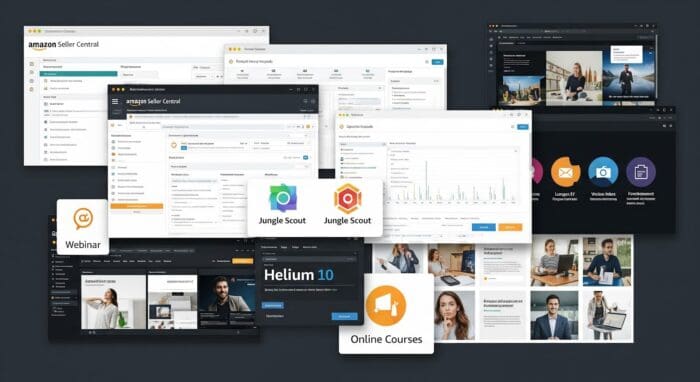
Amazon is committed to helping sellers succeed with their ad campaigns by offering comprehensive resources and support. Through Amazon Seller Central, you’ll find powerful tools to manage your advertising account, monitor campaign performance, and access detailed analytics to guide your strategy.
In addition to Amazon’s built-in resources, sellers can tap into a wealth of third-party tools like Jungle Scout and Helium 10, as well as educational content such as the Asymmetric marketing blog. These platforms offer advanced features for keyword research, competitor analysis, and campaign optimization, helping you get the most out of your Amazon ads by supporting a customer-centric Asymmetric Marketing Engine approach.
Amazon also provides extensive educational support, including webinars, online courses, and step-by-step tutorials designed to help new and experienced Amazon sellers master the art of advertising on Amazon. Sellers can also hear from industry experts and successful sellers through these webinars and tutorials, gaining firsthand insights and practical tips for optimizing Amazon Ads campaigns. If you need personalized assistance, Amazon’s support team can answer questions and resolve issues via phone and email.
By leveraging these resources, you can continually refine your ad campaigns, stay ahead of the competition, and drive more sales and revenue on Amazon.
Elevate Your Amazon Ads with Asymmetric Applications
Navigating the complexities of Amazon Ads can be time-consuming and challenging, especially for growing businesses that need to manage inventory, customer service, and product development. While this beginner's guide to Amazon ads provides a strong foundation, mastering Amazon PPC advertising requires continuous effort and deep expertise.
That's where Asymmetric Applications comes in. We specialize in helping Amazon sellers like you unlock the full potential of Amazon's advertising solutions. Our expertise goes beyond basic Sponsored Products campaign setup. Drawing on top marketing agency strategies, we offer:
- Data-Driven Strategies: We delve deep into your Amazon data and Search Term Reports to develop customized, profitable ad campaigns tailored to your unique products and goals, ensuring your ad spend is optimized.
- Advanced Keyword Research: Leveraging cutting-edge tools and techniques to uncover high-converting relevant keywords you might miss, including long-tail and niche terms, going beyond what even Google Ads can tell you about Amazon search behavior. We'll identify the best broad match, phrase match, and exact match terms for your ad groups.
- Continuous Optimization: Our team actively monitors and optimizes your Amazon ads campaigns, adjusting bids, refining keyword targeting and product targeting, implementing negative keywords, and managing ad groups to ensure maximum ROI and superior campaign performance. We’re always looking for ways to improve your advertising cost efficiency.
- Comprehensive Account Management: From initial advertising account setup to ongoing performance analysis and strategic adjustments across all ad types—sponsored Products, Sponsored Brands, Sponsored Display, and video ads— we handle every aspect of your Amazon advertising, allowing you to focus on other core business areas. We help you create manual campaigns that truly deliver.
Ready to transform your Amazon sales, significantly increase your product sales, and achieve sustainable growth? Don't let the competition outshine you with ineffective PPC campaigns or avoidable Google Ads mistakes that waste budget outside of Amazon.
Conclusion and Next Steps for Your Amazon Advertising Journey

Amazon advertising offers a powerful pathway to growing your business, reaching more customers, and increasing sales on the world’s largest e-commerce platform. You can create campaigns that deliver real results and maximize your ad spend by understanding the different ad formats, targeting options, and optimization strategies.
To get started, consider enrolling in the Amazon Brand Registry program to unlock enhanced advertising features and gain access to valuable metrics and insights, especially if you plan to compete using an asymmetric marketing strategy against larger, better-funded rivals. Next, set up your ad campaigns, experiment with different targeting strategies, and use the tools and resources available to monitor and optimize your performance.
Remember, success with Amazon advertising is an ongoing journey. By staying proactive, leveraging the brand registry program, and making data-driven decisions, you can continually improve your campaigns and achieve your business goals as part of a broader business planning strategy. Whether you’re just starting or looking to scale, Amazon advertising provides the solutions and support you need to thrive in today’s competitive marketplace, particularly when paired with a capable digital marketing agency partner that can manage your broader online presence.
Amazon Ads are available in multiple countries, including Australia and Spain, provided your content meets regional guidelines and policies. Alexa is also a key part of Amazon's integrated advertising ecosystem, helping brands reach customers across devices and platforms. Additionally, Amazon Ads may have specific operations or case studies in regional locations such as York, NY, highlighting the platform's relevance for businesses targeting local markets.

Frequently Asked Questions (FAQs) Getting Started with Amazon Ads
What is the best Amazon ad type for beginners?
For most beginners, Sponsored Products ads are the best place to start. They're easy to set up, appear in prominent placements like search results and product pages, and are designed to drive direct product sales. Starting with automatic targeting can help you gather valuable data before refining your strategy with manual campaigns.
How much should I spend on my first Amazon PPC campaign?
A good starting point for beginners is $10–$20 per day per campaign. This allows you to collect meaningful data without overspending. As you analyze your ACoS (Advertising Cost of Sales) and conversion rates, you can adjust your daily budget based on campaign performance.
What's the difference between automatic and manual targeting on Amazon Ads?
Automatic targeting lets Amazon choose keywords and placements based on your product listings. It's great for gathering search data.
Manual targeting allows you to choose specific keywords and match types (broad, phrase, exact), allowing for more precise ad placement and optimization.
How can I make my Amazon ads more effective?
To improve ad performance:
- Optimize product listings with clear images, bullet points, and keywords
- Use exact and phrase match keywords in manual campaigns.
- Add negative keywords to filter out irrelevant traffic.
- Monitor key metrics like ACoS, CTR, and conversion rate regularly.
Do I need to be brand-registered to run Amazon Ads?
No, you can run Sponsored Products ads without brand registration. However, to unlock Sponsored Brands and Sponsored Display ads, enhanced analytics, and brand protection, you'll need to be enrolled in the Amazon Brand Registry, which requires a registered trademark.

Ready to Boost Your Amazon Sales?
Transform your advertising strategy with effective Amazon Ads. Whether you're just starting or looking to optimize your campaigns, our expert team at Asymmetric Applications is here to help.
Get Started Today:
📅 Schedule a Consultation: Discover tailored Amazon advertising strategies for your products. Book Now!
📚 Learn More: Uncover advanced techniques for maximizing your Amazon sales. Explore More!
Take your Amazon advertising to the next level. Let’s drive your business growth together!
Mark Hope
Partner, Asymmetric Applications
📧 mark.hope@asymmetric.pro
📞 (608) 410-4450

About the author
Mark A. Hope is the co-founder and Partner at Asymmetric Marketing, an innovative agency dedicated to creating high-performance sales and marketing systems, campaigns, processes, and strategies tailored for small businesses. With extensive experience spanning various industries, Asymmetric Marketing excels in delivering customized solutions that drive growth and success. If you’re looking to implement the strategies discussed in this article or need expert guidance on enhancing your marketing efforts, Mark is here to help. Contact him at 608-410-4450 or via email at mark.hope@asymmetric.pro.