

In today’s crowded digital world, email list building is more than a growth tactic—it’s necessary. With the rising cost of ads and declining organic reach on social media platforms, savvy marketers are turning to email campaigns as a powerful tool for audience growth, deeper connections, and consistent revenue.
Learning how to build an email list is a foundational step for any successful email marketing strategy, ensuring you have a targeted audience to engage and nurture over time.
If you want to grow your email list with people who are genuinely interested in your brand, this guide will walk you through the strategies that actually work.
Introduction to Email Marketing

Email marketing is a powerful tool for businesses to connect with their audience and promote their products or services. Unlike social media platforms, where algorithms can limit your reach, email marketing provides a direct line to your potential customers. Email messages provide a direct and personal way to communicate with your audience, ensuring your content reaches them without third-party interference. You can build trust, establish relationships, and drive sales by sending targeted and personalized messages. In an era where social media channels are crowded and competitive, email marketing is a reliable way to reach your audience without the interference of ever-changing algorithms.
Understanding the Importance of Email List Building to Collect Email Addresses
An email list is a collection of email addresses gathered from website visitors, customers, or potential customers who have opted in to receive communications from your company. Having a high-quality email list is crucial for effective email marketing. It allows you to target your marketing efforts more precisely, increasing the chances of conversion. You can build your email list using various methods, including signup forms on your website, social media accounts, and dedicated landing pages. Incorporating website features like popups and embedded forms is an effective way to collect leads as part of your list-building strategy. The key is collecting email addresses from genuinely interested individuals who will likely engage with your content and eventually become paying customers.
Why Email Still Reigns Supreme
While social media and other marketing channels help you reach a broad target audience, your email list is the only platform you truly own. Unlike traditional advertising, which relies on external platforms and is subject to changing rules and algorithms, your email list gives you full control and ownership over your audience. It gives you direct access to potential customers, lets you avoid the spam folder (when done right), and creates a direct line to people who want your content, updates, and offers. Plus, well-crafted email marketing campaigns consistently outperform other marketing efforts regarding ROI, conversion, and engaging customers.
Start with the Right Strategy
Successful email marketing begins with a solid marketing planning strategy that integrates well with your overall marketing strategy. Think of your subscriber list not just as a vanity metric, but as a group of engaged subscribers eager to receive valuable content. Identify your target audience, understand what they care about, and develop content marketing and offers that meet their needs.
To attract and convert subscribers, it’s essential to combine effective list building tactics such as pop-up forms, lead magnets, targeted campaigns, and a broader inbound marketing approach to attracting customers.
You don’t need millions of social media followers to get started. You need a well-defined marketing strategy, the right tools, and consistency.
Offer a Lead Magnet People Can’t Ignore

You'll need a compelling lead magnet to build a list of high-quality contacts. Consider turning a popular blog post into a lead magnet to attract more subscribers. This could be a free ebook, exclusive content, a discount code, or early access to a new product. The more relevant and specific your lead magnet, the better your conversion rates will be.
Let’s say you sell fitness gear—offering a free ebook on home workouts is an excellent example of an irresistible lead magnet for your exact audience. Pair it with pop-up or embedded forms strategically placed on your landing pages as part of a cohesive inbound marketing lead generation strategy, and you’ll start collecting email addresses quickly.
Use Strategic Placement of Signup Forms
Don’t rely on a single opt-in form buried in your footer. Use opt-in forms across your website, including pop-up forms, embedded forms, and banners on high-traffic landing pages. These can be triggered based on scroll behavior, time on page, or exit intent, maximizing your ability to collect email signups from website visitors. Designing an effective web form with a strong call to action is crucial for increasing user engagement and maximizing signups.
For best results, use a double opt-in process. This not only ensures your subscribers are truly interested but also reduces spam complaints and keeps your list clean.
Leverage Social Media to Fuel Growth

Your social media and existing channels are goldmines for reaching new email subscribers. Promote your lead magnet, tease your exclusive content, and invite your current audience to join your list. Use compelling CTAs like “Get your free guide” or “Unlock early access” to encourage people to click.
In your social media posts and videos, use clear calls-to-action to encourage viewers to join your email list after engaging with your content.
Cross-promote across multiple channels, and don’t forget to include signup forms on your social media platforms’ bios or Linktree-style landing pages.
Optimize with Pop Ups and Landing Pages
Pop-up forms may be controversial, but when used well, they’re extremely effective. To maximize engagement, ensure that your pop-ups and landing pages are optimized for mobile devices. Create pop-ups that are timely, non-intrusive, and value-driven. Combine that with targeted landing pages designed solely to convert new subscribers, and you’ll see your list grow steadily.
Use inbound marketing tools for testing and optimization that integrate seamlessly with your website builder to A/B test form designs, opt-in language, and placement. Additionally, leverage dedicated email list building tools to create pop-ups, landing pages, and forms that convert visitors into subscribers. Sometimes, a small tweak to a sign-up form—like adding social proof or tweaking the CTA—makes all the difference.
Using Webinars and Events
Webinars and events are excellent ways to collect email addresses and build your email list, and they fit naturally within broader growth marketing services for business expansion. By hosting webinars or events, you can provide valuable content to your target audience and encourage them to opt in for more information. Webinars are particularly effective for educating customers, establishing authority, and building trust. Events, whether online or offline, offer opportunities to collect contact information and follow up with attendees. Incorporating webinars and events into your marketing strategy can help you reach a wider audience, attract and engage new customers who are interested in your offerings, and significantly grow your email list—especially when you’ve carefully defined your objectives using key questions for effective marketing campaigns.
Building an Email List with Email Marketing Software
Building a thriving email list starts with choosing the right email marketing software or partnering with a digital marketing agency for multichannel campaigns. The right platform not only helps you collect email addresses efficiently but also streamlines the entire process of creating signup forms, managing your list, and launching successful email campaigns. For small and medium-sized businesses, leveraging a robust email service provider (ESP) is essential for maintaining a strong sender reputation and ensuring your messages reach interested subscribers.
When evaluating email marketing software, prioritize a user-friendly interface that makes it easy to design and manage your campaigns—even if you don’t have a technical background—and consider how it supports data-driven growth marketing strategies. Look for features like customizable signup forms, automation tools, segmentation options, and detailed analytics to track your results. Integration is also key: your ESP should work seamlessly with your website, landing page builders, and social media platforms, allowing you to promote your signup form across all your digital channels.
Popular email marketing platforms such as Mailchimp, ConvertKit, and Klaviyo offer a range of tools designed to help you grow your email list. These platforms make it simple to embed signup forms on your website, create pop-up forms, and share your sign up page on social media channels to reach potential customers wherever they are.
Here’s how to build your email list using email marketing software:
- Create a Signup Form: Use your ESP’s drag-and-drop builder to design a signup form that matches your brand. Place it prominently on your website, landing page, or as a pop up form to capture website visitors’ attention.
- Offer Exclusive Content: Entice new subscribers by offering valuable content—think a free ebook, exclusive discounts, or members-only resources. This gives potential customers a compelling reason to sign up.
- Promote Across Channels: Share your signup form on your social media platforms, in your email signature, and even on your Facebook business page. The more places you promote, the more opportunities you have to collect email addresses.
- Leverage Lead Magnets: Use lead magnets like webinars, free downloads, or exclusive content to attract interested subscribers and encourage them to opt in.
- Optimize Your Website: Make sure your website is designed for lead generation. Use clear calls-to-action, relevant content, and strategically placed opt in forms to encourage sign ups from every page.
By harnessing the power of email marketing software, you can automate much of the list building process, nurture new subscribers with a welcome email sequence, and continually grow your email list with minimal manual effort. The result? More leads, higher engagement, and a steady boost in sales—all while delivering relevant content to an audience that wants to hear from you.
Segmenting Your Email List
Segmenting your email list involves dividing it into smaller groups based on demographics, purchase history, or other characteristics. This allows you to send targeted and personalized emails to each group, increasing the chances of conversion. Sales teams can leverage segmented lists to tailor their outreach to specific customer segments, resulting in more relevant messaging and improved conversion rates. Segmenting your email list also helps identify inactive subscribers, allowing you to remove them and improve the overall quality of your list. Using CRM tools and marketing automation, you can easily segment your email list and create targeted marketing campaigns that resonate with each specific group.
Re-Engage Inactive Subscribers
Not everyone on your list will stay active forever, so it’s essential to re-engage existing subscribers with tailored email marketing campaigns. To do this, segment inactive subscribers and re-engage them with a tailored email marketing campaign. Try offering exclusive discounts, highlighting existing content, or asking them what kind of relevant content they’d prefer.
If subscribers remain inactive, consider removing them after a re-engagement attempt. Keeping a healthy, engaged subscriber base is more valuable than padding your numbers.
Use Automation to Scale and Save Time
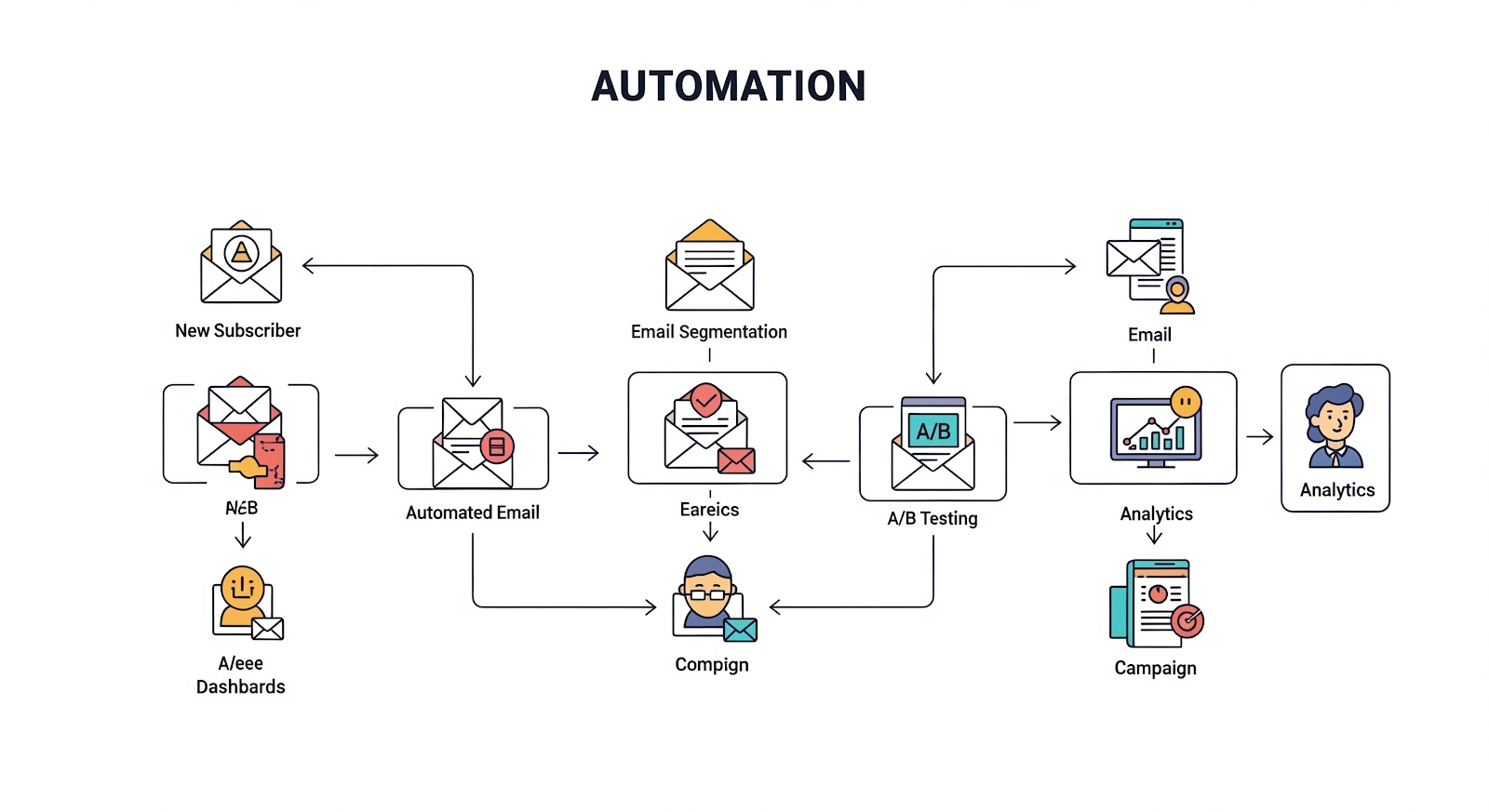
With marketing automation, you can send targeted messages based on purchase history, behaviors, or preferences. Tools like welcome sequences—including setting up a welcome series to automatically engage new subscribers with targeted messages—cart abandonment emails, and re-engagement campaigns help you generate leads, convert potential customers into paying customers, and build trust over time—all on autopilot, leveraging the experiences of existing customers.
Don’t forget to include your email signups in every touchpoint, from your email signature to your referral program or loyalty program. These little efforts add up fast
Measuring Email List Success

Measuring the success of your email list is crucial for understanding its effectiveness and making necessary improvements. Track key metrics such as open rates, click-through rates, click through rate, conversion rates, and spam complaints to gauge your email list’s performance.
Analyzing these metrics will help you identify areas for improvement and make data-driven decisions to optimize your email marketing campaigns. Use these analytics to gain actionable insights that inform your strategy and align with the most important B2B marketing KPIs. Using analytics tools to track these metrics can refine your marketing strategy and increase your email marketing efforts’ return on investment (ROI). Optimizing your campaigns based on these insights can help you boost sales and improve overall performance.
Keep Nurturing and Delivering Value
Once someone subscribes, your job is just beginning. Building customer trust is crucial, and providing exclusive content and valuable resources can help establish and maintain that trust. Provide exclusive content, share useful resources, and be consistent in your content creation. Whether running marketing campaigns, offering exclusive discounts, or sharing updates, ensure your emails always provide something your readers care about.
Stay on top of your performance metrics, including open and click-through rates. Use tools like Google Analytics to understand what’s working, and continuously optimize your email marketing strategy based on data and SEO-driven lead generation insights.
Final Thoughts

Email list building is more than a tactic—it’s a long-term marketing strategy that connects you directly to the people who matter most. Here are a few tips to remember as you build and nurture your email list. When you create irresistible opt-in forms, use strategic landing pages, and promote across social media, you’ll not only capture email addresses but also build lasting relationships with loyal customers.
No matter what you sell or share, building a list of engaged subscribers means you’re creating a powerful tool for ongoing communication, trust, and business growth. Start small, stay consistent, and remember: your email list is your most valuable digital asset.

Frequently Asked Questions About Email List Building
What is an Email List and Why is it Important?
An email list is a collection of email addresses from individuals who have opted in to receive communications from your business. It’s crucial because it provides a direct, owned marketing channel that allows you to communicate with your audience without relying on social media algorithms or paid advertising—this is especially valuable for ecommerce businesses looking to build direct relationships with their customers and reflects a customer-centric view of a business’s true purpose. Unlike other platforms, an email list gives you complete control over your marketing communications and can be a powerful tool for building relationships, driving sales, and nurturing customer loyalty.
How Can I Start Building My Email List from Scratch?
Begin by creating a compelling lead magnet—a valuable free resource that entices people to subscribe. When starting out, select an email marketing platform that offers built-in forms and automation features to streamline your email list building efforts. This could be an ebook, a discount code, exclusive content, or a useful guide relevant to your target audience. Then, strategically place signup forms across your website, including pop-ups, landing pages, and embedded forms. Leverage social media to promote your lead magnet and use a double opt-in process to ensure you’re collecting high-quality, interested subscribers.
How Often Should I Send Emails to My Subscribers?
The ideal email frequency depends on your business and audience, but most experts recommend sending emails 1-4 times per month. The key is consistency and value. Don't email just to email—each communication should provide meaningful content or offers. Use marketing automation to create a balanced approach, including welcome sequences, nurture campaigns, and targeted communications based on subscriber behavior.
What Makes a Good Lead Magnet?
A great lead magnet is:
- Highly relevant to your target audience
- Solves a specific problem
- Easily consumable
- Demonstrates your expertise
- Provides immediate value
- Specific to your ideal customer's needs
For example, a fitness gear company might offer a free home workout guide, while a marketing agency could provide a downloadable marketing strategy template.
How Do I Prevent My Emails from Going to Spam?
To avoid spam folders:
- Use a reputable email service provider
- Always use double opt-in
- Send from a consistent, recognizable email address
- Maintain a clean email list by removing inactive subscribers and avoiding spam traps—never purchase email lists, as they may contain spam traps that can harm your deliverability
- Provide clear unsubscribe options
- Create engaging, valuable content
- Avoid spam trigger words in your subject lines
- Authenticate your domain
Should I Buy an Email List?
No, absolutely not. Buying email lists is ineffective and can be harmful to your marketing efforts. Purchased lists:
- Contain uninterested subscribers
- Often violates email marketing regulations
- Can get your emails marked as spam
- Sending unsolicited promotional messages to purchased contacts often results in spam complaints and low engagement
- Damage your sender’s reputation
- Provide low-quality, unengaged contacts
Focus on organic list building through valuable content and strategic opt-in methods, using paid channels like Google Ads carefully and avoiding common Google Ads mistakes that hurt lead quality.
How Can I Improve My Email Open Rates?
To improve open rates:
- Write compelling, curiosity-driven subject line that aligns with your email content
- Segment your list for more targeted content
- Personalize your emails
- Send at optimal times
- Consistently provide value
- A/B test your email elements
- Clean your list regularly
- Ensure your sender name is recognizable

Ready to Revolutionize Your Email Marketing?
Transform your digital communication strategy with targeted, effective email list building. Whether you aim to increase engagement, drive sales, or build lasting customer relationships, our expert team at Asymmetric Marketing brings top marketing agency strategies for long-term growth to guide you.
Get Started Today:
📅Schedule a Consultation: Explore tailored email marketing strategies for your business. Book Now
📚Learn More: Discover advanced email list-building techniques.Explore More
We can also recommend email marketing solutions that offer a free plan, perfect for businesses looking to start building their list with minimal investment, and point you to our digital marketing blog with in-depth strategy guides and professional web design services for a stronger online presence.
Take the next step towards meaningful digital connections. Let’s amplify your marketing potential together!
Mark HopePartner, Asymmetric Marketing 📧 mark.hope@asymmetric.pro📞 (608) 410-4450

About the author
Mark A. Hope is the co-founder and Partner at Asymmetric Marketing, an innovative agency dedicated to creating high-performance sales and marketing systems, campaigns, processes, and strategies tailored for small businesses. With extensive experience spanning various industries, Asymmetric Marketing excels in delivering customized solutions that drive growth and success. If you’re looking to implement the strategies discussed in this article or need expert guidance on enhancing your marketing efforts, Mark is here to help. Contact him at 608-410-4450 or via email at mark.hope@asymmetric.pro.