

Business continuity ensures your company’s critical operations stay functional during disruptions like natural disasters, cyberattacks, or other crises. It’s crucial for minimizing losses and maintaining business stability. This article will explore essential steps for effective business continuity planning, from understanding the concept to implementing recovery strategies.
Key Takeaways
- Business continuity planning ensures critical operations persist during disruptions, distinguishing itself from disaster recovery by encompassing broader business processes.
- Key components of an effective business continuity plan include resilience, recovery strategies, and contingency plans to maintain operational stability.
- Regular updates, training, and technology integration are essential for the effectiveness of a business continuity plan, ensuring organizations are prepared to respond to unexpected events.
Understanding Business Continuity
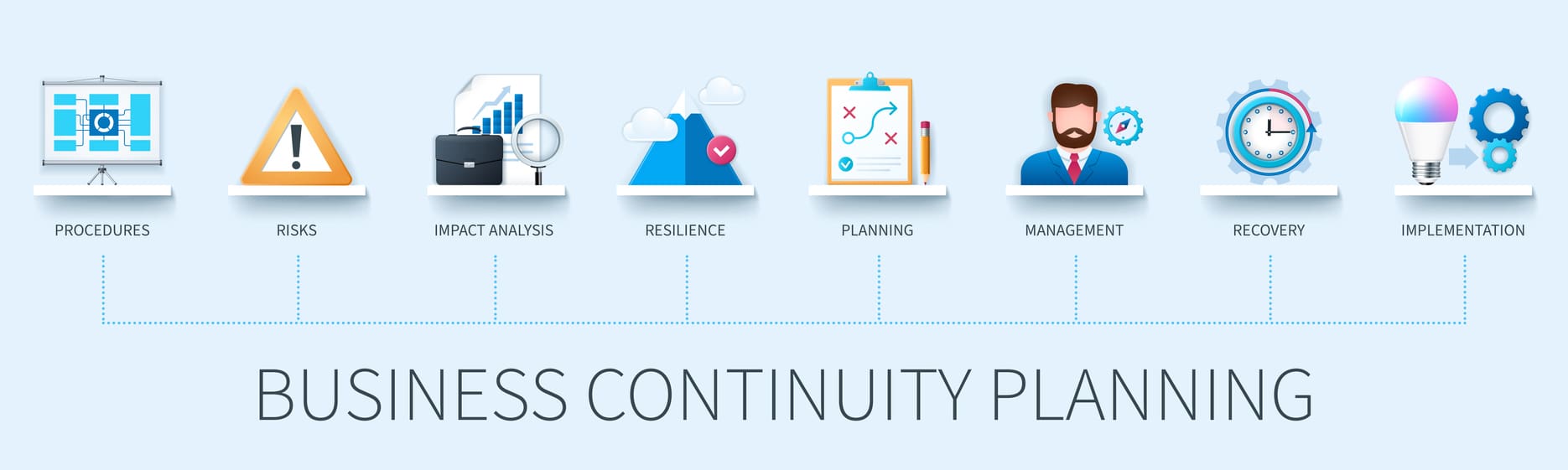
Business continuity is a proactive approach to ensure critical operations continue during business disruption. It is significant because it allows a company to maintain operations amidst threats and disruptions, minimizing losses and ensuring swift recovery. Business continuity planning prepares organizations for operational continuity during unforeseen events, addressing natural disasters, cyberattacks, and other operational risks, including business continuity management systems.
A business continuity plan (BCP) outlines the procedures to keep operations running during and after a disaster. These plans include clear policies, recovery strategies, and contingency plans, providing ready-made directions for navigating crises. Such a plan ensures the protection of personnel and assets and facilitates the quick resumption of normal operations. The focus is comprehensive, covering the entire organization, from customer service to supply chain operations, including business continuity management and business continuity programs.
It’s important to distinguish between business continuity planning and disaster recovery. While both are related, disaster recovery planning specifically targets restoring data and infrastructures, whereas business continuity planning encompasses broader business processes. Effective business continuity planning addresses various organizational risks, improving risk management by preventing disruptions from spreading. This proactive protection is essential for business resiliency and operational stability.
Key Components of a Business Continuity Plan
A successful business continuity plan hinges on three critical components: resilience, recovery, and contingency. Resilience involves designing critical business functions to withstand various disaster scenarios, ensuring continuity of operations. This vital component prepares the organization to handle disruptions without significant losses.
Recovery is another essential element, focusing on the rapid restoration of business functions following a disaster. The Recovery Time Objective (RTO) defines the maximum acceptable downtime for restoring operations, while the Recovery Point Objective (RPO) specifies the maximum tolerable amount of data loss. These objectives help formulate effective recovery strategies that minimize operational downtime and data loss.
The contingency aspect includes plans for external scenarios, such as hardware replacement and vendor contracts. This ensures that the organization can quickly adapt to changes in external conditions, maintaining operational stability. Clearly defined roles and responsibilities are also crucial in this phase, ensuring that every member of the continuity team knows their part in executing the plan.
These elements collectively form the backbone of an effective business continuity plan, ensuring organizational resilience and business recovery.
Conducting a Business Impact Analysis (BIA)
A Business Impact Analysis (BIA) is a critical component of the business continuity planning process. Its primary purpose is to identify the effects of disruptions on business functions and processes, thereby informing recovery priorities and strategies. Understanding the potential impacts allows organizations to prioritize their recovery efforts and swiftly restore critical business functions.
Collecting insights from managers through questionnaires and operational and financial impact worksheets is typically part of the BIA process. The Federal Emergency Management Agency provides resources that help summarize these impacts, assisting businesses in understanding the repercussions of losing specific functions. Differentiating between critical and non-critical functions during this analysis phase allows for better prioritization during recovery efforts.
The final BIA report ranks business functions by their recovery priority based on operational and financial impacts. Ensuring the business's survival during crises requires identifying mission-critical systems and critical processes. Setting realistic recovery goals by establishing clear RTOs and RPOs ensures quick resumption of operations and minimal losses.
Risk Assessment and Management
Risk assessment is an essential phase in business continuity management. It involves identifying potential threats that could disrupt business operations, ranging from natural disasters to technological failures and malicious attacks. Understanding these risks reduces vulnerability by prioritizing resources and protecting critical assets.
The risk assessment process includes identifying hazards, assessing risks, controlling them, recording findings, and reviewing controls. Considering all potential risks and implementing effective measures ensures comprehensive mitigation. Formulating a robust business continuity strategy involves identifying potential loss scenarios during the risk assessment phase.
Implementing actions to lessen the impact of potential threats on business operations is key to effective risk management. Having a well-thought-out risk management plan is critical, as the timing and duration of disruptions significantly affect business losses. Proactively managing risks enhances business resilience and ensures continuity of operations despite significant threats.
Developing Recovery Strategies

A critical step in the business continuity planning process is developing recovery strategies. These strategies aim to minimize operational downtime and rapidly restore business functions. The 3-2-1-1 backup rule effectively involves three copies of data across two media types, with one stored offsite. This approach ensures data availability for recovery even if one backup fails.
Another vital component of recovery strategies is cloud computing, which allows businesses to access critical systems from various locations. This flexibility is crucial during disruptions, ensuring that operations can continue uninterrupted. Remote work technologies, such as secure VPNs and collaboration tools, enable employees to work from anywhere, maintaining productivity during crises.
Strategies for dealing with various disaster scenarios within an effective business continuity plan ensure quick adaptation and resumption of normal operations. Developing robust recovery strategies enhances business resilience, minimizes losses, and ensures a swift return to normalcy.
Implementing and Testing the Plan
Implementing a business continuity plan involves making necessary policy changes, resource allocation, and staffing. Considering the organization’s unique context and objectives during this phase ensures the plan’s relevance and effectiveness. Senior management oversees the creation, review, and testing of the plan, ensuring alignment with the organization’s goals.
Guaranteeing the plan’s effectiveness during real crises requires testing the business continuity plan. Tabletop exercises, structured walk-throughs, and simulations are common testing procedures that help assess the plan’s robustness and identify gaps. Clear objectives focusing on emergency procedures and system recovery for each test provide insights into areas needing improvement.
Maintaining an effective business continuity plan requires regular testing and continuous improvement. Clear communication channels among employees, real-time communication tools, and alert systems ensure effective plan execution during disruptions. Updating the plan based on test findings ensures weaknesses are addressed, and the organization is better prepared for future crises.
Training and Awareness Programs
Ensuring employees know their roles during disruption requires regular training and awareness programs. Management promotes awareness of the business continuity plan by prioritizing it and conducting regular training sessions. A culture of awareness encourages proactive engagement from all staff members, ensuring preparedness for unexpected events.
Simulators and drills effectively familiarize employees with needed procedures during actual disruptions. Providing hands-on experience, these exercises also help identify gaps in the plan, allowing for pre-crisis improvements. Effective communication during training sessions enhances understanding of potential risks and the importance of the business continuity plan.
Regular training and awareness programs ensure the entire team is prepared to respond effectively to disruptions, enhancing organizational resilience.
Maintaining and Updating the Plan
Treat a business continuity plan as a living document, regularly reviewing and updating it. Adapt the plan to reflect changes in business operations and emerging threats. An effective plan requires regular reviews and updates based on testing outcomes and evolving risks.
Refining the plan during periodic reviews requires feedback from staff and stakeholders. Incorporating feedback ensures the business continuity plan remains relevant and effective, continuously improving preparedness for future disruptions.
The Role of Technology in Business Continuity

Technology is pivotal in business continuity planning. Quick recovery from data loss incidents through automated data backup solutions significantly contributes to business continuity. Protecting against data breaches that can disrupt business operations requires cybersecurity measures such as encryption and multi-factor authentication.
ISO/IEC 27031:2011 provides guidelines for ensuring technology readiness for business continuity, while ISO/IEC 24762:2008 outlines criteria for selecting IT disaster recovery service providers. Following these standards enhances technological resilience, ensuring critical business functions remain operational during crises.
Regulatory Requirements and Standards
Various standards and guidelines support business continuity planning efforts. The ISO 223XX series provides a comprehensive business continuity framework, while BS 25999 standards include practical plans for dealing with extreme weather, terrorism, IT failure, and staff sickness. The Business Continuity Institute (BCI) and British Standards Institute (BSI) offer valuable resources for raising business continuity standards.
Guidelines from FEMA and the financial industry regulatory authority set standards for effective business continuity planning, helping organizations meet regulatory requirements and ensure operational resilience. Adhering to these standards and guidelines is required to develop a robust business continuity plan that meets both organizational and regulatory expectations.
Summary
In summary, effective business continuity planning involves understanding the concept, identifying key components, conducting a Business Impact Analysis, assessing risks, developing recovery strategies, and regularly testing and updating the plan. By incorporating technology and adhering to regulatory standards, organizations can enhance their resilience and ensure continuity of operations during disruptions. Remember, a well-prepared organization is better equipped to navigate crises and emerge stronger. Invest in your business continuity planning today to secure a resilient tomorrow.

Frequently Asked Questions About Business Continuity Planning
What is the difference between business continuity planning and disaster recovery?
The primary distinction lies in their scope: business continuity planning maintains overall operations during disruptions, whereas disaster recovery specifically aims to restore data and IT infrastructure. Understanding this difference is crucial for effective risk management.
Why is conducting a Business Impact Analysis (BIA) important?
Conducting a Business Impact Analysis (BIA) is crucial as it identifies the effects of disruptions on business functions. This, in turn, informs recovery priorities and strategies, ensuring that organizations can effectively prepare for and respond to potential crises.
How often should a business continuity plan be updated?
A business continuity plan should be updated regularly. It is a living document that must reflect testing outcomes and evolving risks. Frequent reviews are essential for ensuring its relevance, which is crucial for effective preparedness.
What role does technology play in business continuity?
Technology is essential for business continuity as it enables automated data backups, implements cybersecurity measures, and ensures compliance with standards like ISO/IEC. These factors collectively enhance an organization's preparedness and resilience in disruptions.
What are the critical components of a business continuity plan?
The key components of a business continuity plan are resilience, recovery, and contingency. These elements collectively ensure critical business functions can withstand and swiftly recover from disruptions. Addressing these elements is essential for maintaining operational integrity during crises.


About the author
Mark A. Hope is the co-founder and Partner at Asymmetric Marketing, an innovative agency dedicated to creating high-performance sales and marketing systems, campaigns, processes, and strategies tailored for small businesses. With extensive experience spanning various industries, Asymmetric Marketing excels in delivering customized solutions that drive growth and success. If you’re looking to implement the strategies discussed in this article or need expert guidance on enhancing your marketing efforts, Mark is here to help. Contact him at 608-410-4450 or via email at mark.hope@asymmetric.pro.