

November 3, 2024
Design Thinking: Strategies for Innovative Solutions
Design thinking is a human-centered way to solve ambiguous problems: understand the real problem before solving it, then test your way forward. Here are its origins, five phases, and uses in strategy.
By Mark Hope, Founder, President & Chief Strategy Officer, Asymmetric Marketing
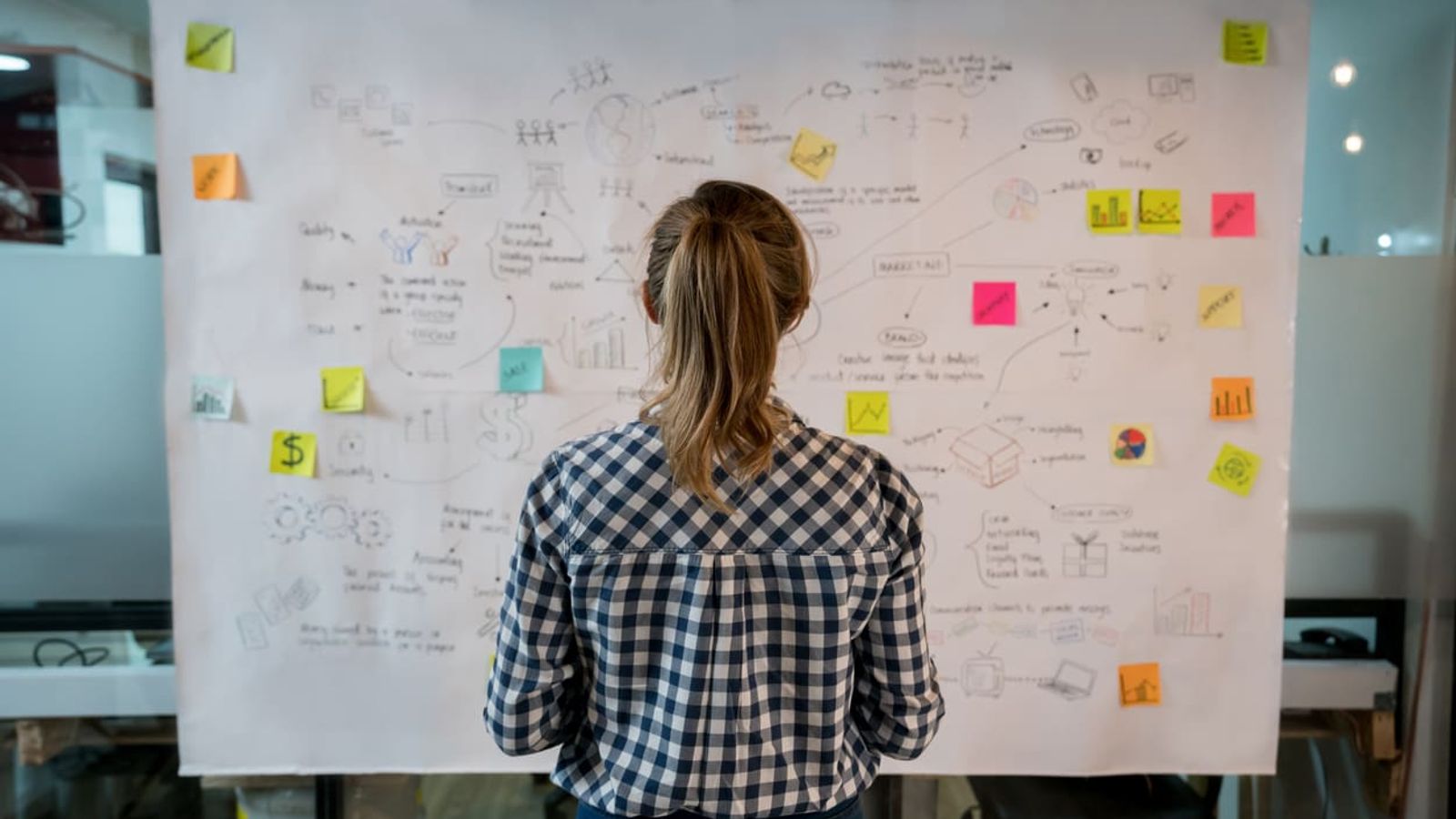
Design thinking is a human-centered approach to solving problems: it starts with a deep understanding of the people you are designing for, not with the solution you already have in mind. Popularized by the design firm IDEO and Stanford's d.school, it became a method for tackling ambiguous, open-ended problems where the answer is not obvious and the usual analysis runs out of road. Its core move is simple but uncommon in practice: understand the real problem before rushing to solve it, then test your way forward instead of betting everything on a plan.
Key takeaways
- Design thinking is a human-centered, iterative method for solving ambiguous problems by understanding people first and testing toward the answer.
- It was popularized by the design firm IDEO and Stanford's d.school, which formalized the five-phase model.
- The five phases are empathize, define, ideate, prototype, and test, and they loop rather than run strictly in order.
- It works by attacking the most expensive mistake in problem-solving: confidently building the wrong thing.
- The same logic powers growth marketing and asymmetric strategy: find the real problem, test cheaply, and avoid betting everything on an untested plan.
What design thinking is
At its heart, design thinking is a way of working that keeps the human you are serving at the center of every decision. Rather than starting from what you can build or what you want to sell, it starts from what the customer actually experiences and needs, often things they cannot fully articulate. It is iterative rather than linear, favoring quick prototypes and real feedback over long planning cycles, and it treats early ideas as experiments to be tested rather than conclusions to be defended. The result is a method especially suited to so-called wicked problems, the messy, ambiguous challenges where no one knows the right answer at the start.
Who created design thinking
The ideas behind design thinking developed over decades across design and academia, but two names anchor its modern form. The global design firm IDEO turned human-centered design into a repeatable commercial practice, and Stanford's d.school formalized it into a teachable process used across business and beyond. Their version popularized the now-familiar five-phase model and the principle that good solutions come from empathy with users plus rapid, hands-on experimentation rather than from expert analysis alone.
The five phases of design thinking
The process is usually described in five phases, which loop rather than run strictly in order. Empathize: understand the people you are designing for through observation and conversation, setting aside your assumptions about what they need. Define: synthesize what you learned into a clear statement of the real problem to solve, which is often not the problem you started with. Ideate: generate a wide range of possible solutions without judging them prematurely, favoring quantity and range before narrowing. Prototype: build quick, cheap, rough versions of the most promising ideas, just enough to make them real. Test: put the prototypes in front of real users, learn from how they respond, and loop back to refine, redefine, or rethink. The power is in the cycle, since each test sharpens your understanding and feeds the next round.
Why design thinking works
Design thinking works because it attacks the most expensive mistake in problem-solving: confidently building the wrong thing. By forcing empathy first, it keeps you from solving a problem the customer does not actually have. By insisting on prototyping and testing, it makes your assumptions cheap to check before they become costly to unwind. It is most valuable when the problem is ambiguous, the stakes are high, and the cost of guessing wrong is large, which describes most meaningful business decisions. When the answer is already clear, the full process is overkill; when it is not, the structured experimentation pays for itself.
Design thinking in marketing and strategy
The same logic transfers directly to how a challenger competes. Start with a genuine understanding of the customer and the market rather than the campaign you already wanted to run. Define the real problem, often a specific unmet need a larger competitor serves poorly. Then prototype and test cheaply, running small experiments to learn what actually works before committing a budget. This is the experimentation engine behind a growth marketing practice and the customer-first read at the heart of asymmetric marketing: find the real problem, test toward the answer, and avoid betting everything on an untested plan.
Solve the right problem
If you are about to invest in a solution you have not tested against the customer's real problem, slowing down to understand and prototype first is the cheapest insurance you can buy. That disciplined, customer-first approach is the work we do.
Frequently asked questions
What is design thinking?
Design thinking is a human-centered, iterative approach to solving problems that starts from a deep understanding of the people you are designing for rather than a solution you already have in mind. It favors quick prototypes and real feedback over long planning, and is especially suited to ambiguous, open-ended problems where the right answer is not obvious at the start.
What are the five phases of design thinking?
Empathize (understand the people you are designing for), define (state the real problem, often not the one you started with), ideate (generate many possible solutions without judging early), prototype (build quick, cheap, rough versions), and test (put them in front of real users and loop back). The phases cycle rather than run strictly in order.
Who created design thinking?
Its ideas developed over decades across design and academia, but its modern form is anchored by the global design firm IDEO, which turned human-centered design into a repeatable commercial practice, and Stanford's d.school, which formalized it into the teachable five-phase process used across business today.
When should you use design thinking?
When the problem is ambiguous, the stakes are high, and the cost of guessing wrong is large, which describes most meaningful business decisions. When the answer is already clear, the full process is overkill; when it is not, its structured empathy and experimentation pay for themselves by preventing confident investment in the wrong thing.
About the author

Mark Hope
Founder, President & Chief Strategy Officer, Asymmetric Marketing
Mark Hope is the Founder, President & Chief Strategy Officer of Asymmetric Marketing, a strategy-first growth consultancy. His career spans elite military service, enterprise leadership at two of the largest companies in their categories, and founding multiple ventures of his own. It is the throughline behind Asymmetric’s approach to competitive strategy.
Mark began his career in U.S. Army Special Operations, serving from 1977 to 1988 in the 1st and 3rd Battalions of the 75th Ranger Regiment and as an Operator in 1st Special Forces Operational Detachment–Delta (1st SFOD–Delta). The discipline that defines that world (rigorous planning, reading an adversary, and winning from a position of disadvantage) became the foundation of the competitive methodologies he practices today.