

October 21, 2026
Local SEO for Trades: How to Outrank the Franchise Down the Street
The franchise down the street has a bigger ad budget, but Google doesn't rank the map on budget. A practical local SEO guide for trade owners, with a 30-day plan you can start this week.
By Mark Hope, Founder, President & Chief Strategy Officer, Asymmetric Marketing
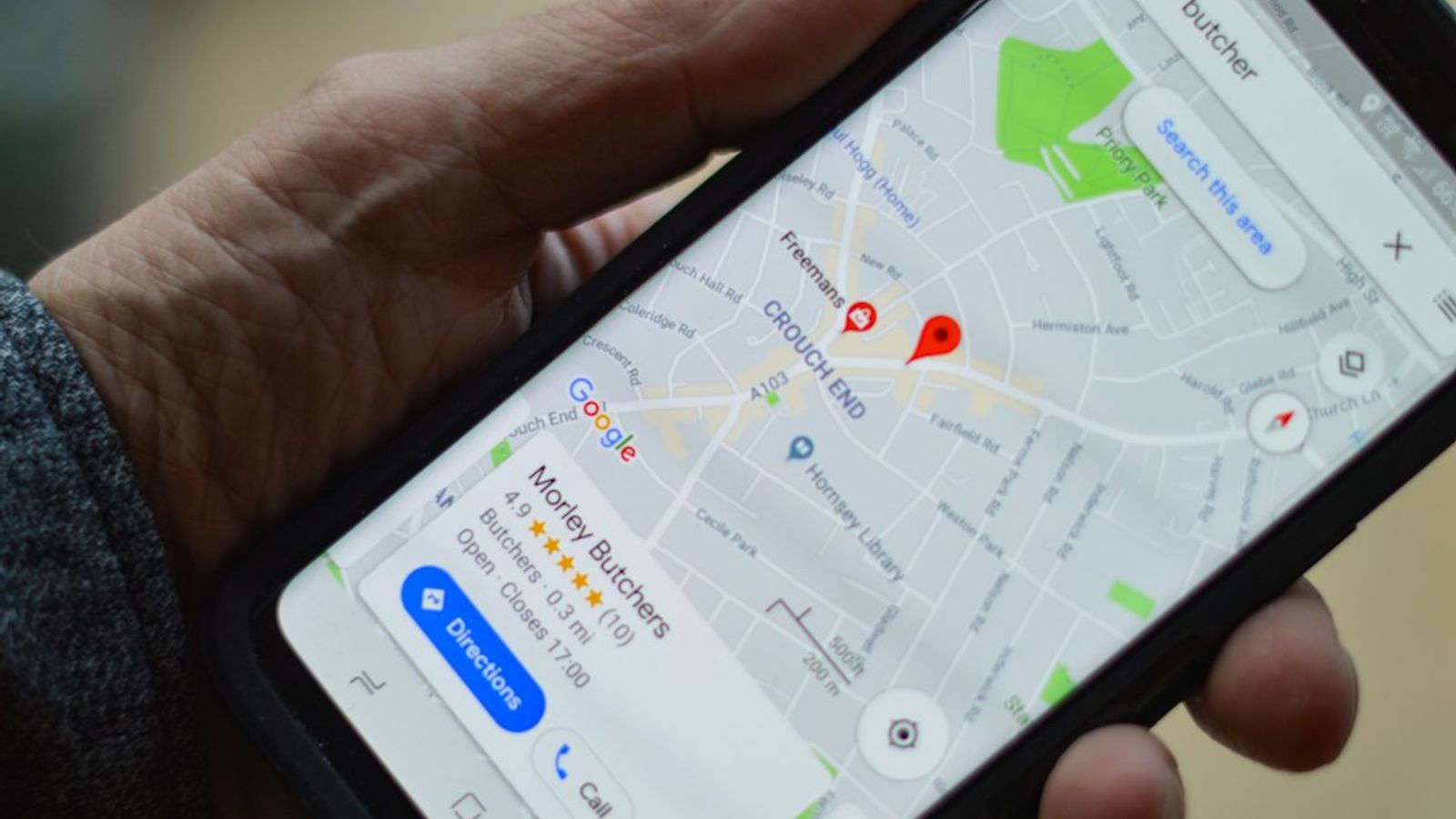
If you run a trade business, you've probably watched a franchise with a billboard budget move into your area and start showing up everywhere. Paid ads are a spending contest you can lose. Local search isn't, because Google ranks the map on how well you match the search, how close you are, and how well-known you are locally. A franchise location run from head office is often weaker on all three than it looks.
This guide covers the work that moves local rankings for plumbers, electricians, HVAC shops, roofers, restoration companies, and other trades: your Google Business Profile, your website's service and area pages, citations, local links, tracking, and a routine you can keep up. At the end there's a 30-day plan.
Key takeaways
- Google says local results come down to relevance, distance, and prominence, and that there's no way to pay for a better local ranking. That's why an independent can beat a national brand in its own backyard.
- Your Google Business Profile and your website have to say the same thing: what you do, where you do it, and how to reach you.
- Each main service needs its own page, and each important town or ZIP cluster needs a page with real local detail, not a copy with the city name swapped.
- Reviews, consistent business listings, and a handful of real local links build the prominence that wins the map pack.
- Local SEO compounds. Expect weeks for small fixes to show and months for big moves, so measure from a baseline.
Why local search is the fight an independent can win
When someone types "emergency plumber near me" or "roof repair" plus their town, Google usually shows three layers: a map with three businesses (the local pack), more map results behind "More places," and regular organic results below. Ads and Local Services Ads sit above all of it. The paid spots go to whoever spends the most within Google's rules. The map and organic results don't.
Google's own local ranking help page names the three factors:
- Relevance: how well your profile and website match what the person searched for.
- Distance: how far you are from the searcher. You can't move your shop, but you can be clear about where you work.
- Prominence: how well-known and trusted you are, based on things like reviews and how many other websites link to you.
A franchise location often runs on a generic corporate page and a profile managed from somewhere else. An owner who fills in every detail, earns reviews from every job, and builds pages about the actual towns and jobs they serve can outrank it. We've laid out why the franchise model leaves that opening in The Local Search Playbook.
Get your Google Business Profile right first
Your Business Profile is the single most important free tool for showing up on the map. The basics:
- Claim and verify it. Google says verification makes your profile more likely to show up in search.
- Pick the most specific primary category that describes what your business is. "Plumber" beats "Contractor." Google's guidelines say to use as few categories as possible, chosen to complete the sentence "this business is a..."
- Keep your name, address, and phone number exactly as they appear on your signage and website. No keywords or city names stuffed into the business name; Google can suspend a profile for it.
- If you work at customers' homes and don't take walk-ins, hide your address and set a service area. Google allows up to 20 service areas and says the whole area shouldn't stretch past about two hours' drive from your base.
- Add real photos of your crew, trucks, and finished work, and keep hours current, including holidays and emergency availability.
Define your service area honestly
Most trades are service-area businesses, and the temptation is to claim the whole state. Don't. Google measures distance from where your business is based, and listing towns you can't reach in a reasonable response time doesn't make you rank there. It makes you look less relevant in the places you can actually serve.

Pick the towns and ZIP codes where your jobs are worth the drive and where you can realistically win. List them in your profile, add an "areas we serve" section to your website, and keep the list the same everywhere. A Milwaukee HVAC shop that lists Milwaukee, Wauwatosa, and Brookfield, and has pages for each, will do better than one that claims "all of Wisconsin."
Build a page for every service you want calls for
If you want calls for drain cleaning, water heater replacement, and sewer line repair, each one needs its own page. A single "Services" page with a bulleted list can't rank for all three, and it gives the person searching nothing specific to read.

A service page that ranks and converts usually has:
- A headline with the service and the main city, such as "Drain Cleaning in Scottsdale, AZ."
- A short opening about the problem you solve, before what you do.
- The sub-services and situations it covers, in the words customers use.
- Proof: licenses, warranties, reviews that mention this service, and photos from local jobs.
- A short FAQ answering the questions you hear on the phone.
- A phone number and a short quote form near the top, plus a call button that stays visible on a phone.
Keep the title tag under about 60 characters and write the meta description as an invitation to call. Put your name, address, and phone number in the footer of every page so they match your profile.
Area pages: one per town, and make each one different
If you serve six towns, a single "Areas We Serve" page won't rank in all six. Separate pages can, but only if each one is useful on its own. Copying the same text and swapping the city name is thin content, and it tends to rank nowhere.
What makes an area page earn its place:
- Jobs you've done there, with photos and a line about what the job involved.
- Reviews from customers in that town.
- Local conditions that change the work: older housing stock, hard water, flood-prone streets, or ice dams.
- The neighborhoods and nearby towns you cover from there.
The Local Search Playbook includes the service-area page pattern we use, and a worksheet for choosing which ZIP codes to build first.
Citations: make every listing say the same thing
Citations are listings of your business name, address, and phone number on other sites: Bing Places, Apple Business Connect, Yelp, Facebook, Angi, Houzz, your chamber of commerce, and trade association directories. They help Google confirm your business is real and where you say it is.
The work here is mostly cleanup. Search for your business name with old phone numbers and old addresses, and fix or remove every listing that's out of date. Then add yourself to the handful of directories your customers actually use, plus one or two for your trade. After that, it's a once-a-year check.
Local links: earn a few good ones
Links from other websites are one of the signals Google mentions for prominence. For a trade business, the useful ones are local and real:
- Your chamber of commerce and local business associations.
- Suppliers and manufacturers that list certified installers.
- Trade association member directories.
- Local teams, events, and charities you sponsor.
- A seasonal checklist or safety guide published by a local news site or neighborhood association.
A few genuine local links do more than dozens of junk directory listings. Skip anyone selling links in bulk.
Content that answers the questions customers actually ask
Beyond service and area pages, a short article that answers a real local question can bring in people earlier in their decision. Good topics come straight from your phones: "What to do in the first 30 minutes after a pipe bursts," "Getting your furnace ready for a Milwaukee winter," or "Do I need a permit to replace my water heater in Madison?" Tie each one to local conditions, link it to the matching service page, and end with a clear next step.
Make the site work on a phone
Many trade searches happen on a phone, in a hurry, with water on the floor. Your site has to load fast, show the phone number at the top, and keep a call button visible as the person scrolls. Keep quote forms short: name, phone, address, a quick description, and an optional photo. Compress job-site photos before you upload them; full-size phone pictures are a common reason a trade site loads slowly.
On the technical side, the essentials are HTTPS, clean page addresses, an XML sitemap submitted in Google Search Console, and LocalBusiness structured data that matches your profile. Get them right once and check them a couple of times a year.
Track calls and booked jobs, not just rankings
Rankings are a means. What you want to know is which pages and searches produce calls and booked jobs. Use:
- Google Search Console for the searches that already show your site and which pages they land on.
- Your Business Profile performance report for calls, direction requests, and website clicks from the map.
- Google Analytics for form submissions and click-to-call taps.
- Call tracking, set up so the number on your profile stays your main, consistent number.
Before you change anything, write down your baseline: rankings for five to ten core searches, monthly calls from the profile, and review count. Compare at three, six, and twelve months. If you want a quick read on how well your search listings earn clicks, our click-through rate calculator compares your numbers to benchmarks.
Mistakes that quietly cost rankings
- Different phone numbers or addresses on your profile, website, and directories.
- Keywords or city names stuffed into the business name.
- Area pages that are copies of each other with the town name changed.
- A virtual office or extra profiles for every truck. Google's guidelines say a virtual office isn't eligible, and a business gets one profile per real location.
- Buying reviews or offering discounts for them, which breaks Google's review policy.
- Leaving bad reviews unanswered.
How the approach changes by trade
An emergency plumber, a roofer, and a remodeler see different search behavior. For emergency work (plumbing, electrical, restoration), the person searching wants a call answered now, so a fast mobile site, 24/7 hours on the profile, and a quick callback matter most. Among the businesses that rank, the one that answers first usually books the job.
For project work (roofing, remodeling, siding), buyers compare before they call. Galleries, detailed project write-ups, and reviews that talk about quality and cleanup carry more weight. For seasonal work (HVAC tune-ups, gutter cleaning, snow removal), publish and update pages ahead of the season, not during it.
What this looks like when it compounds
Advanced Health & Safety, a mold and asbestos inspection firm in Madison, had one top-three keyword ranking when we started working together in early 2024. We rebuilt their website, ran a sustained program to build the site's authority, and aimed the SEO work at searches for the service rather than the company name. In about two years, verified in Ahrefs, their top-three rankings grew from 1 to 111 and organic traffic grew roughly 11 times, from about 57 to 764 monthly visits, with 714 of those visits from people who weren't searching for the company by name.
None of that showed up in the first month. It built steadily, which is how local SEO works.
A 30-day plan to get started
Week 1: foundation
- Claim and verify your Google Business Profile, and fix the primary category.
- Check your name, address, and phone number on your ten most important listings and correct any that are wrong.
- Choose three to five priority services and the towns you most want to win.
Week 2: your website
- Make sure your homepage headline names your main service and area.
- Rewrite your most important service page using the checklist above.
- Add your name, address, phone number, and a map to the contact page and footer.
Week 3: reviews
- Set up a review request that goes to every customer after every job, by email or text, with a direct link.
- Reply to every existing review, positive and negative.
Week 4: content and tracking
- Publish one local article or a detailed write-up of a recent job.
- Set up tracking for calls and form submissions.
- Record your baseline numbers so you can measure progress at 60 to 90 days.
Get help where it pays
You can do most of the profile and review work yourself. Where owners usually stall is the page structure, the authority building, and keeping it going in a busy season. If you want us to run it with you, that's what the Local Lead Plan covers. To find out first where your market can be won and what to fix first, book a one-day working session.
Frequently asked questions
How long does local SEO take for a trade business?
Profile fixes and citation cleanup can show up within weeks. Bigger moves, like breaking into the top three on the map for a competitive service in a large metro, usually take several months and keep building for a year or more. Advanced Health & Safety's gains came over about two years of steady work.
Can I do local SEO myself?
Much of it, yes. Claiming and updating your profile, asking every customer for a review, adding photos, and keeping listings consistent are jobs an owner or office manager can handle. Page structure, technical fixes, and building authority with links usually go faster with help, especially when your time is worth more on jobs and estimates.
Do I need a separate Google Business Profile for each town I serve?
No. Google's guidelines allow one profile per real location with staff, and a service-area business gets one profile with a service area of up to 20 places. Reach the other towns with area pages on your website and reviews from customers there. Fake offices can get your profile suspended.
How much should a trade business spend on local SEO?
It depends on your market and your average job size. A roofer whose average job is worth thousands can justify more than a low-ticket service. Judge it by cost per booked job, not by traffic. Our [marketing budget calculator](/tools/marketing-budget-calculator/) is a good place to start the math.
Does running Google Ads help my map ranking?
Not directly. Google states there's no way to pay for a better local ranking. Ads and Local Services Ads are a separate channel that can bring calls while your organic rankings build.
About the author

Mark Hope
Founder, President & Chief Strategy Officer, Asymmetric Marketing
Mark Hope is the Founder, President & Chief Strategy Officer of Asymmetric Marketing. His career spans elite military service, senior leadership at two of the largest companies in their categories, and founding several companies of his own. It's the common thread behind how Asymmetric helps smaller companies out-compete bigger ones.
Mark began his career in U.S. Army Special Operations, serving from 1977 to 1988 in the 1st and 3rd Battalions of the 75th Ranger Regiment and as an Operator in 1st Special Forces Operational Detachment–Delta (Delta Force). What that world runs on (careful planning, reading your opponent, and winning from a position of disadvantage) is the foundation of how he helps smaller companies win today.