

July 25, 2024
Luck Favors The Prepared Quote: A Business Philosophy to Live By
The article “Luck Favors the Prepared” emphasizes the importance of preparation in achieving success. It explores how thorough planning, anticipation of challenges, and proactive strategies can position businesses to take advantage of opportunities when they arise, ultimately leading to better outcomes and growth.
By Mark Hope, Founder, President & Chief Strategy Officer, Asymmetric Marketing

I’ve heard this quote many times and used it liberally with my teams. I believe that it's a variation of a quote by Louis Pasteur. Some refer to the quote as “chance favors the prepared mind.” Another similar quote from the Roman philosopher Seneca is, “Luck is what happens when preparation meets opportunity.”
Both “luck favors the prepared” quotes highlight the necessity of being prepared, and the role preparation has in reducing the undesirable potential of unmanaged chance.
The quote can be modified in a competitive context to mean that “victory favors the prepared.” Here, the role of preparation in competitive environments becomes the focus.
Today, business leaders (at least the good ones) try to think ahead and prepare for what comes next. Getting through challenging times is much less difficult if you're prepared and have a clear idea of where you want to go and what you need to do to arrive at that destination (a little luck doesn’t hurt either).
Understanding the basic principles of mental preparation and having a foundational understanding of key concepts can significantly aid in handling challenges and uncovering opportunities effectively. Being prepared allows one to seize the right moment when it arises.
How to Be Prepared
It’s a cliché, but it’s true: success favors the prepared. Significant undertakings require substantial time and dedication; without putting in the necessary effort, one may rely on luck rather than preparedness. To succeed, you must work ahead and ensure you’re ready for any opportunity.
But… How does a person prepare for a shockingly uncertain future? How do you prepare for chance? How do you use “Luck favors the prepared” in your strategic thinking?
What does chance favors the prepared mean? It addresses the role of preparation in outcomes. For example, suppose you've thought through a situation and prepared mentally and physically for the various outcomes. In that case, you'll be able to react more quickly and effectively when that event, or something similar, occurs.
We’re not talking about hoping for good luck. We’re talking about that thing that eludes many, well-considered preparedness.
Planning and preparation are essential for any goal you want to achieve. To succeed in business, you must have a solid business plan and know your industry. To lose weight, you must create a diet and exercise plan and stick to it.
The same is true for luck: if you want luck to favor you, you must prepare for it. That means being alert and aware of opportunities and having the skills and knowledge to take advantage of them. It also means being in the right place at the right time and having the courage to act when opportunity knocks.
Being prepared allows you to seize the right moment, turning fleeting chances into significant opportunities.
The answer is to employ strategy development principles, frameworks, and methodologies, coupled with deep thinking and brainstorming, to complement all that luck.
SWOT: A Strategy Development Framework
The strategy development process includes concepts, principles, frameworks, tools, and processes. Many of these are complex and arcane, but some, like the venerable SWOT analysis, are easy to understand and use.
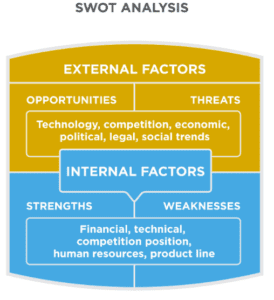
The easy part is identifying your strengths, weaknesses, and associated opportunities and threats.
Thinking through this exercise for other market participants, such as your competitors, is also important.
Most importantly, I think the time to do this is right now. Being prepared is hard work, but it will ultimately pay off.
Sure, the exigencies of addressing problems like store closings, supply chain disruption, consumer fear, and requiring our teams to work remotely are important challenges that deserve our attention. Luck won’t solve these problems, but preparation will.
However, we must set aside time, resources, and energy to work through strategy development to ensure that we'll be in a favorable position when these opportunities arise. Identifying strengths, weaknesses, opportunities, and threats helps you prepare to act immediately.
Don’t forget those elements often considered “uncontrollable,” such as government regulation, the economy, weather, technology, and market trends. A business wargame is another powerful tool for strategic planning that addresses these factors.
Risk Assessment & Planning
Risk management and risk assessment are the most important aspects of preparation. What could go wrong, and how can risks be minimized?
A solid plan B is also essential; you’ll need a backup if your original plan falls through. Finally, always remember that fortune favors the bold. If you see an opportunity, go for it-you may not get a second chance.
You need to be prepared to seize the right moment when it arises, as these fleeting chances can lead to significant opportunities.

Adopting a mindset of preparedness can influence various situations one encounters in life. Being mentally prepared allows you to seize opportunities and achieve more favorable outcomes.
No business is immune to unexpected events, a fact that all entrepreneurs must be prepared for. By planning and preparing for potential disruptions, you can minimize their negative impact on your company. Here are some tips on how to get ready for anything:
- Have a crisis management plan in place. Every business should have a detailed plan in case of emergencies. This plan should include procedures for dealing with everything from natural disasters to data breaches. Ensure all employees are familiar with the plan and practice implementing it regularly.
- Stay organized and track important documents. In a disaster or other emergency, you’ll need quick access to information like insurance policies, bank account numbers, and vendor contact information. Ensure you have a system for regularly organizing, storing, and updating this data.
- Establish a backup plan for critical systems. If your business relies on computer systems or other electronic devices, ensure you have a backup plan in place in case of a power outage or other disaster. This might include having a spare device or keeping important files backed up online.
- Keep a cash reserve on hand. Unexpected expenses can crop up anytime, so having cash on hand is always wise. This will help you cover unexpected costs until you can get back on your feet.
- Stay informed about potential risks. It’s important to be aware of the risks your business might face in the short and long term. Monitor industry news and trends and plan for potential disruptions.
By preparing for the unexpected, you can reduce the risk of major setbacks to your business. With luck, you’ll never need to put your crisis management plan into action, but it’s always good to know you’re prepared just in case.
Contingency Planning
Emergency preparedness matters. Play your part by being ready to seize opportunities when luck arises. This adage is especially true for contingency planning. Planning for potential emergencies gives you the best chance of weathering any storm.
Creating a disaster recovery plan ensures you're ready to act on the right moment during a major disruption. This document should outline how your business will resume operations during a major disruption. It should include information on backup systems and procedures and contact information for key personnel.
Another important part of contingency planning is having adequate insurance coverage. Ensure you're insured for all possible risks, including natural disasters and cyberattacks.
Force Majeure Events
It doesn’t matter what type of business you run-planning for “what if?” moments matters. These ‘Acts of God’, also known as ‘Force Majeure’ events, are natural disasters like floods, earthquakes, and fires, and require solid disaster recovery plans. Many of these events are out of our control. Financial risks can include insufficient cash flow and PR scandals. These can severely impact your customers’ and company’s well-being. Fortune indeed favors the prepared.
Other quotes attributed to Louis Pasteur showcase his insights and philosophies on various subjects, including science and life, emphasizing his contributions to scientific thought and broader reflections.
In 2011, Thailand was hit hard by flooding during the monsoon season. Big companies with operations in Thailand, like Toyota and Canon, had to suspend production because of the flooding. Both companies saw a drop in operating profits and sales because of the event.

It's important to consider the potential consequences before they happen. The bottom line is that you may not stop it from happening, but you can prepare.
The first step in identifying potential hazards is to perform a risk assessment on your business. This will allow you to determine potential threats and their effects and what precautions to take to reduce future danger.
Recognize risks by level (e.g., low, medium, or high) and better understand how to tackle them. This type of assessment should be done annually, regardless of the size of your company. It will help ensure your overall success and avoid surprises for your customers and business.
Fate favors the prepared…
The Art of War
Try to use Sun Tzu’s principle of avoiding strength and attacking weakness to gain a strategic advantage and its corollary, which is to defend your weakness from its strength. If you effectively map your strengths against your adversary’s weaknesses, you create opportunities-and, hence, luck.

On the other hand, if your adversary uses his strength against your weaknesses, you experience threats. Luck favors the prepared.
Let’s think ahead and spend some of our time and energy planning for the future so that we're ready to welcome Lady Luck into our arms because of our preparedness.
Chance can be capricious, so manage it with preparedness. While good fortune is great to have, it's better to guarantee good planning than hope for good fortune.
Luck favors the prepared, a motto to live by. Louis Pasteur was surely right about how luck favors the prepared mind, and he saw clearly how it can bend the forces of chance.
Asymmetric specializes in unique and highly effective marketing, insights, and strategy processes and programs. We believe that luck favors the prepared.
Common Google Searches on This Topic
Reviewing this topic shows that many different search trends are common. These include:
- fortune favors the prepared mind meaning
- chance favors the prepared mind meaning
- luck favors the prepared meaning
- luck comes to those who are prepared
- chance favors only the prepared mind meaning
- lady luck favors the one who tries
There's a lot of interest in the quote and its meaning.
Frequently asked questions
What does "luck favors the prepared" actually mean?
The phrase comes from Louis Pasteur, whose original line was that in the fields of observation, chance favours only the prepared mind. The claim isn't that preparation creates opportunity but that it determines whether an opportunity can be recognised and acted on. The event arrives on its own schedule regardless. What preparation decides is whether you were carrying what the moment required when it did.
How is preparation different from planning?
Planning commits to a forecast: it picks the most likely future and builds toward it, which works until reality diverges from the assumption. Preparation assumes the forecast is wrong and buys capacity instead, such as uncommitted cash, current market knowledge, slack in the team and rehearsed decisions. Planning is measured by whether you stayed on the plan; preparation is measured by how fast you can respond when something shifts. The failure mode is doing only the first and calling it readiness.
How much preparation is too much?
Preparation carries a real cost, so it's possible to over-prepare in the same way a load-out can be too heavy to move with. Uncommitted cash gives up returns, slack looks like inefficiency on a utilisation report, and rehearsing decisions consumes days that could have been billed. The discipline isn't carrying everything useful but deciding what is worth its weight now, which means periodically putting things down as well as picking them up.
What should a business actually prepare for?
Not specific predicted events, since those are the ones you'll get wrong. Prepare the capacities that would help across several futures: cash you haven't committed, a current read on where a competitor is weak, enough headroom in the team that somebody could take something on, relationships built before you needed anything, systems that run without the owner, and decisions you have already argued through once so the first time isn't under pressure.
What does “Luck Favors the Prepared” mean?
The phrase “Luck favors the prepared” means that success often comes to those who are prepared. Being ready and proactive increases your chances of seizing opportunities and achieving favorable outcomes. Preparing to seize the right moment when it arises matters, as these fleeting chances can lead to significant success.
How can I improve my preparedness?
Improving readiness involves continuous learning, clear goals, planning, and adaptability. Being prepared allows you to seize the right moment when it arises, turning opportunities into successes. Key steps include regularly updating your skills, staying informed about industry trends, and having contingency plans.
Why is preparation important in business?
Business strategy matters because it allows you to anticipate challenges, capitalize on opportunities, and make informed decisions. Being prepared ensures you can seize the right moment, turning fleeting chances into significant successes. It helps mitigate risks and ensures you're ready to respond effectively to changing market conditions.
Can you provide examples of how preparation leads to success?
A company that invests in market research before launching a new product is more likely to succeed because it understands consumer needs and competition. Being prepared allows them to seize the right moment when it arises. Similarly, entrepreneurs who network and build relationships before seeking investment are more likely to secure funding.
What role does mindset play in preparation?
A proactive attitude matters in preparation. Preparing to seize the right moment when it arises can make all the difference in achieving success. A proactive, positive attitude encourages you to take initiative and embrace opportunities. It also helps you stay resilient despite setbacks and continuously seek improvement.
How can small businesses ensure they're prepared for unexpected challenges?
Small businesses can ensure preparedness by creating flexible business plans, maintaining financial reserves, staying adaptable to change, and continuously monitoring their environment. You need to be prepared to seize the right moment when it arises, as these opportunities can be fleeting and require immediate action. Regular staff training and development also play a critical role.
What are some tools or resources that can help with preparation?
Tools and resources that aid in preparation include project management software, industry reports, financial planning tools, and continuous education platforms. Preparing to seize the right moment when it arises matters for capitalizing on opportunities. Networking groups and professional associations can also provide valuable support and insights.
How can I measure my level of preparedness?
You can measure preparedness by conducting a readiness evaluation to handle various scenarios, the robustness of your plans, and your ability to adapt quickly to changes. Preparing to seize the right moment when it arises matters for capitalizing on opportunities. Regularly reviewing and updating your strategies and seeking feedback from peers and mentors can provide insights into your preparedness.
What should I do if I feel unprepared?
If unprepared, identify gaps in your knowledge or resources. Being prepared to seize the right moment when it arises matters for success. Seek learning opportunities, gather information, and develop a clear action plan. Don’t hesitate to contact mentors or professionals who can provide guidance and support.
How does being prepared create opportunities?
Opportunity recognition positions you to recognize and act on opportunities when they arise. You need to seize the right moment when it presents itself. It enables you to make swift decisions, approach challenges confidently, and use your strengths effectively, increasing your chances of success.
About the author

Mark Hope
Founder, President & Chief Strategy Officer, Asymmetric Marketing
Mark Hope is the Founder, President & Chief Strategy Officer of Asymmetric Marketing. His career spans elite military service, senior leadership at two of the largest companies in their categories, and founding several companies of his own. It's the common thread behind how Asymmetric helps smaller companies out-compete bigger ones.
Mark began his career in U.S. Army Special Operations, serving from 1977 to 1988 in the 1st and 3rd Battalions of the 75th Ranger Regiment and as an Operator in 1st Special Forces Operational Detachment–Delta (Delta Force). What that world runs on (careful planning, reading your opponent, and winning from a position of disadvantage) is the foundation of how he helps smaller companies win today.