

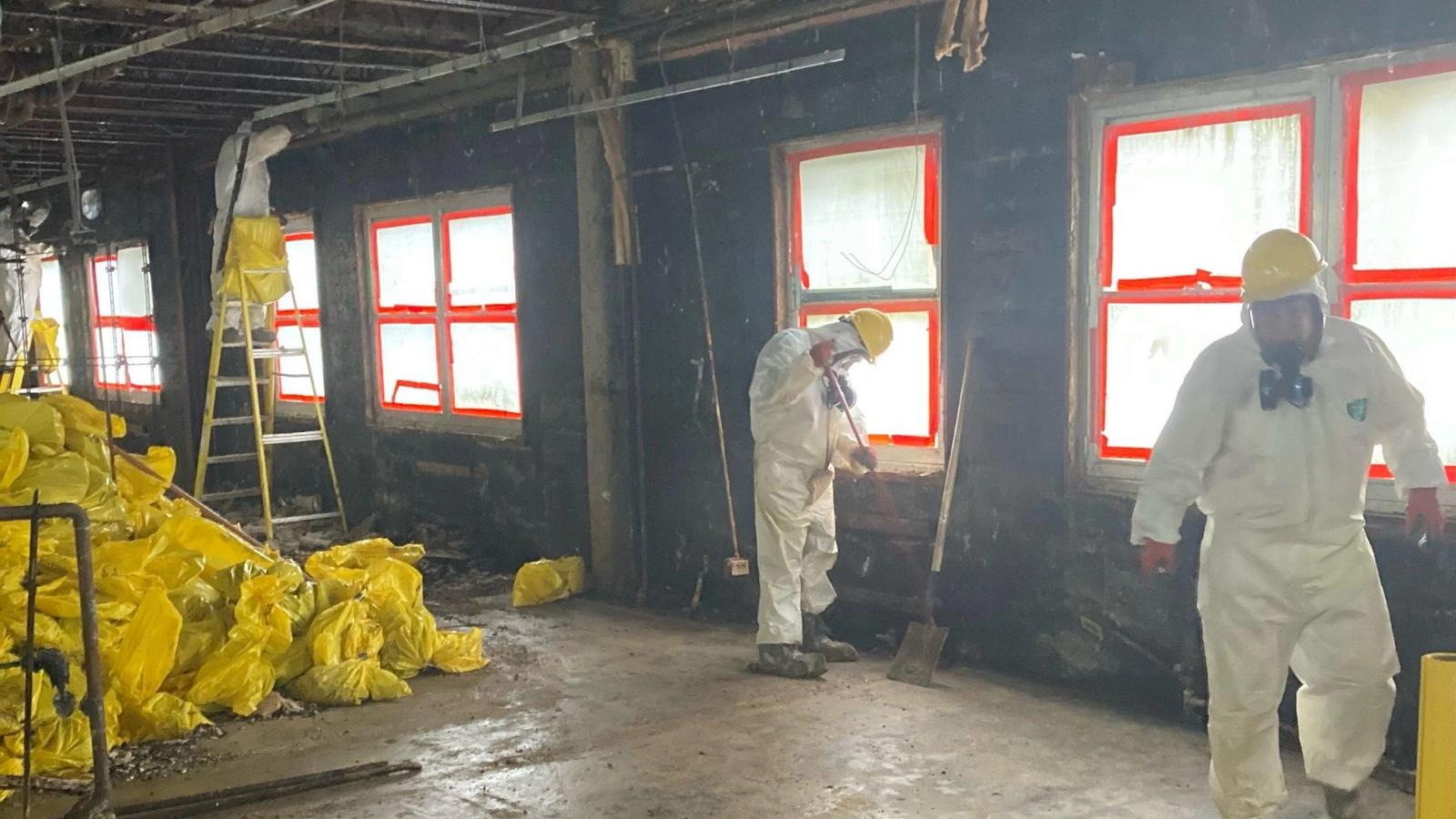
Institutional contracts are the difference between chasing one-off jobs and building a remediation business with predictable, multi-year revenue. But universities, hospitals, and school districts do not buy the way residential customers do. They buy through structured procurement, evaluate risk before price, and reward firms that respond first with credible, documented answers.
This article breaks down exactly how mold and asbestos remediation companies can position themselves to win and retain institutional work in 2026 and beyond.
Key Takeaways
- Institutional buyers like universities, hospitals, and public agencies award remediation contracts to firms that respond fastest, understand compliance, and reduce risk across safety, data privacy, and regulatory reporting.
- A structured vendor management program, strong contract remediation processes, and clear remediation plans are now basic entry tickets for RFPs, not differentiators.
- Speed-to-lead must be balanced by rigorous risk management: the claims you make in early outreach must align with what your master services agreement and remediation plan can deliver.
- Past performance is crucial in institutional contracting, serving as a currency for credibility that procurement teams weigh heavily alongside technical capability.
- Asymmetric Applications helps remediation firms systematize their contract, risk, and vendor workflows so they can consistently win and service large institutional contracts.
The New Reality of Institutional Remediation Contracts in 2026
The institutional market for mold and asbestos remediation has shifted permanently. Post-2020 indoor air quality standards, aging infrastructure in K-12 schools and universities, and a wave of federal and state grant funding have created sustained demand that did not exist at this scale five years ago. Massachusetts alone allocated roughly $100 million through its Improving Ventilation and Air Quality in Public School Buildings Grant starting in FY2023. New York's Clean Green Schools Initiative offers up to $15 million per district for IAQ, building envelope, and energy retrofits through 2026.
Remediation may involve cleanup and corrective actions in environmental or regulatory contracts, and environmental remediation businesses operate in strict regulatory environments that institutional buyers take seriously. Environmental remediation requires adherence to EPA regulations, and institutional buyers rely on formal procurement vehicles rather than standard digital ads. That means your marketing, your contracts, and your operations all need to speak the same language.
Here is what this looks like in practice:
- Universities, hospital systems, and school districts now buy remediation services primarily through structured RFPs, pre-qualified vendor lists, and multi-year framework agreements. The EPA's Remedial Acquisition Framework exemplifies this pattern at the federal level with multiple-award indefinite-delivery contracts running through 2028.
- Institutional contracts often bundle emergency response (flood and mold events) with ongoing monitoring and reporting obligations spanning three to five years. Michigan's RFP #26_2065 covers testing, lab analysis, health and safety consulting, and multi-year renewals under a single solicitation.
- Procurement teams prioritize vendors who can prove robust vendor management, safety records, and contract compliance history, not just the lowest price. Alameda County's RFP Project No. 5001 assigns significant scoring weight to public sector experience, credentials, and regulatory compliance capability.
- Grant funding tied to equity, environmental justice, and infrastructure legislation is driving volume. Companies that cannot demonstrate documented remediation processes, certified personnel, and compliant agreements will not even clear the evaluation threshold.
The rest of this article shows remediation leaders how to align marketing, contracts, and operations to this institutional buying pattern.

Speed-to-Lead: Turning First Response into Institutional Wins
Speed-to-lead in remediation institutional contracts marketing means the elapsed time between an institutional buyer signaling a need via emergency call, RFP release, or referral, and your firm responding with a credible, compliant, documented package. Consumers increasingly evaluate vendors based on their ability to handle problems effectively during remediation, and the firm that responds first with substance often shapes the project scope and wins the follow-on contract.
- Many institutional RFPs start from an emergency. An August dorm mold outbreak, a burst pipe flooding a hospital wing, and an unexpected asbestos discovery during renovation. The first firm to deliver a credible response frequently becomes the de facto advisor, defining scope and methodology before competitors even submit qualifications.
- Guarantee five-to-fifteen-minute response times for inbound institutional leads by implementing call routing, on-call schedules, and templated email or SMS replies. Michigan's state contract requires vendor contact within 15 minutes during working hours and field service reports the same day as inspections-these SLAs are becoming standard.
- Build pre-approved response playbooks for each institutional segment: universities, hospital systems, and government facilities. Each playbook should include sample scopes, preliminary pricing bands, safety documentation, and credentials ready to send within an hour. This is where faster decision-making frameworks give smaller firms an edge over larger, slower competitors.
- Marketing assets-landing pages, case studies, safety stats-must be aligned with contracts. If your website promises 24/7 emergency response and your MSA does not codify it, you have a liability gap, not a marketing advantage.
- Track response SLAs per channel (web form, referral, procurement portal) so leadership can benchmark and improve speed-to-lead over quarters. What gets measured gets managed.
Institutional Buyers and Their Risk Lens
Institutional procurement is fundamentally a risk management exercise. Risk committees at universities, hospitals, and financial institutions evaluate third-party vendor relationships through layered lenses: safety, regulatory compliance (OSHA, EPA, state asbestos rules), data privacy, reputational exposure, and long-term liability. Maintaining compliance minimizes legal complications for remediation firms, but more importantly, it signals to buyers that you understand their world.
The U.S. Government Accountability Office reported that GSA is pushing to complete all missing asbestos inspections by the end of FY 2026, updating its IRIS database to track compliance at the building level. That level of accountability cascades to every vendor on the job. Here is how institutions evaluate you:
- Safety and worker health risk sit at the top. Exposure incidents, containment failures, or PPE non-compliance can shut down a campus building and generate headlines. Institutional RFPs routinely require Certified Industrial Hygienists, documented safety history, and incident-free hour tracking.
- Regulatory compliance risk extends beyond federal law. Tougher state-level asbestos notification rules and evolving indoor air quality standards in K-12 schools (tracked across dozens of states by the Environmental Law Institute) make institutions extremely risk-averse in selecting remediation partners.
- Even environmental remediation contracts now reference data privacy and proprietary information handling for building plans, incident reports, and health-related data. This is territory most remediation firms have not historically addressed in their agreements.
- Institutions distinguish between a "job-by-job customer" relationship and a long-term institutional partnership sharing risk for three to seven years. The former gets evaluated on price; the latter gets evaluated on risk profile, business continuity capability, and consistency of performance.
- Marketing remediation services requires a focus on risk-averse buyers bound by compliance frameworks. If your pitch deck leads with "fast and affordable" instead of "compliant, documented, and reliable," you are speaking the wrong language. Business continuity planning matters to these buyers far more than speed alone.
Building a Vendor Management Program That Institutions Trust
A vendor management program in the remediation context is the system of policies, procedures, and workflows through which your firm ensures that subcontractors, labs, waste haulers, and specialized independent contractor partners meet institutional contract standards. Vendor management mitigates risks in third-party relationships, and regulators hold organizations accountable for vendor compliance failures, including failures by your subs.
- Standardized vetting checklists form the foundation. Every third-party vendor should clear documented checks for licenses, certifications, insurance (general liability, workers comp, pollution), background checks, training records, and safety incident history before they touch an institutional project. Maine's pre-qualified vendor list RFP eliminates firms that fail these thresholds before evaluation even begins.
- Due diligence is essential before and during vendor relationships. This means not just onboarding checks but ongoing monitoring of performance metrics-incident-free hours, job completion quality, response times for emergency call-outs, and lab turnaround accuracy.
- Vendor performance should be monitored against service-level agreements. Track whether your labs return results within contractual windows, whether your waste haulers maintain proper manifests, and whether field crews meet containment and clearance standards consistently.
- Vendor management programs should assess fourth-party risks as well. If your subcontractor uses a lab you have not vetted, that is your compliance risk in the eyes of the institution.
- Contractual flow-down is non-negotiable. Institutional contract terms on safety, reporting, and confidentiality must be mirrored in subcontracts and independent contractor agreements. Contracts must outline vendor responsibilities and compliance requirements at every tier.
- Remediation processes often involve root-cause analyses and third-party audits to ensure operational failures are fixed permanently. Document these and include summaries in your RFP responses.
- A clearly documented vendor management program becomes a marketing asset. Showcase it in RFP responses, pitch decks, and pre-qualification questionnaires. Asymmetric Applications helps firms digitize vendor data, automate reminders for COI renewals, and centralize certificates and licenses through integrated business systems.
Contract Remediation: Fixing Legacy Agreements Before They Cost You Deals
Many remediation firms carry pre-2018 master service agreements and outdated work orders that no longer align with current safety, data privacy, or procurement expectations. Contract remediation corrects defects in existing agreements. It ensures compliance with legal and regulatory changes and addresses ambiguities or non-compliance issues in contracts that could disqualify you from institutional work.
- The process often involves mass updates across similar agreements. If you serve multiple school districts under similar MSA templates, one regulatory change can require updating dozens of documents simultaneously. Contract remediation aligns terms with the parties' original intent while bringing language current.
- Start by centralizing all existing contracts into a digital repository. Tag each agreement by client type (university, hospital, municipality), start date, renewal date, and risk profile. This inventory phase is where most firms realize how many unsigned amendments and expired clauses they are carrying.
- Clauses that commonly need remediation include outdated liability caps, unclear scope of emergency response, missing data privacy language, vague intellectual property ownership for inspection reports, and insurance requirements that no longer reflect current regulatory fines exposure.
- Compliance records can command higher selling prices for businesses, and proactively remediated contracts signal institutional maturity. Firms can confidently state that their institutional contract templates have been legally reviewed and updated within the last 12 to 18 months.
- Determine when to involve external contract counsel versus when standardized internal playbooks are sufficient. High-risk accounts like hospitals and universities with complex research facilities typically warrant outside legal review. Routine municipal contracts may be handled with internal templates once the playbook exists.
- Companies must document remediation processes for compliance. Every update, amendment, and clause revision should be tracked with version control so you can demonstrate a clean audit trail to any procurement team.
Designing Remediation Plans That Double as Marketing Assets
A remediation plan is a detailed document outlining investigation, abatement methodology, roles and responsibilities, safety and containment procedures, air or environmental testing, and re-occupancy timelines. Contractually, it becomes a deliverable. Strategically, it becomes evidence of your competence.
- Institutions increasingly require written remediation plans before issuing a purchase order. These plans must include investigative steps, abatement methods (glovebag versus full removal, wet methods for mold), air clearance criteria, moisture remediation, and re-entry protocols.
- Templated remediation plans for mold, asbestos, and lead paint can be customized quickly while still meeting OSHA, EPA, and local code references. Build switchable sections for different institutional types so your administrative staff can assemble a compliant plan in hours, not days. A CPQ-style approach to scoping remediation work can dramatically reduce cycle times.
- Integrate clear roles and responsibilities in every plan, including when independent contractors or specialized labs are involved and how their work is supervised. The vice president of facilities at a university wants to see exactly who is responsible for what, and when.
- Plans should explicitly address risk management: containment strategies, communication protocols with campus or hospital leadership, emergency escalation paths, and job duties for each crew member on site.
- Visually structured, jargon-light remediation plans with clear headings and checklists strengthen institutional marketing by making complex work feel predictable and controlled. Non-technical buyers on procurement committees need to understand what they are approving.
- Consistent plan formats enable faster internal review and reduce cycle times between lead, proposal, and signed contract, directly improving your speed-to-lead advantage.
Protecting Data, Intellectual Property, and Proprietary Information
Data privacy and intellectual property protection matter even in environmental remediation. Institutions share floor plans, environmental sampling results, incident photos, and sometimes limited health-related data that are treated as sensitive information. Mishandling any of it can trigger legal risks, regulatory fines, and loss of the contract.
- Include explicit data privacy provisions in institutional contracts: data handling procedures, retention periods, breach notification obligations, and permitted use of project data. Missing privacy policies can lead to unfair trade practice claims, even in industries that do not traditionally think of themselves as data handlers.
- Clarify intellectual property ownership early. Who owns the inspection methodologies, digital models of buildings, and remediation reports produced under the contract? Define usage rights and reuse rights in your contractual terms. Just as digital stone fabrication involves advanced methods like robotic milling and CNC technology, where IP ownership of designs matters, your proprietary inspection techniques and report formats deserve similar protection.
- Establish policies around generative AI usage if staff are drafting reports or proposals using AI tools. Without guardrails, proprietary information or client data can be inadvertently exposed to third-party platforms.
- Reference applicable privacy laws and EPA contract clauses under 48 CFR Subpart 24.104 when working on federal or state-funded projects. These requirements often flow down to subcontracts.
- Being able to articulate a clear privacy and IP stance in RFP answers and presentations makes your firm look institution-ready. Asymmetric Applications helps formalize such governance policies and integrate them into contract templates and workflow tools.
From One-Off Jobs to Multi-Year Institutional Relationships
Most remediation firms enter institutional work through a single emergency cleanup-a flooded dormitory basement, mold behind a hospital wall, asbestos discovered during a renovation. That first job is an audition. The question is whether you treat it as a transaction or as the beginning of a relationship worth seven figures over three to five years.
The path from one-off job to multi-year agreement is not about charm. It is about evidence and process. Developing defensible case studies can help firms frame their past performance effectively, and past performance should include quantifiable outcomes and specific metrics to enhance credibility.
- Document everything on the first job: response times, safety incidents (or lack thereof), clearance success rates, and communication logs with facilities leadership. This becomes the evidence for proposing a standing agreement.
- Design institutional pricing models that work for both sides: retainer-based emergency response, tiered rates for after-hours work, and pre-negotiated unit costs for testing and reporting. These structures reduce procurement friction for future add-on acquisitions.
- Align marketing with contract design. Case studies should emphasize long-term partnerships and proactive risk management instead of just "we clean mold fast." Sustainable building materials are an important consideration in the architectural stone industry, and similarly, sustainable long-term vendor relationships are what institutional buyers seek in remediation.
- Negotiate service-level agreements that are aggressive enough to be compelling but realistic given staffing and vendor capacity. Overcommitting creates compliance risk and erodes trust faster than a missed deadline.

Marketing Systems that Align with Risk and Vendor Management
The most dangerous thing a remediation firm can do is let its marketing outpace its operational capacity. When your website claims 24/7 emergency response, your CRM auto-sends case studies with zero-incident safety records, and your sales team promises same-day scoping, but your vendor contracts, staffing plans, and insurance do not support those claims, you are creating legal risks that no amount of lead volume can overcome.
- Marketing teams targeting institutions emphasize risk reduction and compliance expertise instead of just features. Your website, brochures, and RFP boilerplate must be synchronized with what vendor management, safety, and contract teams can truly deliver.
- Build a shared content library accessible to sales, operations, and leadership: up-to-date safety stats, insurance certificates, example remediation plans, and vendor management program summaries that anyone can reuse without creating new compliance exposure.
- Integrate CRM tools with contract repositories so sales teams know exactly which template MSA, NDAs, and SOWs to send by sector and risk profile. This is where competitive intelligence meets operational discipline.
- Automate reminders for expiring institutional certifications (minority-owned status, safety awards, state licenses) that marketing depends on in proposals. A lapsed SOC 2 Type II report indicates compliance exposure. The same principle applies to lapsed remediation credentials.
- Effective marketing in the remediation sector requires establishing deep credibility and aligning with regulatory standards. Asymmetric Applications enables this alignment through workflow design and light automation, not as a replacement for legal counsel or safety expertise, but as the connective tissue between departments.
Common Contract and Vendor Pitfalls in Institutional Remediation
High-profile remediation efforts can negatively impact brand reputation if not managed well. Here are the pitfalls that most frequently cost remediation firms institutional business:
- Misclassification of independent contractors doing high-risk field work. If your "sub" functions as an employee in every practical sense but lacks proper credentialing, insurance, or oversight, institutional audits will flag this. It conflicts with both contract requirements and insurance expectations.
- Promising 24/7 response in marketing but failing to codify it in vendor contracts and staffing plans. This leads to SLA breaches and termination of agreements when the institution calls at 2 AM and no one answers.
- Inadequate documentation of ongoing monitoring of third-party vendor performance. During institutional audits, reviewers seek evidence that you evaluate and control your supply chain. Regulators hold organizations accountable for vendor compliance failures, including your subs' failures.
- Vague scopes of work that do not separate investigation, containment, demolition, and clearance testing. These ambiguities lead to disputes with procurement and facilities teams over who is responsible for what and who pays for scope gaps.
- Missing or outdated indemnity and limitation-of-liability clauses that do not reflect the real risk profile of hospital or campus work. In 2016, First National Bank paid $32.25 million for UDAAP violations-a reminder that compliance failures in any regulated industry carry severe financial consequences.
- Digital accessibility violations can result in ADA lawsuits, even for remediation firms whose websites or client portals fail to meet accessibility standards. This is an emerging compliance risk that many companies overlook.
- In 2024, a school district paused an abatement project because the contract failed to specify which party was responsible for notifying staff and occupants under state asbestos law. The delay cost them grant funding and damaged the contractor's reputation for future work in that geographic region.
Implementing a 90-Day Institutional-Readiness Roadmap
You do not need a year to become institution-ready. You need 90 focused days and the discipline to implement what you learn. Here is how to structure it.
Days 0–30: Inventory and Assess
- Inventory all active institutional and commercial contracts. Centralize them digitally and flag missing signatures, outdated risk clauses, and expired insurance certificates.
- Catalog all third-party vendors and independent contractors. Document their current licensing, insurance, safety records, and the contractual terms governing each relationship.
- Identify your current speed-to-lead baseline: how long does it take from an inbound institutional inquiry to a credible response with documents attached?
Days 30–60: Remediate and Standardize
- Work with legal and operations to address high-risk contracts around safety, liability, and data privacy. This is your contract remediation sprint-implement mass updates where agreements share common language.
- Standardize remediation plan templates for mold, asbestos, and lead. Ensure each template references current OSHA, EPA, and state-specific requirements with sufficient time built into review cycles.
- Formalize basic vendor management policies, including onboarding checklists, ongoing monitoring routines, and contractual flow-down requirements. Achieve compliance across your vendor ecosystem before your next RFP submission.
- Create job descriptions for any new roles required to support institutional work (project managers, compliance coordinators).
Days 60–90: Align and Launch
- Align marketing and sales materials with updated contracts and policies. Retire any collateral that makes claims your operations cannot support.
- Train sales and project managers on new institutional playbooks. Run tabletop exercises simulating emergency response scenarios.
- Implement speed-to-lead tracking in your CRM or similar tooling. Set benchmarks and review weekly. The Pathfinder Sprint model can compress this planning into structured execution.
Beyond 90 days, establish annual contract remediation cycles and semi-annual reviews of vendor performance. The firms that exist at the top of institutional preferred vendor lists are the ones that treat this as an ongoing operational discipline, not a one-time project. It is in your organization's best interest to build these review cycles into your annual calendar.