

Are you looking to align your marketing efforts with your business goals? A strategic marketing plan is your roadmap. This article will guide you through creating an effective plan step by step, from understanding key components to setting measurable objectives.
Key Takeaways
- A comprehensive plan for strategic marketing helps align teams and resources with business objectives, ensuring efficient use of resources and measurable outcomes.
- Following essential steps—such as defining a mission statement, conducting a SWOT analysis, and establishing clear goals and KPIs—is key to building an effective strategic marketing plan.
- Setting measurable marketing goals is essential for assessing the effectiveness of marketing strategies and ensuring alignment with overall business objectives, while thorough market research and target audience identification drive business success.
Understanding Strategic Marketing Planning

Strategic marketing planning is foundational to any successful business strategy. It involves creating a detailed marketing strategy outline that aligns with overall business objectives and delivers measurable results. A well-crafted strategic plan helps the company achieve business impact by connecting marketing activities to tangible outcomes such as revenue, pipeline contributions, and ROI. Think of it as the blueprint that guides your marketing activities toward achieving specific goals, whether it’s increasing brand awareness, generating leads, or driving sales. This marketing strategy covers all aspects necessary for success.
A strategic marketing plan is a comprehensive, data-driven blueprint that ensures efficient resource allocation and sustainable growth. This comprehensive plan helps organizations identify opportunities, anticipate challenges, and develop targeted strategies that capitalize on market trends. Competitive analysis is a key part of the process, informing decision-making and positioning. Aligning marketing efforts with business objectives streamlines resource allocation and optimizes marketing investments. The result? A more efficient and effective marketing strategy that stands out in a crowded media landscape.
Key Components of a Strategic Marketing Plan
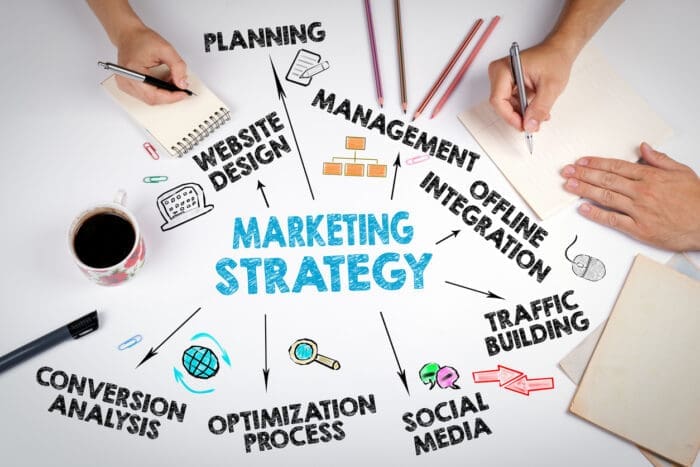
A comprehensive strategic marketing plan serves as a detailed blueprint that guides resource allocation, aligns teams, and focuses efforts on key priorities to achieve objectives. Central to this comprehensive plan is the mission statement, defining how your strategy supports business objectives and guides marketing efforts. This mission statement should be aligned with your broader business goals and reflect your company’s core values. Equally important is establishing a unique value proposition, which clearly articulates what sets your products or services apart from competitors and helps you gain a competitive edge in the market.
Another essential component is the SWOT analysis as a strategic planning tool, a critical method for assessing current marketing efforts by identifying strengths, weaknesses, opportunities, and threats. Conducting a SWOT analysis helps businesses understand their internal capabilities and external market conditions, identify their competitive edge, and inform their overall strategy.
Analyzing competitors and understanding your own services are key to differentiating your company and identifying market opportunities. Highlighting the breadth and uniqueness of your services supports your value proposition and attracts target clients.
The seven essential steps to building an effective strategic marketing plan include: market research and situation analysis, defining a mission statement, setting goals and objectives, developing a value proposition, creating a marketing mix, implementing the strategy, and monitoring and evaluating results, all supported by a structured step-by-step guide to marketing planning.
Additionally, key performance indicators (KPIs) are vital for tracking the success of your marketing activities and making informed adjustments to your strategies.
The Strategic Marketing Planning Process
Creating a strategic marketing plan is a detailed process that involves following essential steps to create an actionable plan aimed at reaching specific marketing goals, such as increasing revenue, achieving greater visibility, or improving brand image, and it should be aligned with broader business planning and strategy development. The process begins with defining your goals, which should be specific, measurable, achievable, relevant, and time-bound (SMART), providing clear direction for your efforts. Conducting market research is a foundational step, helping you understand community needs, assess competitors through competitive intelligence services, identify target audiences, and make informed decisions to enhance your positioning and growth.
With a solid understanding of your offerings and audience, you can start formulating your marketing strategies. This involves breaking down your annual goals into smaller, manageable objectives and creating a timeline that outlines the tactics and deadlines for each marketing activity. The more detailed your plan, the better your chances of success, as it helps stakeholders understand the expectations and milestones.
Finally, create a comprehensive roadmap to guide your efforts toward achieving defined goals. This should include realistic goals, sound information, and community research to ensure well-informed and effective strategies. Creating a detailed implementation schedule that outlines marketing actions, responsible parties, and timelines is crucial for tracking progress and ensuring that marketing goals are met. This structured approach can optimize your marketing investments and improve your overall performance.
Conducting Market Research

To build a successful strategic marketing plan, it is essential to conduct market research as a foundational step and ask yourself key questions for effective marketing campaigns. Market research is crucial for understanding customer needs, preferences, and behaviors, which enables businesses to tailor their marketing strategies effectively. This process involves gathering data through various methods such as surveys, interviews, direct conversations, and focus groups—a qualitative approach that provides direct customer insights, preferences, and perceptions to inform product development, branding, and positioning strategies.
Conducting market research also allows businesses to identify trends, assess competitive dynamics, and uncover untapped opportunities or potential threats, helping position products or services more effectively in the market. Data-driven decision making relies on market research and metrics rather than guesswork, reducing risk and allowing for adjustments based on KPIs. Accurate customer data helps you understand your target audience’s demographics, preferences, and needs. Analyzing this data aids in predicting evolving expectations and developing strategies that address unmet needs and improve satisfaction. Regular market research and customer feedback are crucial for identifying new opportunities and adapting to changing market conditions.
Setting Marketing Objectives
Setting clear marketing objectives is critical in the strategic planning process. Establishing well-defined marketing goals is essential, and using the SMART goals framework—Specific, Measurable, Attainable, Relevant, and Time-bound—provides a structured approach for setting and evaluating these objectives. For example, a measurable marketing goal could be to increase new customer acquisition by 5% in six months and 10% by the end of the fiscal year. Aligning marketing goals with the fiscal year allows for better planning, tracking, and financial forecasting.
Marketing objectives should also include targets such as increasing market share, which serves as a key indicator of practice growth and the effectiveness of your strategic marketing plan. These objectives must align with broader business goals and contribute meaningfully to your company’s mission, offering a clear path for your efforts. Regularly monitoring key performance indicators (KPIs) is crucial for evaluating the success of your marketing efforts and making necessary adjustments to strategies. Setting realistic and measurable goals ensures that your marketing strategies are focused, effective, and capable of driving business growth.
Identifying Your Target Audience
Identifying your ideal customer and target customers is vital for creating relevant and impactful marketing strategies. This process involves analyzing demographic and psychographic data to understand characteristics, preferences, needs, and lifestyle choices. Segmenting your audience based on demographics, interests, lifestyle choices, and where they spend money—such as gyms, theaters, or specialty stores—enables you to reach the right people with the right message.
Target audience segmentation involves dividing a broad consumer or business market into sub-groups of consumers based on shared characteristics such as demographics, interests, and behaviors. Effective audience segmentation allows businesses to tailor their marketing messages to specific groups, enhancing engagement and improving conversion rates.
Creating detailed buyer personas, which include both demographic and psychographic information, is a crucial step in the audience segmentation process. These fictional representations help visualize and understand your ideal customer, enabling more personalized marketing strategies that address the unique preferences, motivations, and lifestyle choices of different segments.
Effective buyer persona research combines insights from existing customers with broader consumer research and inbound marketing strategies focused on valuable content to form detailed market segmentation.
Developing a Value Proposition
A strong unique value proposition is crucial for differentiating your company in a competitive market. Your unique value proposition is a concise statement that clearly articulates what sets your company’s products or services apart from competitors, helping attract customers and gain a competitive advantage. It should align with your company’s mission and brand promise, ensuring that your core values and strengths are communicated effectively.
Key components of a strong unique value proposition include identifying your target audience, articulating your brand promise, and detailing the benefits offered. Utilizing a value proposition canvas can help align your company’s offerings with customer expectations and needs.
By establishing internal alignment among team members on essential benefits, you can craft an accurate and compelling unique value proposition that resonates with your audience and contributes to a sustainable competitive advantage.
Selecting Marketing Channels
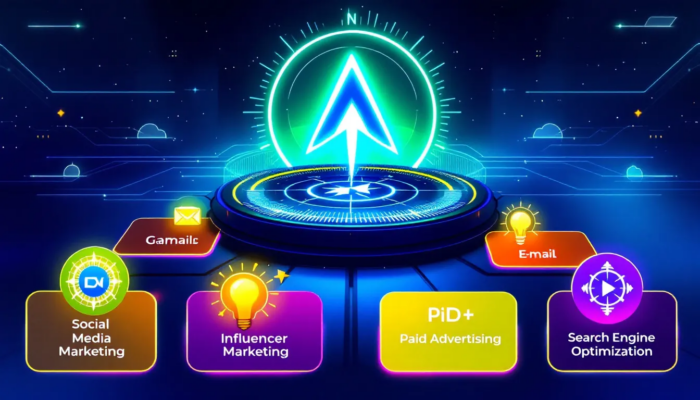
Choosing the right marketing channels is vital for reaching and engaging your target audience, especially when building an integrated digital marketing strategy across channels. Integrating offline channels as part of an omnichannel strategy ensures your brand connects with customers through both digital and in-person touchpoints, such as events and face-to-face engagements, creating a seamless experience across all interactions. This decision should be based on thorough audience analysis to ensure alignment with where your audience engages. Delivering the right message to the right audience at the right time is crucial for effective segmentation and maximizing impact across all channels.
The chosen channels must reflect and enhance your brand’s identity and values. Consistent messaging across all platforms builds long-term brand credibility and trust.
Well-planned budgeting is essential for identifying which marketing strategies will effectively reach your audience. It’s also important to evaluate the cost-effectiveness of each marketing channel to ensure financial feasibility. A multi-channel approach can help businesses avoid over-reliance on a single channel, reducing risk and increasing the chances of reaching a broader audience.
Creating a Marketing Budget
Creating a marketing budget is essential in the strategic planning process, and applying proven marketing budget strategies to optimize spend will make that budget far more effective. The budget should reflect the company's overall strategy and the range of services offered, ensuring that investment aligns with business objectives and supports differentiation in the market. Efficient resource allocation to initiatives that contribute most effectively to success is crucial. Establishing a budget based on financial capabilities ensures campaigns remain within financial limits.
Allocating a percentage of revenue to marketing can vary based on a company’s growth stage and industry, so it helps to benchmark against an essential guide to marketing budget by industry. Start small and focus on one or two efforts before expanding. When allocating resources in a marketing budget, it’s vital to consider the potential return on investment (ROI). This consideration can greatly influence decision-making.
Customer acquisition cost (CAC) and return on investment (ROI) are key metrics that provide insights into initiative profitability and help prioritize successful strategies, alongside other critical B2B marketing KPIs for performance measurement.
Launching Marketing Campaigns

Launching a marketing campaign involves several steps, beginning with a structured campaign calendar to maintain focus and ensure timely execution and applying data-driven growth marketing strategies for acquisition and retention. To implement marketing tactics systematically, it is crucial to coordinate actions, allocate organized resources, and assign defined team roles with clear timelines for accountability and smooth execution. An effective promotion strategy requires deep knowledge of the product, value, and price point. Incorporate various channels for customer communication to maximize reach and engagement, with customer engagement as a key campaign goal to foster strong relationships and drive long-term growth.
Monitoring the campaign’s performance during its execution is essential for measuring its effectiveness against the set goals. Key performance indicators (KPIs) such as organic traffic, bounce rate, and conversions provide valuable insights into the campaign’s success.
After the campaign ends, analyzing its results helps determine what worked and what can be improved for future campaigns.
Measuring Marketing Performance
Measuring marketing performance is essential for demonstrating business impact and understanding what works. Key Performance Indicators (KPIs) are crucial for monitoring performance and informing strategy adjustments. Tools like Google Analytics enable you to track KPIs, analyze customer data, and make data-driven decisions that reduce risk and allow for swift responses to market changes. Common KPIs in marketing include website traffic, conversion rates, sales revenue, and customer feedback.
Regular monitoring and evaluation of KPIs is necessary to adapt strategies quickly to new trends or competitive shifts and ensure alignment with business goals. Assigning metrics to each marketing tactic allows you to track and analyze performance effectively.
Data from KPIs provides precise direction for improving campaigns and identifying areas needing improvement.
Adapting to Market Changes
In an ever-evolving business landscape, continuous evaluation and refinement of strategies are crucial for adapting to market dynamics, especially for small companies that can benefit from an asymmetric marketing approach to outcompete larger rivals. Conducting a thorough competitive analysis is essential for understanding the market landscape, identifying competitors, and uncovering opportunities to gain a competitive edge. This process also helps businesses spot chances to enter a new market as part of their adaptation strategy. Research and customer feedback are essential for refining strategies over time. Regularly tracking KPIs enables a business to quickly adapt to new trends or competitive shifts, while monitoring intermediate metrics helps identify where potential customers might face obstacles in the marketing funnel.
Setting aside a portion of the budget for unforeseen opportunities is vital for adaptability. Businesses should prepare for future industry changes and opportunities, ensuring they remain competitive and responsive to trends.
Leveraging Content Marketing
Content marketing is pivotal in engaging the target audience and building brand loyalty, and ongoing education through a specialized digital marketing blog for SMBs can support your efforts. A key component of content marketing is content creation, which involves developing original and relevant materials that resonate with your audience. Blogging is one of the most proven content marketing techniques. User-generated content (UGC) is another powerful tool, as it is created by customers promoting your products. UGC helps build community and encourages product promotion.
Content marketing not only drives engagement but also fosters customer loyalty by consistently providing value and strengthening relationships with your audience. Different types of content, such as short-form videos, influencer marketing, and social media DMs, are emphasized for high visibility. B2B companies can utilize user-generated content by sharing positive reviews, enhancing their strategy, and building trust.
Integrating Digital Marketing
Integrating SEO into your digital marketing approach enhances online visibility and drives traffic without additional costs, especially when supported by a full-service digital marketing agency for business growth. While digital strategies are essential, traditional marketing—such as print ads and radio spots—remains effective for certain demographics and industries. A cohesive SEO strategy aligns your website, content, social media, and paid campaigns to optimize search engine performance. This integration, when combined with traditional marketing efforts, not only improves user experience but also boosts search engine rankings, particularly when paired with professional web design and SEO services.
The marketing mix—Product, Price, Place, and Promotion—defines how value is delivered to your customers and should be considered when developing your strategic marketing plan. Using the same keywords in both SEO and PPC strategies improves performance across both channels. Local SEO optimizes your online presence to attract business from relevant local searches, ensuring you reach your target market effectively.
Case Studies and Examples
Real-world examples significantly enhance understanding of how strategic marketing plans and frameworks like the Asymmetric Marketing Engine for small businesses can be effectively implemented and the outcomes they generate. For instance, Red Bull’s ‘Stratos’ space jump campaign exemplified extreme branding, aligning the brand with high-energy events and creating a global spectacle. This campaign profoundly impacted brand perception, showcasing the effectiveness of aligning marketing strategies with emotional and experiential consumer engagement.
Similarly, Procter & Gamble’s ‘Thank You, Mom’ campaign connected emotionally with audiences by highlighting mothers’ roles in supporting athletes and enhancing brand loyalty.
These case studies demonstrate how well-crafted marketing campaigns can drive significant results and strengthen brand identity, echoing many of the strategic insights shared in Mark Hope’s asymmetric marketing articles.
Summary
In summary, crafting a winning strategic marketing plan involves understanding its core components, conducting thorough market research, setting clear objectives, and selecting the right marketing channels. By developing a solid value proposition and creating a well-structured marketing budget, you can ensure your efforts are focused and effective. Launching and monitoring marketing campaigns, measuring performance, and adapting to market changes are essential for continuous improvement and long-term success.
By leveraging content marketing and integrating digital marketing strategies, you can enhance your online presence and engage your target audience more effectively. Real-world examples provide valuable insights into the impact of strategic marketing plans. It’s time to apply these insights to create your winning marketing strategy.

Frequently Asked Questions About a Strategic Marketing Plan
What is the purpose of a strategic marketing plan?
A strategic marketing plan aims to create a structured approach that aligns marketing objectives with overall business strategies, ensuring optimized investments and better outcomes. This focused roadmap is essential for achieving sustainable growth.
How do you conduct effective market research?
Effective market research requires various methods to gather valuable insights, such as surveys, interviews, and direct conversations with your target audience. This approach enables data-driven decisions and helps identify market gaps.
What are SMART marketing objectives?
SMART marketing objectives are clearly defined goals that are Specific, Measurable, Achievable, Relevant, and Time-bound. They enable effective tracking and focused direction in your marketing strategies. By using this framework, you can enhance your marketing efforts and ensure accountability.
Why is identifying your target audience important?
Identifying your target audience is crucial because it enables you to develop tailored marketing strategies that resonate with their preferences and motivations. This ultimately enhances the effectiveness of your campaigns. Understanding your audience ensures that your efforts yield maximum impact.
How can content marketing benefit your marketing strategy?
Content marketing effectively engages your target audience and fosters brand loyalty through strategies like blogging and user-generated content. This approach increases engagement and builds a strong community around your brand.

Ready to Create a Strategic Marketing Plan?
Building a successful marketing plan is the first step toward achieving remarkable growth. Let’s make it happen together with strategies designed to elevate your brand.
Get Started with Your Strategic Marketing Plan!
- Dive Deeper into Strategic Marketing
Explore more resources to enhance your planning skills and drive results. - Craft Your Winning Strategy
Need help creating a plan that aligns with your business goals? Our experts are here to guide you every step of the way. Contact us for personalized advice. - Schedule a Free Strategy Consultation
Let’s discuss how a strategic marketing plan can accelerate your business growth. Book a consultation with our team.

About the author
Mark A. Hope is the co-founder and Partner at Asymmetric Marketing, an innovative agency dedicated to creating high-performance sales and marketing systems, campaigns, processes, and strategies tailored for small businesses. With extensive experience spanning various industries, Asymmetric Marketing excels in delivering customized solutions that drive growth and success. If you’re looking to implement the strategies discussed in this article or need expert guidance on enhancing your marketing efforts, Mark is here to help. Contact him at 608-410-4450 or via email at mark.hope@asymmetric.pro.