

Looking to create a successful marketing strategy? This guide on strategic planning and the marketing process covers everything you need. From market research to setting marketing goals and developing a robust marketing mix, we’ll show you how to align your marketing efforts with your business objectives—an essential step for achieving sustainable growth.
Key Takeaways
- A strategic marketing plan is essential for aligning marketing initiatives with overall business goals, providing a competitive edge through specific, measurable objectives.
- Following the essential steps of the strategic marketing process ensures alignment with business objectives and supports making informed decisions based on accurate data and insights.
- Strategic marketing planning is a structured approach that aligns marketing practices with business objectives to achieve desired outcomes.
- The strategic marketing planning process typically includes defining marketing goals, conducting market research, identifying target audiences, and developing a unique value proposition.
- Key components of effective strategic marketing include thorough market research, setting SMART goals, and developing a cohesive marketing mix tailored to the target audience.
- Continuous improvement through regular performance measurement, customer feedback, and adaptability to market changes is crucial for maintaining the effectiveness of the marketing strategy.
Mastering Strategic Planning and the Marketing Process: A Practical Guide

Creating a strategic marketing plan involves crafting a coherent narrative that aligns with your business goals and values. Understanding your company's mission statement and why your company exists is foundational to strategic planning, as it clarifies your purpose, values, and objectives, and aligns team members. Analyzing competitors is also a key part of the process, helping you position your brand effectively in the market.
This guide covers the essentials, from identifying your mission and values to defining your ideal customer profile (ICP) and establishing a brand message that resonates with your audience, laying the groundwork for effective business planning and strategy development.
Introduction
Strategic planning is a systematic process that helps organizations define their long-term objectives and chart a course to achieve them. In marketing, strategic planning is crucial for aligning marketing initiatives with broader business goals and ensuring that resources are used effectively. Situation analysis is the foundational step in the process, involving internal and external research such as SWOT analysis, analyzing trends, and defining target audiences to guide tailored messaging.
Key components of this process include conducting market research—a critical part of understanding the market and informing strategy—setting clear marketing goals, and developing a robust marketing mix.
Understanding Strategic Planning in Marketing

Strategic marketing planning is your blueprint for success. It provides a competitive advantage and guides you toward commercial triumph with specific marketing goals and strategies. This process isn’t a one-time event; it’s a dynamic strategy that evolves with market trends and business needs.
Aligning your marketing goals with overall business objectives enables data-driven decisions and more effective resource allocation. Strategic marketing planning helps identify opportunities and make strategic decisions that can increase market share, especially when supported by robust competitive intelligence services. By conducting a gap analysis and leveraging multiple coordinated marketing frameworks, businesses can compare current performance to desired goals, identifying areas for improvement. A well-executed strategic plan can create a sustainable competitive advantage by identifying unique market positions. Additionally, a strategic plan ensures that marketing budget and resources are invested in the highest-return activities.
Defining Strategic Marketing Planning
Strategic marketing planning is a continuous process that evolves with market dynamics. It includes gathering stakeholders, evaluating data, conducting a SWOT analysis, and setting goals that align with your business strategy. To ensure effective implementation, each team member should clearly understand their specific responsibilities, deadlines, and KPIs, with organized resources, clear timelines, and defined team roles supporting accountability and efficiency. These are all part of the strategic planning and strategic marketing processes.
The marketing plan is a living document, regularly updated to reflect new insights and market conditions, and an organized step-by-step marketing planning process helps keep it aligned with evolving goals. Focusing on a concrete goal and defining your target audience optimizes resource utilization and aligns marketing efforts with your business strategy.
The Role of Strategic Planning in Achieving Business Goals
Strategic marketing planning defines business goals and enhances your brand image through a structured approach that aligns marketing efforts with business objectives and identifies market opportunities. Brand positioning and a compelling unique value proposition (UVP) are essential for differentiating your brand and attracting your target audience, particularly when you apply asymmetric marketing strategies for small businesses. A well-crafted UVP should resonate with the target audience's needs and preferences, ensuring your messaging is relevant and impactful.
Integrating your marketing plan with the overall business strategy focuses all initiatives on driving business growth and achieving desired outcomes. This alignment mitigates unproductive initiatives and concentrates resources on profitable ventures, ultimately guiding your marketing strategies and decisions.
Key Steps in the Strategic Marketing Planning Process
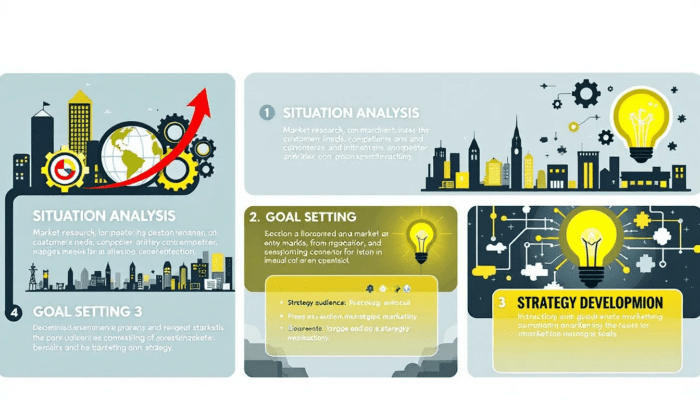
Crafting a successful strategic marketing plan involves following the essential steps of the strategic marketing process—a structured, cyclical framework—and addressing key questions for effective marketing campaigns along the way. These steps provide a foundation, guidelines, and a clear path to aligning your marketing efforts with business goals.
Conducting thorough market research, setting clear, measurable goals, and developing a comprehensive marketing mix are essential for creating a winning strategy.
Conducting Market Research
Market research is the backbone of strategic marketing planning, helping you understand each stage of the customer purchase path from awareness to decision. Situation analysis, including competitor analysis, is foundational for understanding the target market, customer expectations, and the competitive landscape. It involves collecting and analyzing raw data on customers, customer preferences, industry trends, and the competitive landscape to help marketers identify opportunities and make informed decisions about product lines, product offerings, and services.
Effective market research methods allow businesses to gather, analyze data, and interpret information about a market, which is crucial for product development, marketing strategies, and pricing, and can be amplified with essential inbound marketing tools for data collection and analysis. Market research provides insights that enable businesses to fulfill unmet needs, refine their messaging, and align marketing efforts with broader business goals, supporting long-term growth.
Tools like:
- Similarweb, which provides insights into website traffic and engagement
- Glimpse, which helps analyze consumer behavior and trends
- BuzzSumo, which identifies key influencers and content performance
can provide valuable insights, helping you benchmark performance, understand consumer sentiment, and identify key influencers.
This information tailors your marketing efforts and ensures your message resonates with your target audience.
Setting Clear Marketing Goals
Setting a clear marketing goal is a vital step in the strategic planning and the marketing process. Defining marketing goals is a key part of the strategic marketing planning process, as these specific targets guide the overall marketing strategy and help align efforts across the organization. The goals should be SMART, which means they should be specific, measurable, achievable, relevant, and time-bound. Determining objectives like boosting brand awareness, increasing customer loyalty, and finding new leads creates a roadmap for your marketing efforts and supports inbound marketing strategies for quality lead generation.
Aligning these marketing goals with your overall company objectives ensures that your marketing strategy is focused and effective.
Developing Your Marketing Mix
The marketing mix—product, price, place, and promotion—is critical to your strategic marketing plan and should tie into a broader customer-centric marketing engine that extends beyond the initial sale. Understanding your product and its unique value proposition, setting competitive pricing, choosing the right distribution and marketing channels, and crafting compelling promotional strategies such as content marketing are all essential. Selecting the appropriate marketing channels, like content marketing, ensures you effectively reach your target audience and align tactics with business goals.
Additionally, understanding the lifestyle choices of your target audience—including their daily habits, spending patterns, and values—helps tailor the marketing mix for maximum impact. Aligning these elements with your target market’s needs ensures an effective marketing message that drives high conversion rates and customer retention.
Implementing the Strategic Marketing Plan

After developing your strategic marketing plan, the next step is implementation, which many businesses support by partnering with a full-service digital marketing agency. This involves building an effective project management process, establishing timelines and schedules, and launching and monitoring marketing campaigns.
Coordinating with other departments is essential for effective implementation and resource allocation, ensuring that cross-departmental efforts align with overall company goals and reinforce data-driven growth marketing strategies.
Close monitoring and resource alignment ensure the effective execution of your marketing strategy, especially when you track critical B2B marketing KPIs.
Building an Effective Marketing Project Management Process
Project management tools like Smartsheet and Teamwork significantly enhance coordination and efficiency in executing marketing strategies. These tools facilitate task management, team communication, and resource allocation to ensure the smooth implementation of your marketing plan.
Involving staff in the process gains support and commitment.
Establishing Timelines and Schedules
A well-defined timeline orchestrates marketing activities efficiently. Establishing clear timelines and schedules improves team coordination and the overall effectiveness of your marketing campaigns.
Timely execution meets project deadlines and maximizes market opportunities.
Launching and Monitoring Marketing Campaigns
The launch phase of your marketing plan aims to create awareness and generate interest. This involves executing your plan’s marketing tactics and strategies and closely monitoring their performance. Tracking customer engagement is essential for measuring the success of marketing initiatives and refining tactics to deepen customer relationships. Marketing automation tools reduce manual effort and improve tracking, enabling swift campaign modifications in response to market conditions and measuring initiative effectiveness.
Continuous Improvement and Iteration
Continuous improvement ensures a successful strategic marketing plan, and events like a dedicated strategy development conference can help leaders refine their approach. Regularly measuring performance, gathering customer feedback, and adapting to market changes keep your marketing strategies effective and relevant. This iterative process helps you identify areas for improvement and optimize your marketing efforts.
Measuring Performance with Key Performance Indicators (KPIs)
Key performance indicators (KPIs) are crucial for evaluating the success of your marketing plans, and exploring a broader digital marketing strategy blog can provide additional context for interpreting these metrics. Tracking metrics like website traffic, conversion rates, and sales revenue helps you understand what works and make data-driven decisions to improve campaigns.
Gathering Customer Feedback
Customer feedback is invaluable for refining marketing strategies. Integrating feedback with KPI analysis provides insights into customer preferences and satisfaction, enabling adjustments to meet needs and improve future performance.
Adapting to Market Changes
Adapting to changing market conditions maintains your competitive edge. Regularly updating your marketing plan based on customer feedback and market trends keeps strategies relevant and effective. This continuous improvement helps you stay ahead of the competition and achieve your business goals.
Common Challenges in Strategic Marketing Planning
Strategic marketing planning comes with challenges. Common hurdles include aligning marketing strategies with business goals, managing budget constraints, and overcoming implementation barriers. Additionally, other factors—such as emotions, motivations, and personal opinions—can influence customer behavior and decision-making, so these should be considered in strategic marketing planning. Identifying challenges early and developing strategies to address them ensures a smoother planning process and more effective marketing efforts.
Aligning Marketing Strategies with Business Strategy
Aligning your marketing strategies with your overall business strategy drives success. A strategic marketing plan guides you in aligning marketing efforts with business goals and objectives.
Managing Budget Constraints
Managing budget constraints is a frequent challenge in strategic marketing planning. Carefully planning and prioritizing the marketing budget eliminates ineffective initiatives and focuses on profitable ventures, ensuring efficient resource allocation.
Overcoming Implementation Barriers
Overcoming implementation barriers involves recognizing common challenges like lack of resources, insufficient communication, and resistance to change. Training programs, providing necessary tools, and clear communication channels help address these issues.
Engaging key stakeholders throughout planning and implementation ensures buy-in and support, which are vital for overcoming resistance and achieving desired outcomes.
Tools and Resources for Effective Strategic Marketing Planning
Various tools and resources streamline the strategic marketing planning process and enhance decision-making. Tools like project management software, market research, and analytics software help teams manage tasks, gather insights, and track performance effectively.
Choosing the right tools and tailoring them to your needs significantly improves the efficiency and effectiveness of your marketing efforts, as highlighted in many of Mark Hope’s asymmetric marketing insights.
Project Management Tools
Project management tools like Teamwork and Smartsheet are essential for effectively managing tasks, resources, and timelines. These tools offer features like task tracking, resource allocation, and collaboration, enhancing team productivity and project outcomes.
Using these tools ensures smooth and efficient execution of your marketing plan, especially when combined with a well-designed website from a specialized local web design partner.
Market Research Tools
Market research tools are crucial for obtaining accurate data on customer preferences and market trends. Surveys, focus groups, and analytics software gather and analyze consumer insights, enabling informed decisions.
Choosing the right research tools and thoroughly analyzing data provides actionable insights for your marketing strategies.
Analytics and Reporting Tools
Analytics and reporting tools are crucial for tracking and analyzing marketing performance data, and experienced marketing agency partners focused on growth can help you act on those insights effectively. Tools like Tableau facilitate data visualization, making it easier to derive actionable insights and improve marketing strategies.
Leveraging these tools enhances competitive analysis and enables data-driven decisions.
Best Practices for Strategic Marketing Planning

Adopting best practices in strategic marketing planning ensures effective efforts aligned with business goals. It is essential to develop strategies, unique value propositions, and marketing plans as an ongoing process, with regular evaluation and adaptation to changing market dynamics. Regularly reviewing and updating your plan, fostering team collaboration, and prioritizing customer-centric strategies are key to maintaining a successful strategic marketing plan.
These practices help you stay relevant in a changing market environment and drive continuous improvement while supporting effective marketing budget strategies that keep spending aligned with results.
Regularly Reviewing and Updating the Plan
Regularly reviewing and updating your marketing plan ensures its relevance in a dynamic market. A detailed schedule and timeline provide a clear reference for meeting goals and reassessing the plan.
This continuous review aligns your marketing efforts with current market trends and customer needs, ensuring a successful strategic marketing plan.
Fostering Collaboration Across Teams
Fostering team collaboration enhances creativity, efficiency, and the achievement of marketing objectives. Regular interdepartmental meetings and collaborative tools facilitate open communication and alignment between teams. Encouraging social interactions among departments fosters relationships, enhances teamwork and collaboration, and drives better marketing outcomes.
Prioritizing Customer-Centric Strategies
Prioritizing customer-centric strategies maintains customer satisfaction and loyalty. Understanding the preferences and needs of your target audience allows you to align marketing strategies to enhance customer satisfaction.
This approach cultivates loyalty among your clientele and drives sales and business growth.
Summary
Mastering the strategic marketing planning process is essential for achieving business success. By following the key steps, implementing best practices, and leveraging the right tools, you can create a strategic marketing plan that aligns with your business goals and drives measurable results. Continuous improvement and adaptation to market changes ensure that your strategies remain effective and relevant. Embrace these principles, and you’ll be well on your way to mastering strategic planning and the marketing process.

Frequently Asked Questions
What is strategic marketing planning?
Strategic marketing planning is a continuous process that aligns marketing efforts with business goals by defining objectives, conducting market research, and developing a targeted marketing mix. This structured approach ensures that marketing strategies effectively support overall business success.
What are the key steps in the strategic marketing planning process?
The key steps in the strategic marketing planning process involve conducting market research, establishing clear marketing goals, developing a marketing mix, implementing the marketing plan, and continuously improving it based on performance and market changes. Focus on these steps to drive effective marketing strategies.
Why is aligning marketing strategies with business goals important?
Aligning marketing strategies with business goals is crucial. It ensures that marketing efforts directly support overall objectives, enhancing effectiveness and optimizing resource utilization. This alignment ultimately drives business success.
What tools are essential for effective strategic marketing planning?
Essential tools for effective strategic marketing planning include project management software such as Teamwork or Smartsheet, market research tools like surveys and analytics software, and reporting tools like Tableau. Utilizing these tools enables efficient task management, insightful data gathering, and performance tracking, ultimately enhancing your marketing strategy.
How can businesses overcome common challenges in strategic marketing planning?
Businesses can effectively navigate challenges in strategic marketing planning by ensuring that their marketing strategies align with overarching business goals and investing in training and resources to enhance implementation. Clear communication and meticulous budget management are also crucial for success.

Take Your Strategic Planning and the Marketing Process to the Next Level
Ready to elevate your business with a well-executed strategic plan? Our team at Asymmetric Marketing can help you align your vision, goals, and marketing processes for measurable success.
Explore More Resources
- Dive deeper into our expert content on Planning
Get Expert Guidance
- Do you have questions or need a customized approach? Contact Us
- Ready to transform your strategy? Schedule a Consultation Today
Don’t leave your business strategy to chance—partner with experts who can help you achieve remarkable results!

About the author
Mark A. Hope is the co-founder and Partner at Asymmetric Marketing, an innovative agency dedicated to creating high-performance sales and marketing systems, campaigns, processes, and strategies tailored for small businesses. With extensive experience spanning various industries, Asymmetric Marketing excels in delivering customized solutions that drive growth and success. If you’re looking to implement the strategies discussed in this article or need expert guidance on enhancing your marketing efforts, Mark is here to help. Contact him at 608-410-4450 or via email at mark.hope@asymmetric.pro.