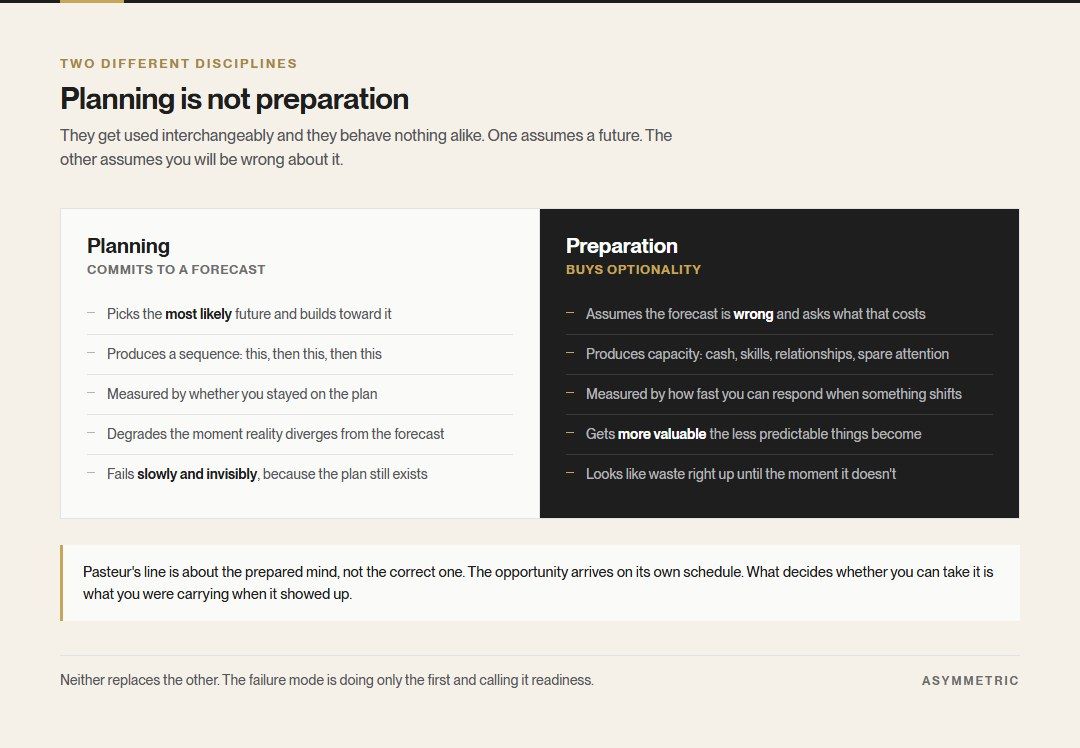

I’ve heard this quote many times and used it liberally with my teams. I believe that it is a variation of a quote by Louis Pasteur. Some refer to the quote as “chance favors the prepared mind.” Another similar quote from the Roman philosopher Seneca is, “Luck is what happens when preparation meets opportunity.”
Both “luck favors the prepared” quotes highlight the necessity of being prepared, and the role preparation has in reducing the undesirable potential of unmanaged chance.
The quote can be modified in a competitive context to mean that “victory favors the prepared.” Here, the role of preparation in competitive environments becomes the focus.
Today, business leaders (at least the good ones) try to think ahead and prepare for what comes next. Getting through challenging times is much less difficult if you are prepared and have a clear idea of where you want to go and what you need to do to arrive at that destination (a little luck doesn’t hurt either).
Understanding the basic principles of mental preparation and having a foundational understanding of key concepts can significantly aid in navigating challenges and uncovering opportunities effectively. Being prepared allows one to seize the right moment when it arises.
How to Be Prepared
It’s a cliché, but it’s true: success favors the prepared. Significant undertakings require substantial time and dedication; consistent effort also helps people create their own luck rather than rely on chance. To succeed, you must work ahead and ensure you’re ready for any opportunity.
But… How does a person prepare for a shockingly uncertain future? How do you prepare for chance? How do you use “Luck favors the prepared” in your strategic thinking?
What does chance favors the prepared mean? It addresses the role of preparation in outcomes. For example, suppose you have thought through a situation and prepared mentally and physically for the various outcomes. In that case, you will be able to react more quickly and effectively when that event, or something similar, occurs.
We’re not talking about hoping for good luck. We’re talking about that thing that eludes many - well-considered preparedness.
Planning and preparation are essential for any goal you want to achieve, because planning sets your course, gives direction, and helps you make informed choices along the way. To succeed in business, you must have a solid business plan and effective strategy development and know your industry. To lose weight, you must create a diet and exercise plan and stick to it.
The same is true for luck: if you want luck to favor you, you must prepare for it. That means building a prepared mind on knowledge, curiosity, and a readiness to explore, so you are equipped to spot opportunities and have the skills to take advantage of them. It also means being in the right place at the right time and having the courage to act when opportunity knocks. Chance favors the prepared mind because ready, aware people are more likely to recognize opportunities when they discover them. James H. Austin argues that people become more lucky by staying curious and open to new experiences.
Being prepared allows you to seize the right moment, turning fleeting chances into significant opportunities.
The answer is to employ asymmetric marketing strategy development principles, frameworks, and methodologies, coupled with deep thinking and brainstorming, to complement all that luck.
SWOT - A Strategy Development Framework
A well-structured SWOT analysis for strategic planning helps you clarify where you stand before you decide where to move next.
The strategy development process includes concepts, principles, frameworks, tools, and processes. Many of these are complex and arcane, but some, like the venerable SWOT analysis, are easy to understand and use.
The easy part is identifying your strengths, weaknesses, and associated opportunities and threats.
Thinking through this exercise for other market participants, such as your competitors, is also important.
Most importantly, I think the time to do this is right now. SWOT can surface answers before conditions change. Being prepared is hard work, but it will ultimately pay off.
Sure, the exigencies of addressing problems like store closings, supply chain disruption, consumer fear, and requiring our teams to work remotely are important challenges that deserve our attention. Luck won’t solve these problems, but preparation will.
However, we must set aside time, resources, and energy to work through strategy development to ensure that we will be in a favorable position when these opportunities arise. Identifying strengths, weaknesses, opportunities, and threats helps you prepare to act immediately.
Don’t forget those elements often considered “uncontrollable,” such as government regulation, the economy, weather, technology, and market trends, along with the other things that can affect outcomes. A business wargame is another powerful tool for strategic planning that adds more depth to the process, and using a structured business wargame guide for effective strategy development can make these exercises even more impactful.
Risk Assessment & Planning
Robust crisis management strategies and risk planning ensure that when disruption hits, your organization already knows how to respond.
Risk management and risk assessment are the most important aspects of preparation. Preparation helps you calculate risk more effectively and reduces the chance you'll fail. What could go wrong, and how can risks be minimized?
A solid plan B is also essential; prepared people create multiple backup plans and can pivot quickly when one path falls through. Finally, always remember that fortune favors the bold. If you see an opportunity, go for it—you may not get a second chance.
It is crucial to be prepared to seize the right moment when it arises, as these fleeting chances can lead to significant opportunities.
Risk Assessment & Planning
Risk management and risk assessment are the most important aspects of preparation. What could go wrong, and how can risks be minimized?
A solid plan B is also essential; you’ll need a backup if your original plan falls through. Finally, always remember that fortune favors the bold. If you see an opportunity, go for it—you may not get a second chance.
It is crucial to be prepared to seize the right moment when it arises, as these fleeting chances can lead to significant opportunities.
Adopting a mindset of preparedness can influence various situations one encounters in life. Being mentally prepared allows you to seize opportunities and achieve more favorable outcomes.
No business is immune to unexpected events - a fact that all entrepreneurs must be prepared for. By planning and preparing for potential disruptions, you can minimize their negative impact on your company. Here are some tips on how to get ready for anything:
- Have a crisis management plan in place. Every business should have a detailed plan in case of emergencies. This plan should include procedures for dealing with everything from natural disasters to data breaches. Ensure all employees are familiar with the plan and practice implementing it regularly.
- Stay organized and track important documents. In a disaster or other emergency, you’ll need quick access to information like insurance policies, bank account numbers, and vendor contact information. Ensure you have a system for regularly organizing, storing, and updating this data.
- Establish a backup plan for critical systems. If your business relies on computer systems or other electronic devices, ensure you have a backup plan in place in case of a power outage or other disaster. This might include having a spare device or keeping important files backed up online.
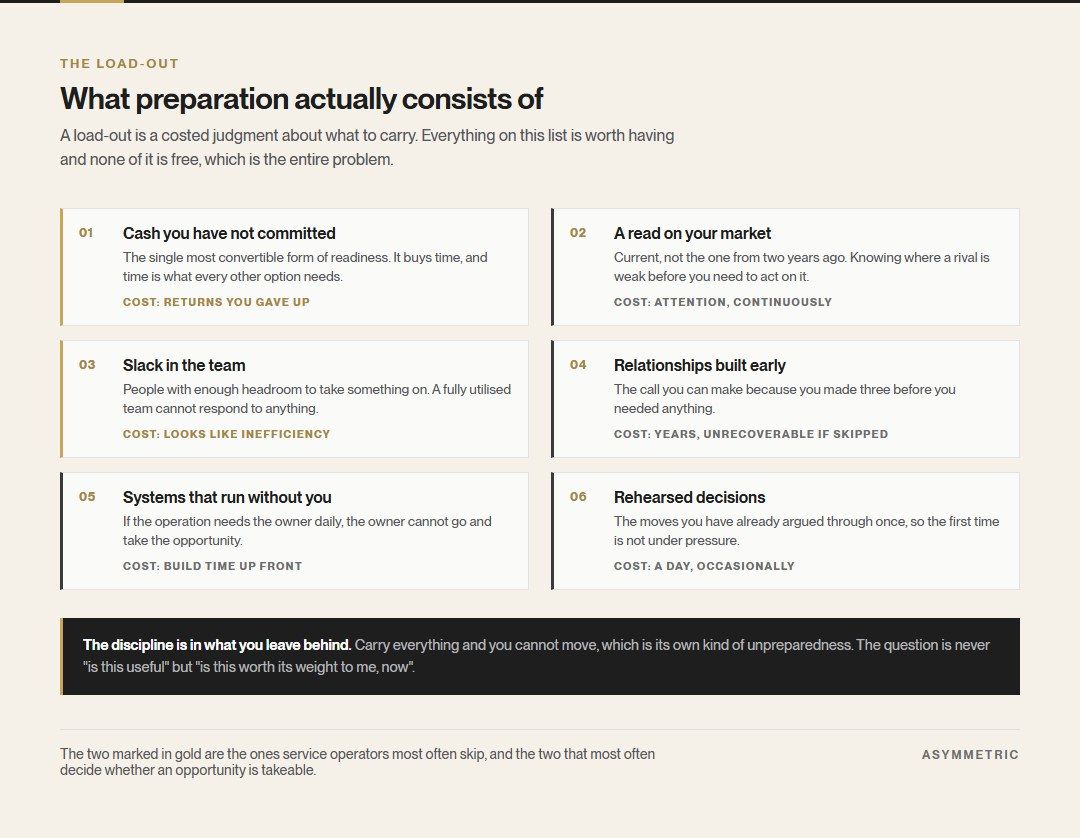
- Keep a cash reserve on hand. Unexpected expenses can crop up anytime, so having cash on hand is always wise. This will help you cover unexpected costs until you can get back on your feet.
- Stay informed about potential risks. It’s important to be aware of the risks your business might face in the short and long term. Monitor industry news and trends and plan for potential disruptions.
Setbacks can be a teacher when teams learn from what they miss. That kind of resilience, paired with persistence, helps a business recover, adapt, and try again.
By preparing for the unexpected, you can reduce the risk of major setbacks to your business. With luck, you’ll never need to put your crisis management plan into action - but it’s always good to know you’re prepared just in case.
Contingency Planning
Emergency preparedness is crucial. Play your part by being ready to seize opportunities when luck arises. This adage is especially true when it comes to contingency planning, which works best when you have a clear aim before disruption hits. Thoughtful emergency preparedness plans for businesses make planning for potential emergencies far more concrete and give you the best chance of weathering any storm.
Creating a disaster recovery plan ensures you are ready to act on the right moment during a major disruption. This document should outline how your business will resume operations during a major disruption. It should also state the proper order of actions during recovery. It should include information on backup systems and procedures, as well as the essential operational gear needed to keep the business running, and contact information for key personnel.
Another important part of contingency planning is having adequate insurance coverage. Ensure you are insured for all possible risks, including natural disasters and cyberattacks.
Force Majeure Events
Scenario-based wargame exercises for business planning can help you rehearse how these shocks might unfold before they ever occur.
It doesn’t matter what type of business you run—planning for “what if?” moments is crucial. These ‘Acts of God’, also known as ‘Force Majeure’ events, are natural disasters like floods, earthquakes, and fires, and require robust disaster recovery plans. Many of these events are out of our control. Financial risks can include insufficient cash flow and PR scandals. These can severely impact your customers’ and company’s well-being. Fortune indeed favors the prepared.
Other quotes attributed to Louis Pasteur showcase his insights and philosophies on various subjects, including science and life, emphasizing his contributions to scientific thought and broader reflections.
In 2011, Thailand was hit hard by flooding during the monsoon season. Big companies with operations in Thailand, like Toyota and Canon, had to suspend production because of the flooding. Both companies saw a drop in operating profits and sales because of the event. Preparedness has a real price in time, money, and effort, but that cost is far lower than being caught off guard.
It is important to consider the potential consequences before they happen and plan for uncertainty. The bottom line is that you may not stop it from happening, but you can prepare.
The first step in identifying potential hazards is to perform a risk assessment on your business. This will allow you to determine potential threats and their effects and what precautions to take to reduce future danger.
Recognize risks by level (e.g., low, medium, or high) and review them regularly, not as a one-day or annual checkbox exercise. It will help ensure your overall success and avoid surprises for your customers and business.
Fate favors the prepared… and organizations that regularly run business wargame exercises for planning are far better positioned when uncertainty strikes.
The Art of War
Applying Sun Tzu strategic planning principles in business reinforces the idea that disciplined preparation shapes outcomes more than luck does.
Try to use Sun Tzu’s principle of avoiding strength and attacking weakness to gain a strategic advantage and its corollary, which is to defend your weakness from its strength. For small companies, applying Art of War principles in modern business and embracing Sun Tzu’s timeless strategic thinking can turn preparation into a real edge. If you effectively map your strengths against your adversary’s weaknesses, and share useful insight through alliances built before opportunities appear, you create opportunities—and, hence, luck.
On the other hand, if your adversary uses his strength against your weaknesses, you experience threats. Luck favors the prepared.
Let’s think ahead and spend some of our time and energy planning for the future so that we are ready to welcome Lady Luck into our arms because of our preparedness. Strong networks built before they are needed help opportunities visit more often.
Chance can be capricious, so manage it with preparedness. While good fortune is great to have, it is better to guarantee good planning than hope for good fortune.
Luck favors the prepared, a motto to live by. Louis Pasteur was surely right about how luck favors the prepared mind, and he saw clearly how it can bend the forces of chance. Studying annotated editions of The Art of War or a comprehensive guide to Sun Tzu’s The Art of War can deepen your understanding of how disciplined strategy tilts the odds in your favor.
Asymmetric specializes in unique and highly effective marketing, insights, and strategy processes and programs. Our perspective on how luck favors the prepared in business underpins everything we do. We believe that luck favors the prepared.
Common Google Searches on This Topic
Reviewing this topic shows that many different search trends are common. These include:
- fortune favors the prepared mind meaning
- chance favors the prepared mind meaning
- luck favors the prepared meaning
- luck comes to those who are prepared
- chance favors only the prepared mind meaning
- lady luck favors the one who tries
There is a lot of interest in the quote and its meaning. Readers often land on the topic through a blog post or related searches on the subject.
Q&A: Enhancing Your Luck Through Preparation — Luck Favors the Prepared
What does "Luck Favors the Prepared Mind" mean?
The phrase “Luck favors the prepared” means that success often comes to those who are prepared. Being ready, proactive, and observant increases your chances of turning even accidental moments into meaningful discovery, reflecting Louis Pasteur’s insight that what seems like luck often rewards a prepared mind. Preparing to seize the right moment when it arises is crucial, as these fleeting chances can lead to significant success.
How can I improve my preparedness?
Improving readiness involves continuous learning, clear goals, planning, and adaptability. Staying mentally sharp and physically fit through proper sleep, nutrition, and exercise helps you maintain the energy and focus to spot and act on sudden opportunities. Being prepared allows you to seize the right moment when it arises, turning opportunities into successes. Key steps include regularly updating your skills, staying informed about industry trends, and having contingency plans.
Why is preparation important in business?
Business strategy is crucial because it allows you to anticipate challenges, capitalize on opportunities, and make informed decisions. Being prepared ensures you can seize the right moment, turning fleeting chances into significant successes. It helps mitigate risks and ensures you are ready to respond effectively to changing market conditions.
Can you provide examples of how preparation leads to success?
A company that invests in market research before launching a new product is more likely to succeed because it understands consumer needs and competition. Being prepared allows them to seize the right moment when it arises.
Similarly, entrepreneurs who network and build relationships before seeking investment are more likely to secure funding, much like J.K. Rowling’s journey shows how fortune favors the prepared mind when resilience and planning meet opportunity.
What role does mindset play in preparation?
Some people prefer an optimistic, proactive outlook because it makes them more likely to notice opportunity. Preparing to seize the right moment when it arises can make all the difference in achieving success. A proactive, positive attitude encourages you to take initiative and embrace opportunities. It also helps you stay resilient despite setbacks and continuously seek improvement. A useful mindset also includes acknowledging uncertainty and possibility.
How can small businesses ensure they are prepared for unexpected challenges?
Small businesses can ensure preparedness by creating flexible business plans, maintaining financial reserves, staying adaptable to change, and continuously monitoring their environment.
It is crucial to be prepared to seize the right moment when it arises, as these opportunities can be fleeting and require immediate action. Regular staff training and development also play a critical role.
What are some tools or resources that can help with preparation?
Tools and resources that aid in preparation include project management software, industry reports, financial planning tools, and continuous education platforms. Regularly conducting a structured SWOT analysis for business decision-making and using business wargaming to test strategies are powerful ways to turn abstract preparedness into concrete action.
Preparing to seize the right moment when it arises is crucial for capitalizing on opportunities. Networking groups and professional associations can also provide valuable support and insights.
How can I measure my level of preparedness?
You can measure preparedness by conducting a readiness evaluation to handle various scenarios, the robustness of your plans, and your ability to adapt quickly to changes. Structured simulations such as business wargame exercises reveal how well your plans hold up when stressed. Preparing to seize the right moment when it arises is crucial for capitalizing on opportunities.
Regularly reviewing and updating your strategies and seeking feedback from peers and mentors can provide insights into your preparedness.
What should I do if I feel unprepared?
If unprepared, identify gaps in your knowledge or resources. Being prepared to seize the right moment when it arises is crucial for success. Seek opportunities to learn from those gaps and prior mistakes, gather information, and develop a clear action plan.
Don’t hesitate to contact mentors or professionals who can provide guidance and support.
How does being prepared create opportunities?
Opportunity recognition positions you to recognize and act on opportunities when they arise. It is crucial to seize the right moment when it presents itself. It enables you to make swift decisions, approach challenges confidently, and leverage your strengths effectively, increasing your chances of success.
Ready to Seize the Opportunity? Use "Luck Favors the Prepared" in Your Business
Success isn't just about luck; it's about being prepared. Take your business to the next level with strategic insights and a proactive approach by drawing on Mark Hope’s innovative asymmetric marketing strategies.
Get in Touch
📧 Email: mark.hope@asymmetric.pro
📞 Phone: (608) 410-4450
Schedule a Meeting
Click here to book a convenient time to discuss how we can work together to achieve your business goals
About the author
Mark A. Hope is the co-founder and Partner at Asymmetric Marketing, an innovative agency dedicated to creating high-performance sales and marketing systems, campaigns, processes, and strategies tailored for small businesses. With extensive experience spanning various industries, Asymmetric Marketing excels in delivering customized solutions that drive growth and success. If you’re looking to implement the strategies discussed in this article or need expert guidance on enhancing your marketing efforts, Mark is here to help. Contact him at 608-410-4450 or via email at mark.hope@asymmetric.pro.